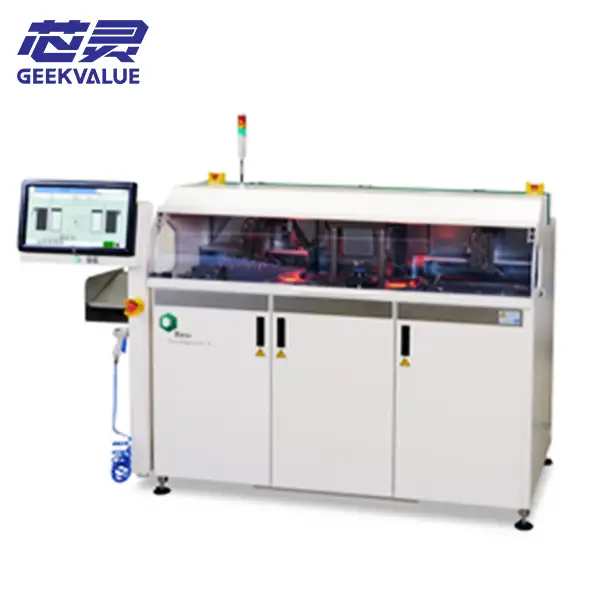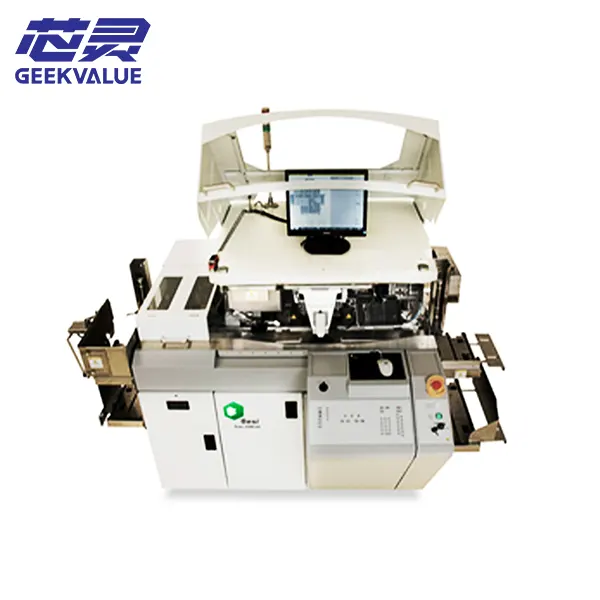
The Besi Esec 2100 hS high-speed epoxy die bonder picks dies from wafers, applies epoxy to lead frames or substrates and positions chips with 20 µm @ 3σ standard placement accuracy or 15 µm @ 3σ high-precision mode. With an optional liquid cooling system mounted on the Y-axis, it delivers throughput up to 18,500 UPH and a minimum cycle time of 120 ms. The first model of the 2100 GENS series, this platform adopts a lightweight yet rigid pick-and-place structure paired with advanced trajectory control technology to shorten cycle time and preserve accuracy during high-speed operation. Its signature Phi-Y architecture, the synchronous rotation and linear motion system common to the 2100 platform, sustains throughput and yield over extended production runs for mainstream semiconductor packages with well-defined process windows.
The 2100 hS handles die sizes from 0.25 mm (with Small Die Kit) to 20 mm, with 4" to 12" wafer capability on 8" or 12" wafer frames. Leadframe dimensions run from 90 to 300 mm in length and 23 to 100 mm in width. Bond force is programmable from 0.2 to 20 N. Typical applications include QFN, TSOP, QFP, BGA, CSP-BGA, SiP-BGA, FBGA, and LGA — mainstream package families where the process is stable and production continuity matters more than tighter placement precision.
The 2100 hS is a previous-generation platform within the 2100 family. Besi has since introduced the 2100 hS ix, which targets the same high-speed epoxy die attach space but with tighter accuracy options (down to 12 µm in Accuracy Mode, and 10 µm with Up Looking Vision) and a narrower die size range (0.15 to 8 mm). The hS itself supports die sizes up to 20 mm, which positions it for applications that may not require the tighter placement of the iX generation.
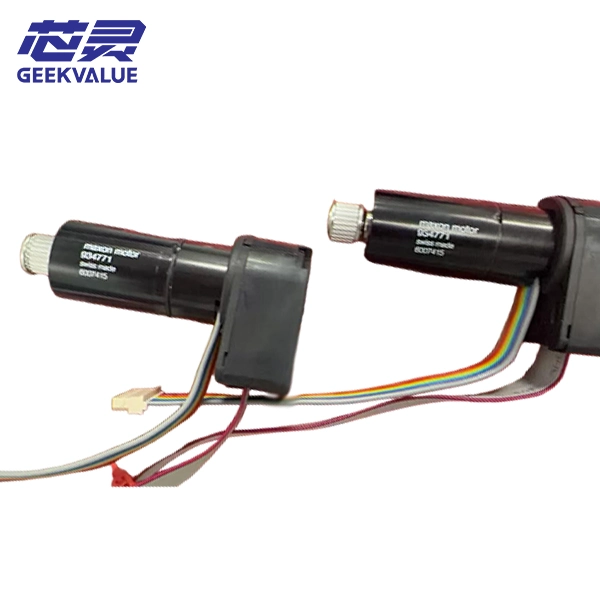
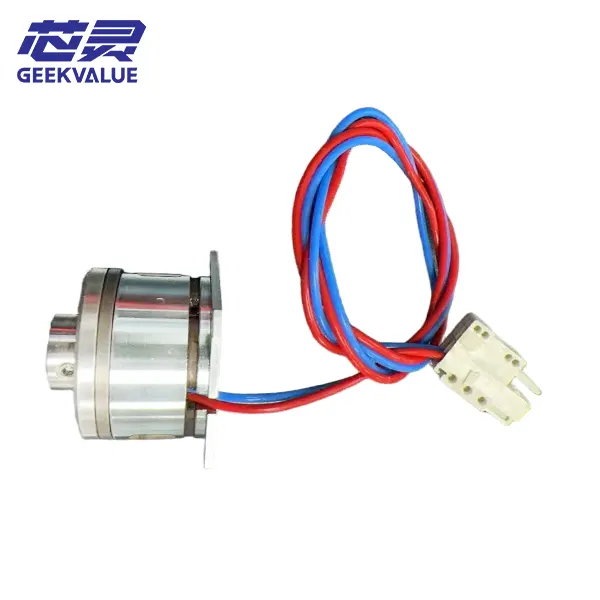
Because the 2100 hS is a mature platform, common parts and service channels are generally accessible, though some specialized components may require refurbishment or alternative sourcing given the platform's generation. The sections below cover the platform's technical capabilities first, followed by configuration and procurement considerations for used units.
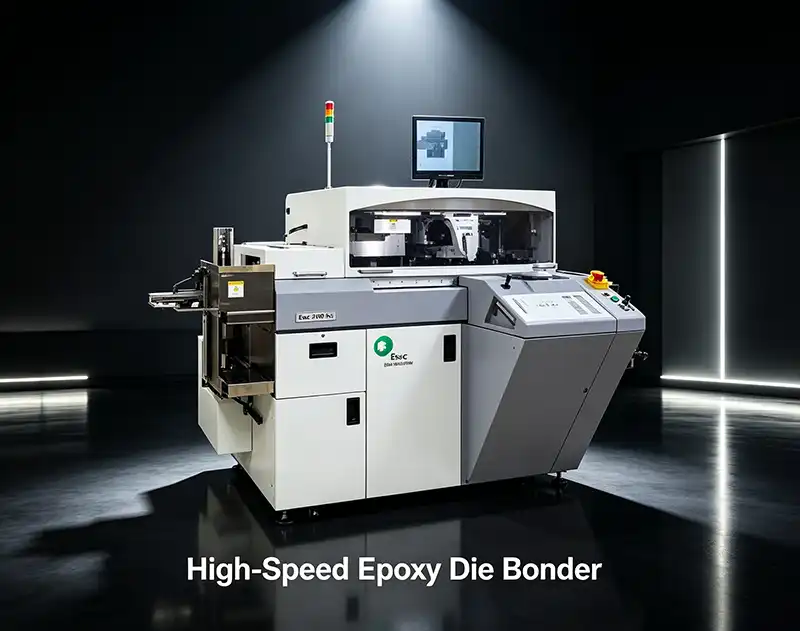
Key Specifications
| Parameter | Specification |
|---|---|
| Equipment Type | High-speed epoxy die bonder |
| Bonding Method | Epoxy |
| Cycle Time | 120 ms (with Liquid Cooling option) |
| Productivity | Up to 18,500 UPH |
| Placement Accuracy | 20 µm @ 3σ standard; 15 µm @ 3σ in High Accuracy Mode |
| Die Size Range | 0.25 mm (with Small Die Kit) – 20 mm |
| Wafer Size | 4" – 12" (on 8" or 12" wafer frames) |
| Leadframe Dimensions | Length 90 – 300 mm; Width 23 – 100 mm |
| Bond Force | 0.2 – 20 N |
| Footprint (W × D × H) | 1,785 × 1,448 × 1,400 mm |
| Weight | Approx. 1,400 kg |
| Power Supply | 208 – 230 VAC, 47 – 63 Hz |
| Power Rating | 800 – 1,100 VA |
| Compressed Air | Minimum 5.2 bar |
| Vacuum | Minimum -0.75 bar |
| Nitrogen Blow | 1.8 – 6 bar |
The 2100 hS is a high-throughput epoxy die bonder for mainstream package families — QFN, TSOP, QFP, BGA, CSP-BGA, SiP-BGA, FBGA, and LGA — where the process window is established and the production challenge is sustained throughput and yield. It runs up to 18,500 UPH at 20 µm @ 3σ standard accuracy, with 15 µm available in High Accuracy Mode. The platform is previous-generation relative to the 2100 hS ix, and that matters for buyers: the hS supports die sizes up to 20 mm, which is wider than the iX generation, but it does not offer the tighter accuracy window. For used equipment evaluation, the key checks are the liquid cooling option, accuracy mode configuration, dispensing module count, and vision system generation. If your process fits within the hS accuracy and die size window, the platform remains a cost-effective production tool with accessible parts and service channels.