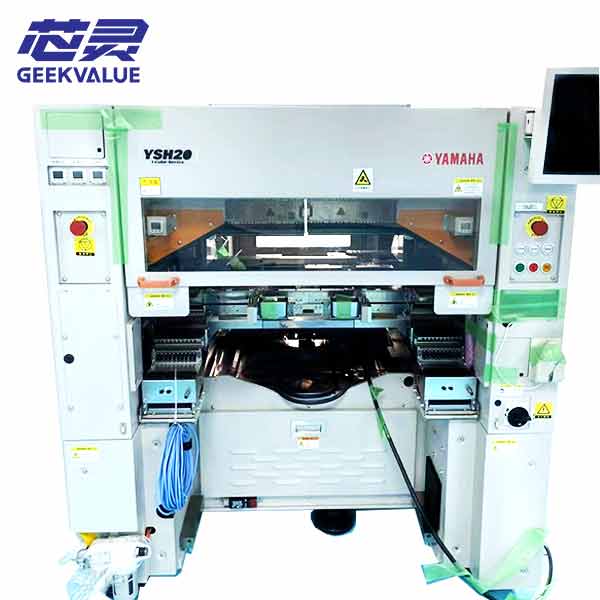
Yamaha YSH20 High-Speed SMT-Derived Die Placement System
Used Yamaha YSH20 hybrid flip-chip placer with ±10 μm accuracy, 4,500 UPH, and 6/8/12-inch wafer support. Bump inspectio...
We stock used flip chip bonders from Besi, ASMPT, K&S, Shibaura and other major platforms, covering thermocompression bonding, mass reflow placement, chip-to-substrate and chip-to-wafer processes. Every unit is run-tested before shipment with a unit-specific condition report. Tell us your bump type, die size and joining process, and we'll shortlist the machines that actually fit.
Current inventory of flip chip bonders and thermocompression bonding systems for advanced packaging, 2.5D/3D integration, chiplet assembly and silicon photonics. Product availability, installed options and machine condition are confirmed per unit before quotation.
Used Yamaha YSH20 hybrid flip-chip placer with ±10 μm accuracy, 4,500 UPH, and 6/8/12-inch wafer support. Bump inspectio...
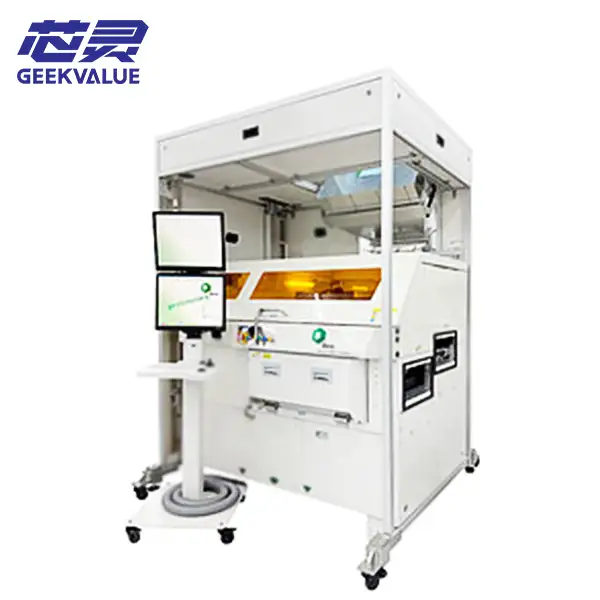
BESI Datacon 8800 CHAMEO ultra plus AC Hybrid Bonder: 100 nm @ 3σ alignment accuracy, up to 2,000 CPH dry cycle, ISO 3 c...
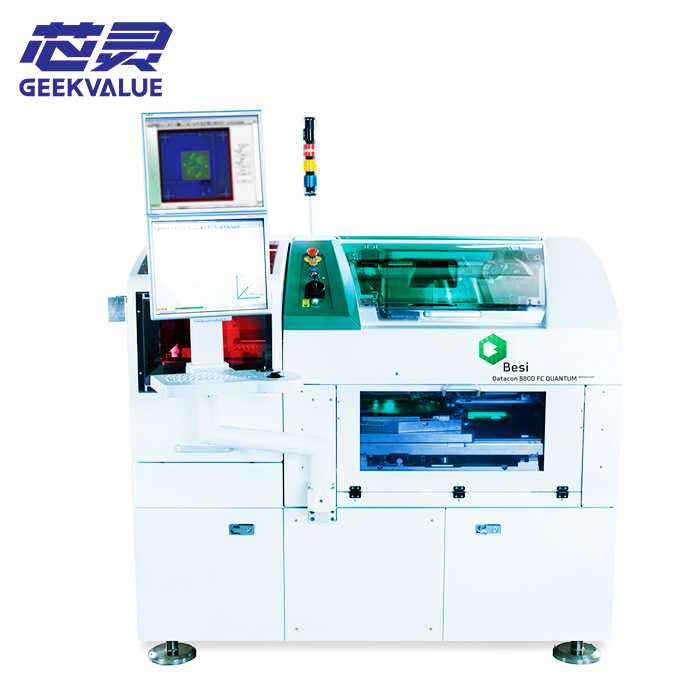
BESI Datacon 8800 Advanced: ±2 µm @ 3σ placement accuracy option, up to 10,000 UPH, 8"–12" wafer handling, 2–5...
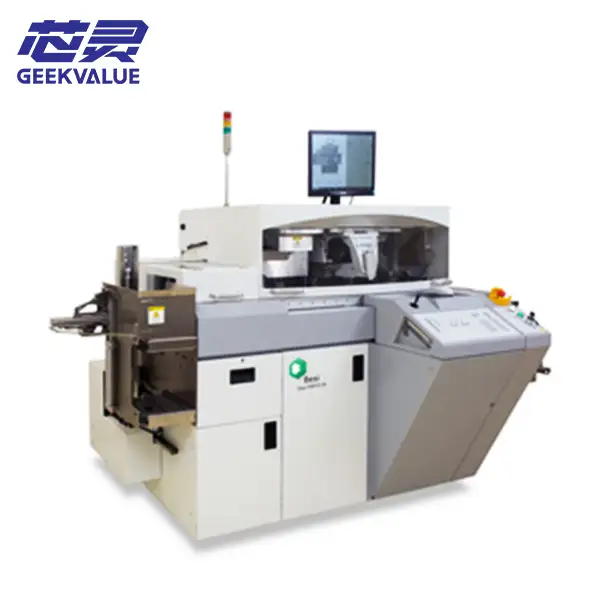
Besi Esec 2100 FC hS: 8 µm @ 3σ placement accuracy, up to 12,000 UPH including flux dipping and full inspection. Flip ch...
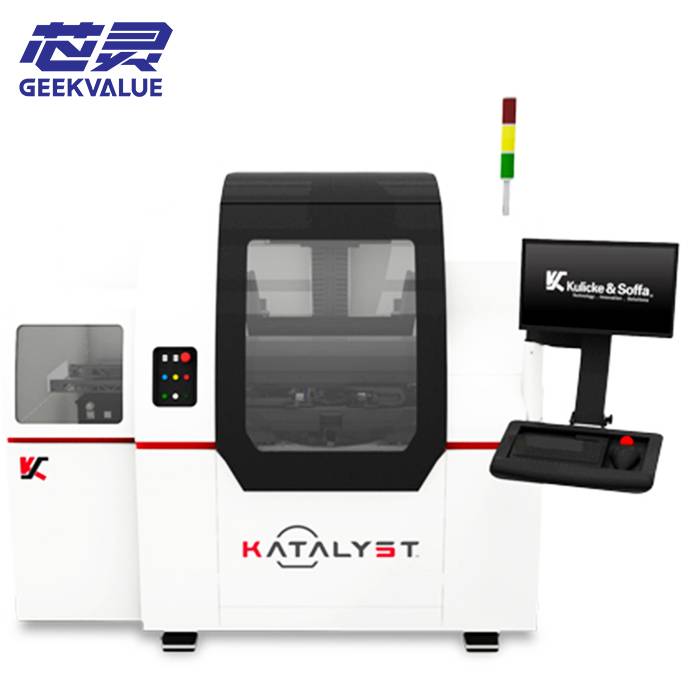
K&S Katalyst flip chip die bonder, 3 μm placement accuracy, 15,000 UPH instantaneous throughput, dual-bond head with...
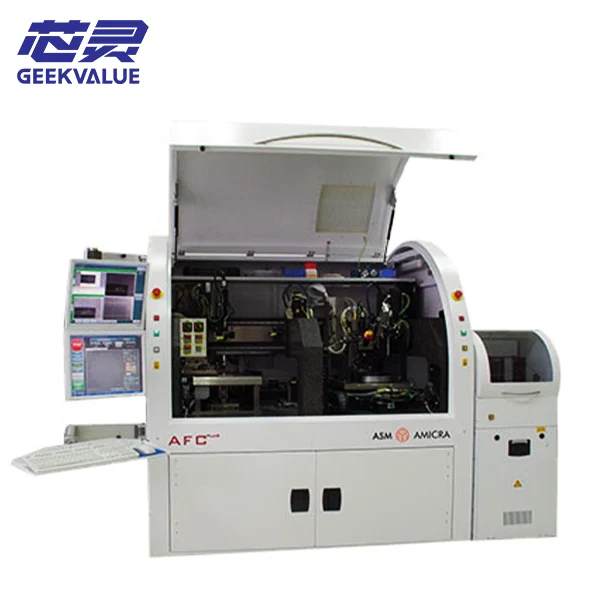
Fully automatic flip chip bonder. ±0.5 μm @ 3σ, 15–30 sec per bond. Dies from 0.1×0.1 mm to 20×20 mm, substrates up to 3...
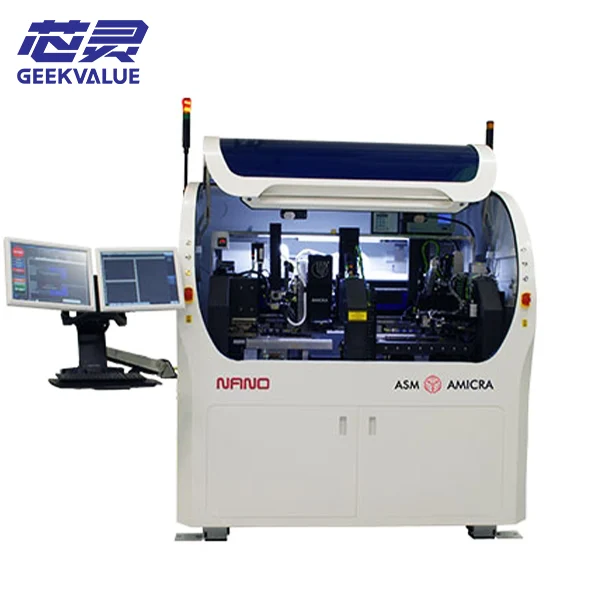
±0.2 μm @ 3σ placement accuracy, 0.1–20 N bond force, 200–400 CPH. Built for silicon photonics, CPO, and hybrid bonding.
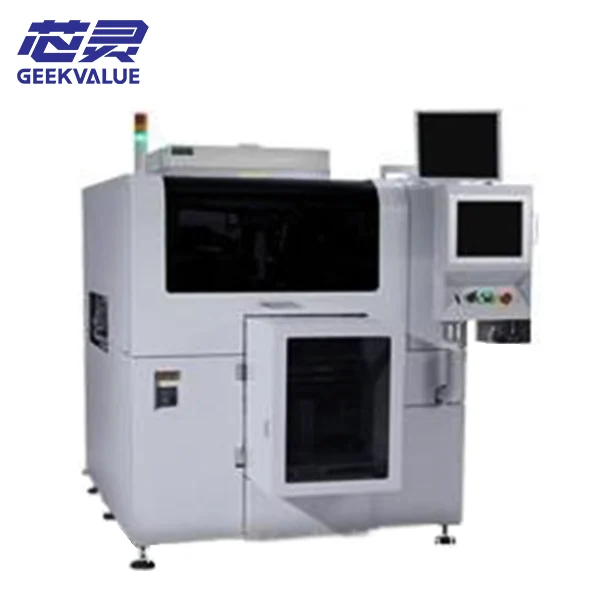
TFC-9000 handles both Chip-1st and Chip-Last (RDL-1st) FO-WLP flows. Face Up takes DAF or adhesive sheet; Face Down hand...
The fastest way to shortlist is to start with your joining process, not the machine brand. Each category below lists the platforms we most often recommend for that process — and why.
For fine-pitch copper pillar and micro-bump joining where mass reflow cannot meet the thermal or alignment window. Requires precise force, top/bottom heating and coplanarity control. Recommended: Datacon 8800 CHAMEO, ASM AFC Plus.
Where bumped die are aligned and placed before an integrated or downstream reflow step completes the joint. Common in high-volume C4 and solder-bump assembly. Recommended: Datacon 8800 FC QUANTUM, Yamaha YSH20.
Where individual die are placed onto a target wafer for 3D stacking or heterogeneous integration. Wafer stage, die input and alignment system differ from C2S platforms. Recommended: ASMPT AMICRA NANO, Besi Datacon 8800 series.
For dielectric-to-dielectric and metal-to-metal direct bonding. Requires exceptionally clean handling, fine alignment, low-force contact and controlled environment. Recommended: Datacon 8800 CHAMEO Ultra Plus AC.
Sub-micron alignment for photonics, VCSEL, laser diode and RF device assembly. Vision system and stage stability are the limiting factors. Recommended: Shibaura TFC-9000, ASMPT AMICRA NANO.
Laboratory and process development where optical access, flexible tooling and controlled experiments matter more than throughput. Recommended: Manual & Semi-Automatic Bonders.
The best platform depends on whether the project is developing a new interconnect, transferring a stable process into pilot production or operating a repeatable high-volume line.
Do not select by advertised accuracy alone. Operator access, material presentation, recipe development, process data, cycle time, traceability and factory integration can be equally important.
Discuss Your Production StageManual or assisted systems prioritize optical access, flexible tooling, controlled experiments and the ability to evaluate different dies, targets, forces, temperatures and joining methods.
Semi-automatic or versatile platforms add programmable motion, process repeatability, measurement and data logging while retaining flexibility for engineering changes and limited production.
Production systems emphasize wafer, tray or carrier automation, short cycle time, stable recipe execution, inspection, host communication, traceability and predictable equipment utilization.
“Flip chip” describes the assembly orientation, not one universal bonding recipe. The interconnect metallurgy and required joint formation determine the bond head, thermal system, atmosphere, force control and handling options.
Confirm bond-force range, top and bottom heating, temperature uniformity, dwell time, active tip and tilt, atmosphere, cooling, die warpage and the method used to verify post-bond accuracy. TCB capability depends on the installed hardware, not only the platform name.
Review flux application, tack placement, stage heating, die stability, substrate support, reflow flow, cooling and post-placement handling. A mass-reflow placement platform and a dedicated TCB system are not automatically interchangeable.
Verify the ultrasonic module, heating method, dispensing or stamping, bond-line control, UV access, tool interface and compatible process monitoring. These options are configuration-specific.
Direct or hybrid bonding normally requires dedicated environmental control, surface preparation, particle management, parallelism, low-force contact and post-bond thermal processing. Do not assume a standard solder-bump bonder can perform this process.
A laboratory alignment bonder, a high-force process-development platform and a fully automatic thermocompression production system belong to different equipment classes. One generic price range would not describe them accurately.
A comparable quotation must identify the actual installed process package, handling modules, calibration condition, tooling and support scope—not only the model printed on the machine.
Send the preferred model or application, die and target format, interconnect process, accuracy, automation level, condition and destination.
Request Current Availability →Optics, bond head, force range, parallelism, heating, atmosphere and inspection options determine the processes the machine can actually support.
Wafer stages, ejectors, trays, flip tools, chucks, collets, substrate fixtures and automation modules can materially change quotation scope.
Licenses, recipe functions, camera calibration, force and thermal verification, post-bond measurement and demonstration evidence affect readiness.
Manufacturing year, operating history, replaced parts, documentation, packing, installation, training and after-sales scope affect delivered cost.
Used equipment can shorten lead time and reduce capital cost, but a model name does not reveal its current accuracy, installed process modules or included tooling.
The review should connect machine identity and condition to the target package, interconnect and acceptance criteria.
Confirm the complete designation, manufacturing year, serial information, machine location, ownership history and current operating status.
Review cameras, illumination, pattern recognition, stage calibration, post-bond measurement method, repeatability results and parallelism verification.
Identify force range, tool interface, top and bottom heating, cooling, temperature controllers, tip and tilt hardware and process-specific modules.
List wafer stage, ejector, die input, trays, chucks, collets, flip tools, substrate fixtures, carriers and included change parts.
Confirm the atmosphere enclosure, gas controls, vacuum, flux or fluxless route, ultrasonic hardware, dispensing, stamping and UV capability where required.
Check the PC, software versions, licenses, manuals, maintenance records, refurbishment work, spare parts, test samples and available live or recorded demonstration.
These answers clarify equipment scope, process compatibility, specification comparison, used-machine inspection and the information needed for a useful quotation.
A flip chip bonder is semiconductor assembly equipment that picks and orients a bumped die face-down, aligns its bumps or pillars with matching pads, and places or bonds it to a substrate, wafer or another die under controlled force, temperature, atmosphere and parallelism.
A conventional die bonder usually places a die onto adhesive, solder or another attach material with the active side facing up. A flip chip bonder aligns a bumped active surface face-down for direct connection to matching pads. Some modular platforms support both, but the installed optics, bond head, heating and handling must be verified.
Depending on configuration, a platform may support mass-reflow placement, thermocompression bonding, thermosonic bonding, eutectic or solder joining, adhesive bonding, UV curing and selected direct or hybrid bonding processes.
Compare placement or post-bond accuracy together with the measurement method, sigma level, die size, temperature, field position and whether the value is measured before or after the complete bonding cycle.
Some platforms can support both C2S and C2W, but wafer stages, substrate handling, die input, optics, tooling, software and process modules differ. Compatibility must be confirmed from the actual installed configuration.
Price depends on equipment class, accuracy, force, heating, atmosphere, wafer and substrate handling, automation, software, tooling, year, condition and support scope. A useful quotation requires the target process and offered configuration.
Verify the complete model and suffix, serial number, year, alignment system, calibration, bond head, force, heating, parallelism, handling modules, atmosphere options, software, tooling, service history and available demonstration evidence.
Provide die, bump and substrate details, C2S or C2W format, joining process, post-bond accuracy, force and temperature window, atmosphere, automation level, preferred condition, destination and project schedule.
Send the die, bump or pillar, substrate or wafer format, required post-bond accuracy, joining method, force and temperature window, production stage, preferred machine condition and destination.