Buying a used ACCRETECH UF3000 wafer prober is not simply a matter of finding a machine with the correct model name. Two units carrying the same model designation can have different options, operating histories, software environments, interface hardware, and levels of readiness for production. Those differences affect whether a machine can be integrated into an existing test line, what additional work may be required, and how much the purchase will ultimately cost.
For a buyer evaluating an ACCRETECH UF3000 for sale, the most important question is therefore not just whether the machine is available or attractively priced. It is whether the specific unit can perform the intended wafer-probing work with an acceptable level of risk.
A practical evaluation should connect five areas: the required test process, the machine's actual configuration, its mechanical and electrical condition, compatibility with the customer's test environment, and the total cost of bringing it into operation. A machine that looks complete in photographs may still lack a required interface or option. Conversely, an older unit may remain commercially useful if its configuration is suitable, its condition is documented, and the buyer can support it after installation.
This guide explains how to evaluate a used ACCRETECH UF3000 wafer prober, what evidence to request from a seller, how to compare quotations, and which issues deserve attention before committing to a purchase.
What Is an ACCRETECH UF3000 Wafer Prober?
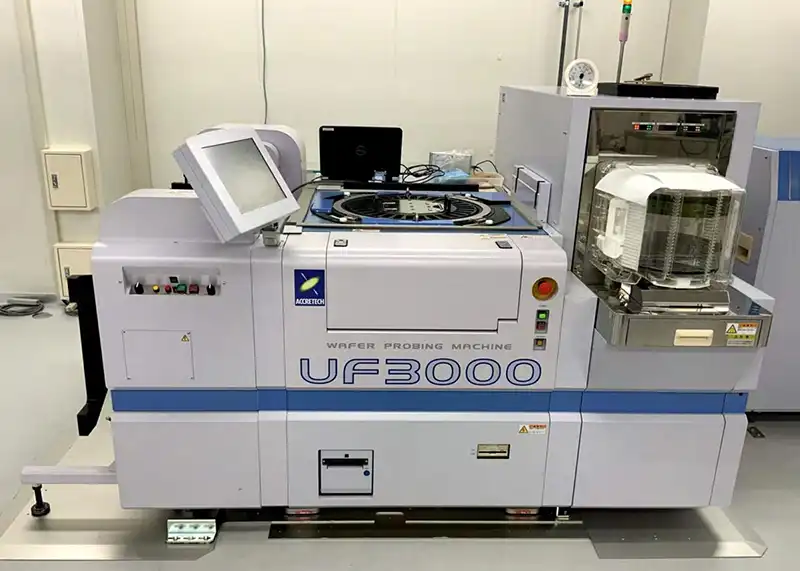
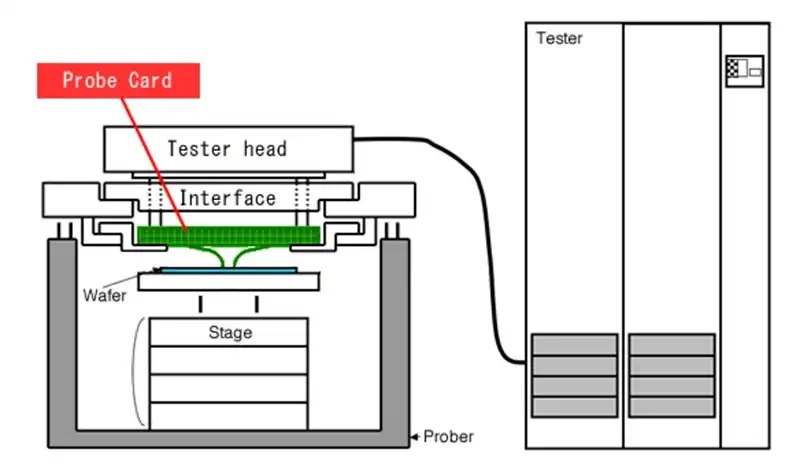
The ACCRETECH UF3000 is a wafer-probing platform associated with the ACCRETECH/TSK equipment family. In wafer test, a prober positions a wafer and brings its die or test structures into contact with probe needles or a probe card. The electrical test itself is performed through the connected test system, while the prober provides the wafer handling, positioning, alignment, and contact interface required by the process.
The distinction matters when evaluating used equipment. A 晶圓探針 is not a complete replacement for the customer's entire electrical test setup. Its practical value depends on how well the mechanical platform, probe interface, control software, wafer-handling arrangement, and external tester work together.
The UF3000 name alone does not confirm every detail of an individual machine. Buyers should verify the exact unit rather than assume that every listing includes the same chuck, loader, temperature option, probe-card handling function, alignment camera, communication interface, or supporting equipment.
Where the prober fits in a wafer-test line
A typical wafer-probing operation brings together several separate elements:
Wafer handling: The system receives, transfers, and positions wafers according to its installed loading arrangement.
Wafer alignment: Alignment functions help establish the wafer's position and orientation before test locations are approached.
Probe contact: The probe card and its needles make electrical contact with the relevant pads or test structures.
Positioning and motion control: The prober moves between test sites according to the process and configured test flow.
Tester communication: The prober and tester exchange the signals or commands required for the integrated test sequence.
Process support: Depending on the installed options and application, additional functions may be involved in temperature control, probe-card management, needle cleaning, identification, or data handling.
These functions should not be treated as a universal equipment specification. Their availability and implementation must be checked on the particular machine being offered.
Why configuration is more important than the model name
Suppose two sellers offer an ACCRETECH UF3000. One unit may include the wafer size and loading arrangement required by a buyer, along with a compatible tester interface and supporting temperature-control equipment. The other may have a different configuration, incomplete documentation, or an interface that would require additional engineering.
Both machines may be advertised under the same model name, but they do not necessarily represent equivalent purchasing options.
The correct comparison is therefore not simply UF3000 versus UF3000. It is the actual configuration of one UF3000 against the process requirements of the buyer's production line.
Is a Used ACCRETECH UF3000 the Right Choice for Your Application?
Before requesting a quotation, define the work the machine must perform. This sounds straightforward, but many purchasing problems begin when a buyer searches by model first and investigates process compatibility afterward.
A used prober may be suitable for one test program and unsuitable for another, even when the wafer diameter appears correct. The decisive factors can include probe-card arrangement, chuck requirements, temperature conditions, tester communication, wafer handling, and the condition of the positioning system.
Start with the wafer and test process
Record the wafer diameter, wafer thickness range if relevant, product type, test temperature requirements, probe-card design, and expected test flow. Include any restrictions associated with wafer orientation, alignment marks, wafer maps, or the way test results are handled.
Do not rely on a broad statement such as “supports 300 mm wafers” as the only compatibility check. Wafer-size capability is one part of the evaluation. It does not independently establish that the machine has the correct chuck, loading hardware, alignment arrangement, or process options for the intended application.
If the production line needs to handle more than one wafer size, ask the seller to identify the installed hardware and explain what changes would be required to switch between the required formats. A listing may describe a machine as capable of handling more than one wafer size, but the exact configuration and changeover conditions still need confirmation.
Check whether the application depends on temperature
Some wafer-test applications require a controlled chuck temperature rather than ambient testing. If temperature is important, confirm the installed hot-chuck or temperature-control configuration, the specified operating range, the condition of the relevant hardware, and whether a compatible chiller or other supporting equipment is included.
A temperature range shown in a listing should be treated as a claim to verify, not as proof of present performance. Request documentation for the exact unit and, where possible, a demonstration showing that the temperature function operates under the conditions relevant to the planned process.
Also establish whether the temperature-control equipment is included in the quoted price, supplied separately, or excluded. A prober that appears less expensive may require a separate purchase or additional installation work before it can meet the buyer's requirements.
Consider the probe card and tester together
Probe-card compatibility is often more consequential than buyers initially expect. The mechanical interface, card arrangement, available clearance, alignment procedure, and any automatic card-handling option must suit the probe cards used in the intended application.
The external tester is equally important. The prober's interface hardware and communication arrangement must match the buyer's test environment. A machine that previously operated with one tester configuration should not automatically be assumed to work with another.
Before shortlisting a unit, identify the tester manufacturer and model, the interface required by the test program, any necessary cables or interface boards, and the software or control dependencies. If the buyer intends to retain an existing tester, provide these details to the seller before the quotation is finalized.
What to Verify in the Actual UF3000 Configuration
The configuration sheet is one of the most valuable documents in the purchasing process. It should describe the machine being offered, not merely reproduce a general product description.
Where possible, ask for a serial-number-linked configuration record, current photographs of the installed hardware, and a list of included accessories. If the seller cannot confirm a particular option, record it as unverified rather than assuming it is present.
| 配置區域 | What to establish | 為什麼這很重要 |
|---|---|---|
| 機器身份 | Manufacturer, model, serial number, and available asset records | Connects the quotation, photographs, test evidence, and shipping documents to the same unit |
| 晶圓處理 | Supported wafer size and installed loading arrangement | Determines whether the machine can handle the intended wafers and workflow |
| Chuck | Chuck type, condition, size, and relevant process options | Affects wafer support, contact setup, and application suitability |
| 對準系統 | Installed camera and alignment-related hardware | Influences setup and the ability to execute the required alignment procedure |
| Probe-card arrangement | Manual or automatic handling configuration, if installed | Determines how probe cards are installed and changed |
| Needle cleaning | Installed cleaning method or accessories, if required | May affect the maintenance workflow for the buyer's process |
| Tester interface | Interface hardware, cables, and supported communication arrangement | Determines the work needed to integrate the prober with the test system |
| Temperature control | Installed temperature option and supporting equipment | Important for applications that require controlled-temperature probing |
| Control system | Software version, computer or storage configuration, and available backups | Affects maintainability and recovery planning |
| 文件 | Manuals, wiring information, maintenance records, and option lists | Reduces uncertainty during installation and troubleshooting |
The table is a verification framework, not a statement that every item is standard on every UF3000.
Ask for evidence, not just a list of options
A seller's configuration sheet is useful, but it should be supported by evidence. For example, a line stating that an automatic probe-card changer is included is stronger when accompanied by a current photograph or a demonstration of the installed function.
The same principle applies to a temperature option, wafer loader, camera, tester interface, or supporting unit. Request evidence that corresponds to the specific machine's serial number whenever practical.
This does not mean every option must be tested in isolation before purchase. It means that material claims should be supported in proportion to their importance. If the buyer's production process depends on a particular function, that function deserves more scrutiny than an accessory that is not essential to operation.
Distinguish installed, included, and available
These terms should not be used interchangeably in a quotation.
Installed means the hardware or option is currently fitted to the machine.
Included means the item forms part of the agreed sale, whether or not it is physically attached to the main unit.
Available separately means the item may be obtainable but is not necessarily part of the quoted package.
Not confirmed means the seller has not supplied enough evidence to establish its status.
This distinction helps prevent disagreements after payment. A photograph of a chiller beside the machine, for instance, does not by itself prove that the chiller is included in the sale. Likewise, a software function mentioned in an old equipment record does not prove that the current unit retains the necessary hardware, license, or working environment.
How to Inspect a Used ACCRETECH UF3000 Before Purchase
The inspection should follow the same order as the buyer's risk. First establish that the machine is the correct unit and has the required configuration. Then examine its condition and operating evidence. Finally, confirm that the test process and installation plan are realistic.
A cosmetic inspection alone is not enough. A clean exterior can coexist with missing options, incomplete records, or unverified operating performance. At the same time, cosmetic wear does not automatically make a machine unsuitable. The important question is whether the observed condition affects function, reliability, safety, or the buyer's acceptance criteria.
1. Confirm the machine's identity and history
Start with the model plate, serial number, and available asset information. Check that the details agree across the quotation, photographs, configuration sheet, test report, and shipping documents.
Ask for the machine's approximate vintage where available, its previous operating environment, and any known relocation, refurbishment, retrofit, or major component replacement history. These details should be recorded as reported information unless supported by maintenance records or other documentation.
An older machine is not automatically a poor purchase, and a newer machine is not automatically a better one. Age is one factor in evaluating a tool, but configuration, maintenance, condition, availability of support, and the intended workload may be more decisive.
2. Examine the chuck and wafer-support area
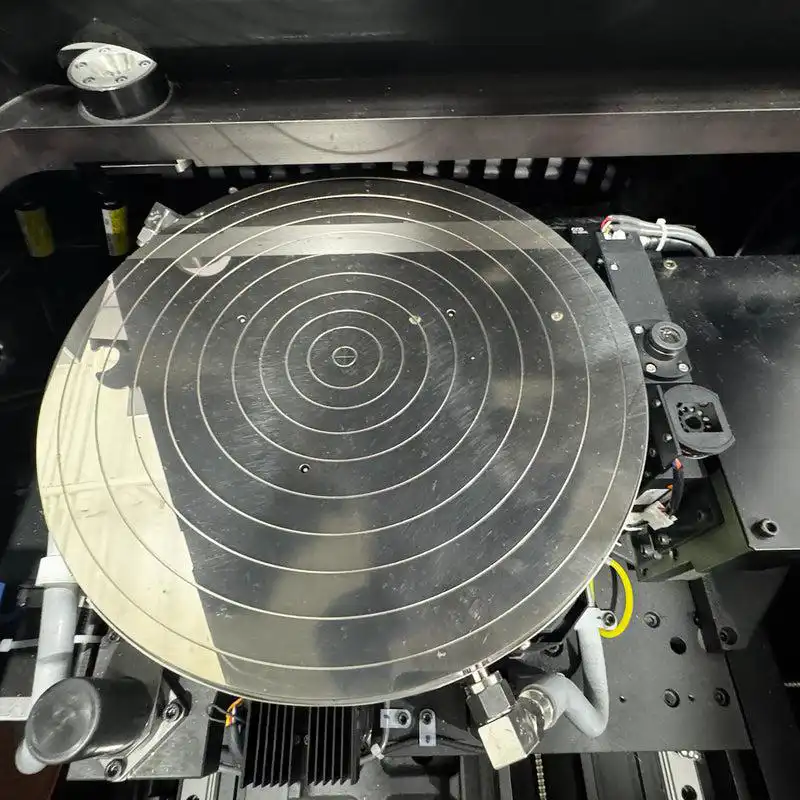
The chuck is central to the wafer-probing process because it supports the wafer during positioning and contact. Ask for clear photographs of the chuck surface and surrounding area. Look for visible damage, contamination, signs of impact, or conditions that the seller identifies as requiring repair.
Visual inspection cannot establish every relevant performance characteristic. Depending on the process, the buyer may need further checks related to flatness, temperature behavior, vacuum or retention functions, or other chuck-specific requirements. Those checks should be defined by the application and the installed configuration rather than assumed to be identical for every unit.
If the chuck is a critical part of the purchase decision, request a documented inspection or functional demonstration that addresses the buyer's acceptance criteria.
3. Review wafer handling and transfer functions
The wafer-handling system should be evaluated against the intended loading method and wafer format. Ask the seller to demonstrate the relevant transfer sequence where possible and to identify any alarms, restrictions, or known faults.
Pay attention to whether the installed loading configuration matches the buyer's requirements. A machine may have a loader arrangement that differs from the buyer's existing line, and a conversion or modification may introduce cost, lead time, and additional validation work.
If the equipment is sold without a complete demonstration, the quotation should clearly state which functions were verified, which were not tested, and which conditions remain unknown.
4. Check alignment and positioning behavior
Wafer alignment and positioning influence whether the prober can execute the intended test sequence. The buyer should ask how alignment is performed on the specific machine, what relevant cameras or alignment hardware are installed, and whether the available demonstration reflects the intended process.
Where practical, request evidence that the machine can complete a representative setup and move through the required positions without unresolved alarms. If the process depends on particular alignment marks, wafer-map information, or product-specific setup data, the buyer should clarify how those requirements will be handled.
Avoid accepting broad descriptions such as “fully functional” as the only test evidence. A useful report describes what was actually demonstrated, under what conditions, and with which configuration.
5. Inspect probe-card handling and needle-cleaning provisions
If the process requires frequent probe-card changes, establish whether the relevant handling arrangement is manual or automated and whether all required hardware is present. The availability of an automatic option should be verified on the actual machine rather than inferred from the model name.
Needle-cleaning requirements also depend on the buyer's process. Confirm which cleaning method or accessories are installed, whether they are included, and whether the method matches the intended probe-card workflow.
For both functions, the buyer should separate three questions: Is the hardware present? Does it operate? Does it suit the intended process? A positive answer to the first question does not establish the other two.
6. Verify the control system and software environment
The control computer, storage media, software version, and available recovery materials can have a significant effect on long-term support. Ask the seller to identify the current software environment and explain what documentation, backups, installation media, or recovery information will accompany the machine.
Do not assume that a working computer means the software environment is fully recoverable. Legacy industrial systems can depend on particular hardware, operating environments, configuration files, or licenses. The exact dependencies vary, so they should be confirmed for the unit being purchased.
If the machine contains customer data or a storage device that will not be supplied, clarify the boundary between excluded data and the machine's required control environment. The buyer should know whether the system can be commissioned with the delivered components and what support is available if a storage device fails later.
7. Confirm the tester interface before closing the deal
Interface compatibility should be resolved early, not left until the machine arrives. Request the details of the installed interface hardware, available cables, supported communication arrangements, and any known dependencies on the tester previously connected to the machine.
The buyer should compare these details with the actual test system and test flow. If the interface has not been demonstrated with the buyer's intended tester, the remaining uncertainty should be made explicit in the acceptance plan.
Where additional engineering is required, ask who will perform it, what information is needed, what costs are expected, and how successful integration will be established. “Can be integrated” is not a substitute for a defined integration scope.
8. Request a meaningful functional demonstration
A demonstration should be designed around the buyer's essential requirements. Depending on the machine's configuration and the agreed scope, this may include startup, loading, alignment, movement, selected option checks, alarm review, and communication with the relevant test environment.
A demonstration is most useful when the seller records the machine identity, configuration, test conditions, observed results, and any limitations. A video can provide preliminary evidence, but it may not replace an on-site inspection or a formal acceptance test when the purchase risk is substantial.
If the unit cannot be demonstrated under power, that does not automatically make the transaction impossible. It does, however, change the risk profile. The buyer should consider whether the price, contractual terms, refurbishment scope, or acceptance conditions adequately reflect the unverified functions.
How to Judge the Condition of a Used UF3000
Condition should be described in terms that help the buyer make a decision. Labels such as “good,” “excellent,” or “working condition” are too broad to serve as complete acceptance criteria.
A more useful condition report separates physical appearance, basic operation, critical function testing, configuration completeness, and documentation.
| Condition category | 請求提供的證據 | 待解決的問題 |
|---|---|---|
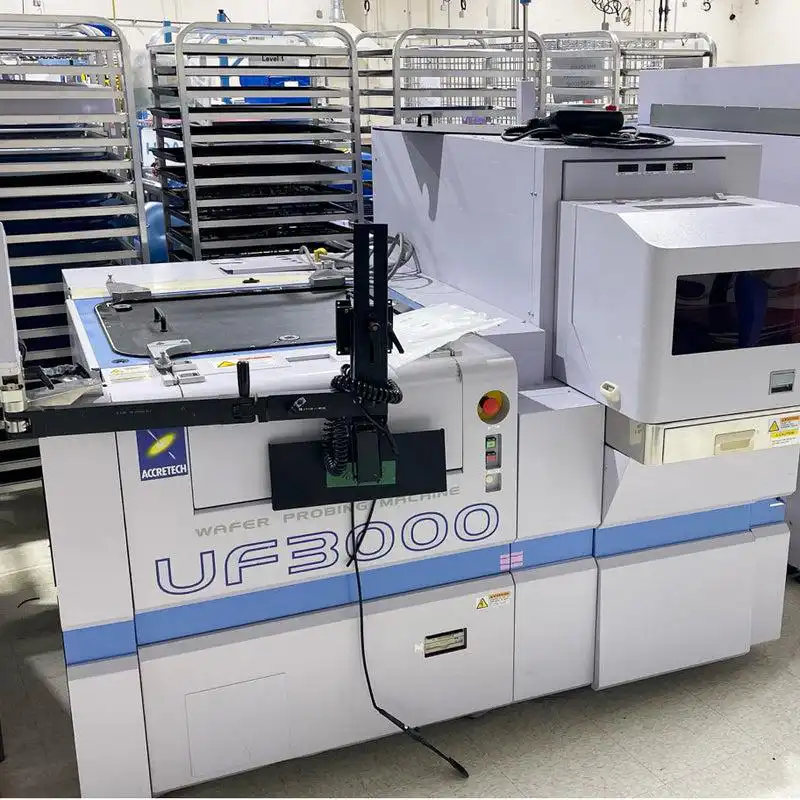
| Physical condition | Current photographs and inspection notes | Are there visible defects, missing covers, damage, or signs of poor storage? |
| Basic operation | Startup record or demonstration | Does the machine power up and reach its expected operating state? |
| Functional performance | Test report or witnessed demonstration | Which required functions were actually tested, and what were the results? |
| Configuration completeness | Option list and photographs | Are the required components installed and included in the sale? |
| Maintenance history | Available service records and replacement history | Are known faults, repairs, or recurring problems documented? |
| Support readiness | Manuals, backups, interface details, and parts information | Can the buyer install, operate, and maintain the delivered system? |
Why “powers on” is not the same as “ready for production”
A machine can power on without completing a representative probing sequence. It may also operate mechanically while a required interface, option, or application-specific function remains unverified.
For this reason, acceptance should be based on functions that matter to the buyer's process. A basic startup check may be sufficient for a machine purchased for parts, but it is not an adequate substitute for process-related testing when the buyer expects the tool to enter production.
The intended use determines the appropriate level of evidence. A research laboratory, a spare-equipment program, a refurbishment project, and a production line may reasonably apply different acceptance criteria.
Establish a written acceptance scope
Before issuing a purchase order, list the functions that must be demonstrated and the evidence required for acceptance. Define whether the test will take place at the seller's facility, at the buyer's site, or through another agreed process.
Also specify what happens if a critical function fails. Possible arrangements may include repair before shipment, a price adjustment, replacement of an agreed component, or another contractual remedy. The appropriate arrangement depends on the commercial terms and the parties' agreement.
The goal is not to eliminate every uncertainty. It is to prevent the most important uncertainties from remaining hidden until after the equipment has been delivered.
What Determines the Price of an ACCRETECH UF3000?
Used wafer-prober pricing is difficult to compare using the model name alone. A quotation may reflect the machine's configuration, condition, included accessories, seller's testing scope, refurbishment work, and delivery terms. Asking prices from different listings may therefore describe materially different packages.
A low headline price can be attractive, but it does not reveal how much work remains before the tool can be used. Likewise, a higher quotation may include inspection, selected repairs, supporting equipment, or more extensive test evidence. Those inclusions should be evaluated rather than assumed.
Configuration and completeness
The first pricing factor is whether the machine has the options required for the intended process. A unit that already matches the buyer's wafer handling, probe-card, temperature, and interface requirements may need less additional work than a unit requiring modifications.
However, more options do not automatically make a machine more valuable to every buyer. An option that is unnecessary for the target process may add little practical value, while a missing interface that is essential to the test line can become a major cost.
The relevant question is: How much of the quoted configuration can the buyer actually use?
Operating condition and inspection evidence
Condition affects both the purchase price and the risk of additional expenditure. A machine sold as-is with limited functional evidence is not equivalent to a unit that has undergone an agreed inspection and passed a documented test sequence.
Ask sellers to state the condition basis in writing. If refurbishment is offered, request a scope describing the work to be performed and the functions that will be checked afterward. Avoid paying a premium for vague assurances that a machine has been “serviced” or “fully checked” without knowing what those statements mean.
Included accessories and supporting equipment
The package may include some combination of interface cables, a chiller, handling accessories, probe-card-related hardware, cleaning components, manuals, or other items. The specific list varies by unit.
Each item should be marked as included, excluded, or separately available. The buyer should also determine whether the item is functional and compatible with the intended setup. An accessory that is physically present but unusable does not provide the same value as a verified working component.
Software, interface, and integration requirements
Integration costs can be difficult to estimate before the machine's configuration is known. A mismatch between the installed interface and the buyer's tester may require additional hardware, engineering, or validation. Missing documentation or unavailable recovery materials may also increase commissioning effort.
These costs should not be hidden inside a vague contingency allowance. Ask the seller to identify known interface dependencies and provide the information required for a technical review before the order is finalized.
Logistics, installation, and commissioning
The purchase price is only one part of the acquisition cost. Depending on the transaction, the buyer may also need to budget for de-installation, packing, export preparation, freight, insurance, customs-related charges, delivery to the facility, rigging, utilities, installation, and commissioning.
The exact cost depends on the machine's location, shipping route, delivery terms, facility conditions, and the scope of the seller's service. Obtain quotations based on the actual shipment and installation plan rather than relying on a generic percentage.
A more useful way to compare quotations
Compare each offer against the same set of requirements. For example:
| Cost or value item | Offer A | Offer B | Offer C |
|---|---|---|---|
| Machine price | Record quoted amount | Record quoted amount | Record quoted amount |
| Required configuration included | Yes / No / Unverified | Yes / No / Unverified | Yes / No / Unverified |
| Functional test evidence | Describe scope | Describe scope | Describe scope |
| Missing components | List and estimate | List and estimate | List and estimate |
| Refurbishment or repairs | Included / Excluded | Included / Excluded | Included / Excluded |
| Packing and shipping | Quote separately | Quote separately | Quote separately |
| Installation and integration | Estimate | Estimate | Estimate |
| Acceptance terms | Record conditions | Record conditions | Record conditions |
| Estimated total acquisition cost | Calculate | Calculate | Calculate |
This comparison is more informative than ranking offers by the initial asking price. It also exposes missing information that should be resolved before negotiations proceed.
Calculate the Total Cost of Ownership Before Buying
For a used UF3000, the purchase decision should account for the expected cost of making the machine operational, not merely the price shown in the listing.
A simple calculation can help identify the difference between an apparently inexpensive machine and a more complete offer.
Estimated acquisition cost = equipment price + required repairs or refurbishment + missing components + packing and logistics + installation and integration + commissioning and acceptance work.
This is a planning framework, not a fixed formula for every transaction. Some expenses may be included in the quotation, while others may be borne by the buyer or handled under separate contracts. The key is to avoid counting the same item twice or overlooking a necessary cost because it sits outside the equipment price.
Example: a lower price versus a more complete package
Imagine that two used UF3000 offers are under review.
Offer A has a lower machine price, but the interface configuration has not been confirmed, a required accessory is excluded, and the seller provides limited functional evidence. Offer B costs more, but the required configuration is documented, the relevant functions have been demonstrated, and the quotation clearly identifies what will be delivered.
Offer A may still be the better commercial choice if the buyer has the engineering resources and time to resolve the gaps. Offer B may be preferable if the cost of delay, integration uncertainty, or internal engineering work is high.
There is no universal answer. The comparison depends on the buyer's ability to handle refurbishment, the urgency of the project, the availability of technical support, and the consequences of a delayed installation.
Include the cost of uncertainty
Some risks cannot be priced precisely before inspection. A practical approach is to list unresolved items separately and assess their potential effect on the project.
For example:
If the tester interface is unverified, obtain a technical review before purchase or define an integration condition.
If a required function cannot be demonstrated, determine whether the seller can test it or whether the buyer accepts the risk.
If maintenance history is incomplete, consider the implications for support planning and spare-parts availability.
If shipping and installation responsibilities are unclear, obtain a written logistics scope.
This approach is more useful than assigning an arbitrary risk percentage to every machine. It connects each uncertainty to a specific decision, cost, or acceptance condition.
How to Buy a UF3000 Without Creating Avoidable Integration Problems
The purchase process should involve both the commercial buyer and the people responsible for operating and maintaining the equipment. Procurement may focus on price, lead time, and payment terms, while process engineering focuses on compatibility, test flow, and performance. Both views are necessary.
A machine that meets the budget but cannot be integrated into the intended test environment is not a successful purchase. Equally, a technically suitable machine may still be a poor transaction if its delivery scope, documentation, or acceptance conditions are unclear.
Prepare a technical requirement sheet
Before requesting offers, prepare a concise document describing the minimum requirements. Include wafer size, loading needs, probe-card arrangement, tester model and interface, temperature requirements, required options, facility constraints, and the acceptance evidence expected from the seller.
Separate essential requirements from preferences. This distinction helps suppliers identify suitable units and makes it easier to explain why a particular configuration is acceptable or unsuitable.
A requirement sheet also reduces repeated questions during the quotation process. Instead of exchanging messages about isolated specifications, the buyer and seller can evaluate the same set of conditions.
Ask for a serial-number-specific quotation
A useful quotation should identify the actual unit being offered and state what is included. It should also describe the condition basis, known limitations, available documentation, delivery scope, and any work that remains the buyer's responsibility.
If the seller offers several units, ask for separate configuration and condition records for each one. Do not assume that photographs or inspection results for one machine represent every unit in the same inventory group.
Agree on what “tested” means
Before payment, clarify whether the machine has been powered on, whether its main motion and handling functions have been checked, whether the buyer's required options have been demonstrated, and whether tester communication has been verified.
These are different levels of testing. The purchase agreement should describe the level actually offered and any exceptions. If a specific function is essential, name it directly rather than relying on a broad phrase such as “tested working.”
Keep technical and commercial records aligned
The final configuration sheet, quotation, purchase order, packing list, and acceptance plan should describe the same machine and package. If an accessory is added or removed during negotiation, update the documents accordingly.
This step may seem administrative, but it protects both sides. It reduces the chance of disputes over a missing component, an assumed software option, or a test function that was discussed informally but never included in the agreed scope.
Choosing a Supplier for a Used ACCRETECH UF3000
The supplier's role is not limited to locating a machine. A capable supplier should help the buyer establish what is being offered, identify gaps in the available information, and clarify the boundary between verified condition and untested claims.
That does not mean every supplier can provide every service. Some sell equipment as-is; others offer inspection, refurbishment, or assistance with logistics. The buyer should compare the actual service scope rather than assuming that all used-equipment offers include the same support.
Look for configuration transparency
A reliable offer should make it possible to identify the unit, review its configuration, and understand which components are included. If a key option cannot be verified, the supplier should say so clearly.
Be cautious when a listing relies on generic product language but provides little information about the specific machine. The more a buyer's process depends on particular options, the more important unit-level evidence becomes.
Evaluate the quality of communication
Technical questions are part of the purchasing process. A supplier should be able to respond clearly to requests about machine identity, available photographs, testing scope, missing parts, and delivery conditions—or explain when a question requires confirmation from a technician.
No supplier can reasonably guarantee every unknown characteristic of a used tool without inspection. What matters is whether uncertainties are handled transparently and whether the buyer receives enough information to make a reasoned decision.
Clarify post-sale responsibilities
Before ordering, determine who is responsible for packing, shipping, installation support, commissioning, and any agreed repairs. Confirm what documentation will be delivered and how any discrepancy against the agreed configuration will be handled.
If the buyer's internal team will perform installation and integration, make sure it receives the technical information required for that work. If the supplier will provide support, specify the scope and limits rather than relying on informal expectations.
As a manufacturer and supplier of used semiconductor equipment, we consider configuration clarity and realistic condition information essential to the buying process. The objective is to help buyers assess whether a particular machine matches their requirements—not to suggest that every used unit is automatically ready for every production line.
When Should You Walk Away From a UF3000 Offer?
A used machine does not need to be perfect to represent good value. Some buyers deliberately purchase equipment for refurbishment, parts recovery, or applications that do not require every option. The issue is whether the risks are understood and priced appropriately.
Certain gaps, however, should be resolved before a buyer commits to a production-critical purchase.
The machine identity cannot be established
If the serial number, configuration, and available records cannot be connected to the quoted unit, the buyer may have difficulty confirming what will actually be delivered. Request clarification before proceeding.
A critical option is claimed but cannot be verified
If the process depends on a specific wafer-handling arrangement, temperature option, interface, or other function, an unsupported claim should not be treated as confirmed. Ask for evidence, a demonstration, or an explicit contractual condition.
The seller cannot explain the testing scope
A statement that the machine is “working” is not sufficient if the buyer needs to know whether particular functions have been demonstrated. If no evidence is available, the buyer should understand the resulting risk and decide whether the commercial terms reflect it.
The integration path is unknown
If the buyer cannot establish how the prober will connect to the intended tester and process environment, the purchase may create an avoidable engineering problem. Obtain a compatibility review or define the remaining work before the order is finalized.
The delivered package is not clearly defined
Unclear responsibility for accessories, supporting equipment, software materials, shipping, or installation can turn a seemingly straightforward purchase into a dispute. The scope should be written down and agreed by both parties.
A Practical Pre-Purchase Checklist for ACCRETECH UF3000 Buyers
Use this checklist to organize the final review. Items marked “not applicable” should be excluded from the acceptance requirements rather than left ambiguous.
The model and serial number match the quoted unit.
The required wafer size and handling arrangement are confirmed.
The installed chuck and its condition have been reviewed.
Required alignment and positioning functions have been identified.
Probe-card handling requirements have been checked.
Needle-cleaning requirements and included accessories have been clarified.
Temperature requirements and supporting equipment have been verified, if needed.
The tester model and interface arrangement have been reviewed for compatibility.
The software environment and available recovery documentation are understood.
The seller has identified which functions were tested and which remain unverified.
Current photographs and available maintenance records have been reviewed.
Missing components, refurbishment, and integration work have been costed.
Packing, shipping, insurance, and delivery responsibilities are clear.
Installation and commissioning responsibilities are documented.
Acceptance conditions and remedies for material discrepancies are agreed.
The final quotation and purchase order describe the same machine and package.
The checklist should be adapted to the application. A buyer purchasing a tool for parts recovery will not need the same functional evidence as a buyer expecting immediate production use. The important point is to define the required level of completeness before the transaction rather than after delivery.
Frequently Asked Questions About Used ACCRETECH UF3000 Wafer Probers
What should buyers check before purchasing a used ACCRETECH UF3000?
Buyers should verify the exact machine configuration, wafer-handling arrangement, chuck condition, alignment functions, probe-card setup, tester interface, software environment, maintenance information, and available functional test evidence. They should also calculate the cost of missing components, refurbishment, shipping, installation, and commissioning. The priority is to establish whether the specific unit can support the intended test process.
Does every ACCRETECH UF3000 have the same configuration?
No. Used listings can describe different installed options and supporting equipment. Buyers should confirm the configuration of the actual unit, including wafer handling, chuck type, interface hardware, temperature-related options, probe-card functions, and included accessories where relevant. The model name alone is not a complete configuration record.
Can a used UF3000 handle 300 mm wafers?
UF3000 listings commonly describe 300 mm configurations, but the buyer should still verify the wafer-handling and chuck arrangement of the specific unit. If another wafer size or a particular loading workflow is required, confirm the installed hardware and any changeover requirements before purchase.
Is a used UF3000 suitable for production?
It can be suitable when the configuration matches the application, critical functions have been verified to the required level, and the buyer has a workable installation and support plan. A listing or successful power-on does not by itself prove production readiness. The appropriate acceptance test depends on the buyer's process and risk tolerance.
How much does a used ACCRETECH UF3000 cost?
There is no single reliable price for every unit. Pricing depends on configuration, condition, included accessories, testing and refurbishment scope, delivery terms, and the amount of integration work required. Buyers should compare the total acquisition cost rather than the asking price alone and obtain a quotation for the specific machine.
What documents should a seller provide?
Useful records include the machine's model and serial number, configuration or option list, current photographs, available maintenance and repair history, software and interface information, a list of included accessories, and a description of any functional testing performed. The available documentation varies by unit, so the buyer should identify which records are essential for the intended application.
Should buyers choose the lowest-priced unit?
Not automatically. A lower-priced machine may require missing options, additional testing, refurbishment, or engineering work. It may still be a sensible choice for a buyer with the appropriate resources. The better decision is the offer that provides the right combination of configuration, verified condition, total cost, delivery scope, and acceptable risk.
Is a functional demonstration necessary?
The required level of demonstration depends on how the machine will be used. For a production-critical purchase, the buyer should define and verify the functions that matter to the process. If a demonstration is unavailable, the unverified functions should be documented and reflected in the commercial terms and acceptance plan.
What is the difference between “as-is” and a tested used prober?
An as-is sale generally places more responsibility on the buyer to assess and manage the equipment's condition, subject to the agreed contract. A tested unit should have a defined testing scope, but the word “tested” is meaningful only when the seller explains what was checked and what the results were. Buyers should not assume that either label guarantees a particular level of performance.
What should be included in the quotation?
The quotation should identify the specific machine, describe the confirmed configuration and included accessories, state the condition and testing basis, list known exclusions, and clarify packing, shipping, installation, and support responsibilities. Any essential acceptance conditions should be documented before the purchase order is issued.
最終考慮
An ACCRETECH UF3000 wafer prober should be evaluated as a specific piece of used production equipment, not as a model name detached from its configuration and history. The most useful buying decision comes from connecting the intended test process to verifiable details about the actual machine.
Start with wafer and tester compatibility. Confirm the options that matter to the application. Review the chuck, wafer handling, alignment, control environment, and available test evidence. Then compare offers using the full acquisition cost, including missing components, integration, logistics, and commissioning.
A well-documented used unit may provide a practical route to obtaining the required wafer-probing capability. But its value depends on fit, condition, and the buyer's ability to support it—not simply on whether the listing says UF3000.
For buyers sourcing used semiconductor equipment, the strongest purchasing process is one that resolves critical technical questions before price negotiations are complete. A clear configuration record, a defined testing scope, and written delivery and acceptance terms make it easier to compare offers and reduce avoidable surprises after the machine arrives.