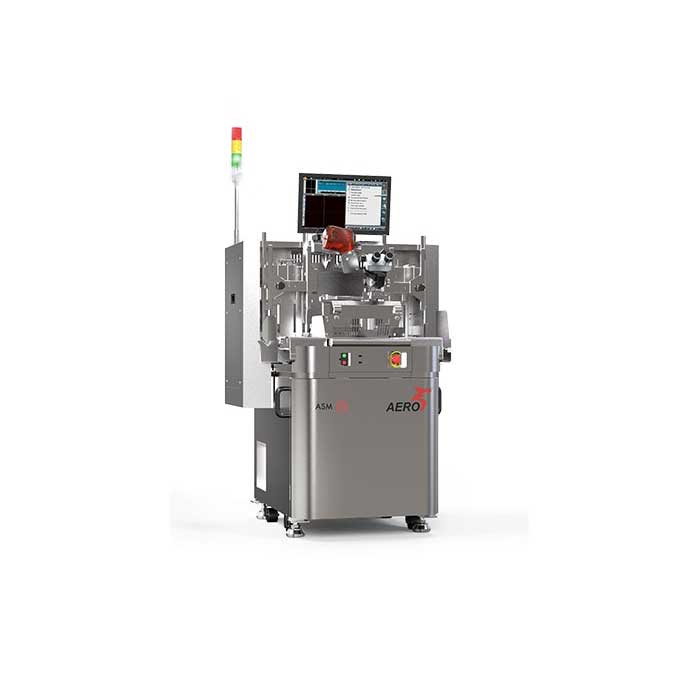
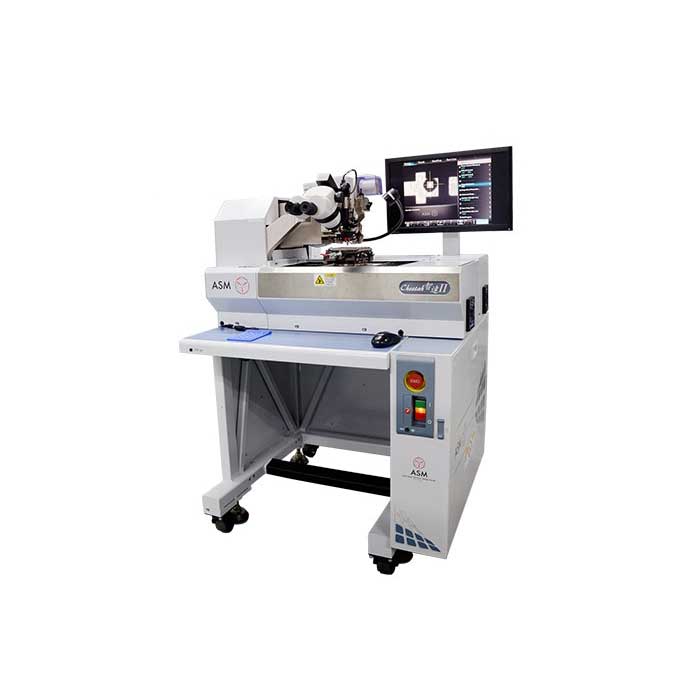
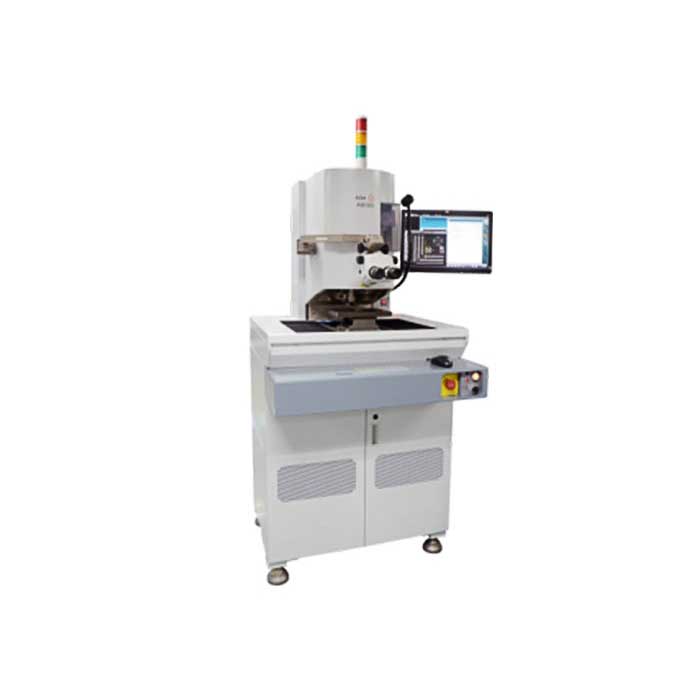
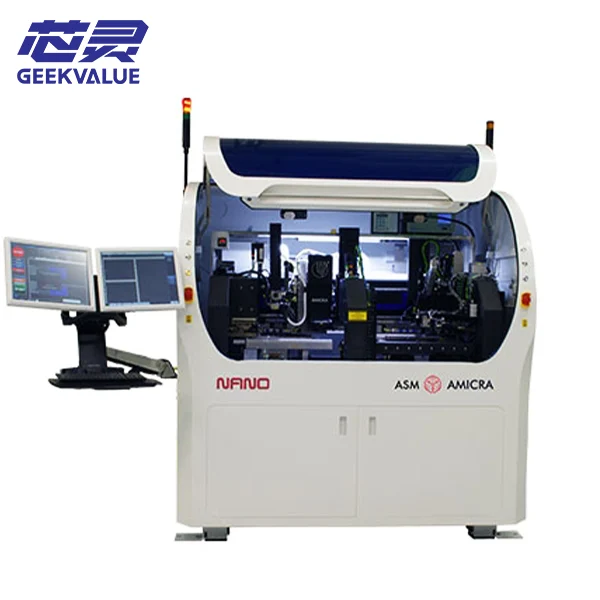
The ASMPT SD8312 is a specialized automatic soft solder die bonder developed for leadframe-based power semiconductor production. ASMPT identifies SOT223, TO-92, TO-220 and DPAK matrix as representative package applications.
For a used SD8312, the model name and 12-inch wafer capability are only the starting point. The real value of the machine depends on whether its solder-process hardware, thermal system, oxygen control, leadframe handling and product tooling remain complete and usable.
A machine that powers on and moves normally has not yet demonstrated a working soft solder process. Heating, atmosphere control, solder application and bonding must operate together under representative production conditions.
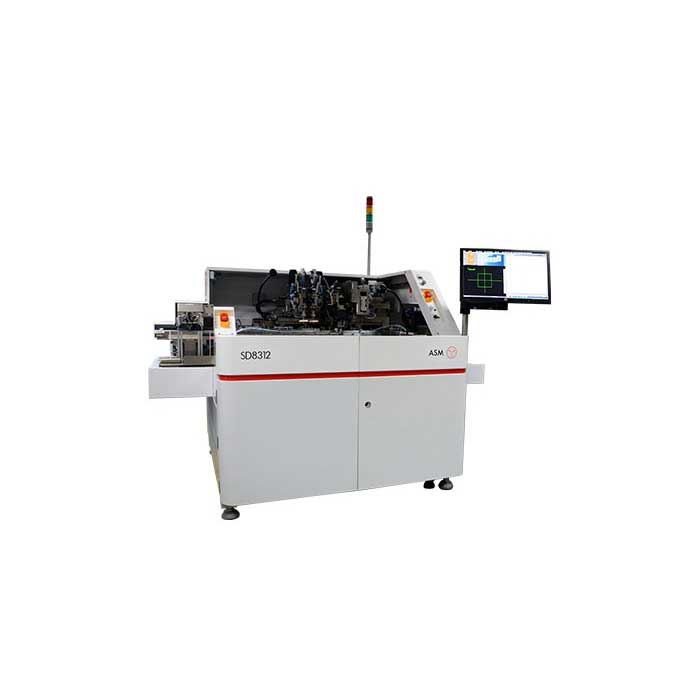
Independent Assessment of a Used SD8312
| More Suitable When | Higher-Risk or Incorrect Fit When |
|---|---|
| The factory already operates a qualified soft solder die attach process. | The intended process uses epoxy, silver sintering or another attach material. |
| The product uses compatible leadframe-based power packages. | The product uses DBC, AMB, ceramic substrates or large power-module carriers without confirmed support. |
| The available workholder and handlers match the actual leadframe drawing. | The machine is missing product tooling or requires a major material-handling conversion. |
| Original recipes, software backups or previous-product information are available. | No process files, maintenance information or qualified setup can be supplied. |
| The thermal and oxygen-control systems can be tested. | The only evidence available is a power-on or dry-cycle video. |
The SD8312 can be a practical choice for expanding or replacing an established soft solder line. It carries more risk when introduced into a completely new process without matching tooling, recipes, technical support or representative test material.
Published Features and What They Do Not Prove
| Published Feature | What It Means | What Must Be Verified |
|---|---|---|
| 12-inch wafer handling | The platform was designed for 12-inch wafer processing. | Confirm the installed wafer loader, wafer table, frame format, expander and ejector configuration. |
| High-density leadframe handling | The machine supports volume processing of compatible leadframe layouts. | Compare the actual strip length, width, thickness, matrix layout and indexing requirement. |
| Universal workholder design | The platform can be configured for different products. | It does not eliminate the need for product-specific fixtures, clamps and change parts. |
| High-speed performance | The platform was developed for volume production. | ASMPT does not publish one universal production rate for every product. Actual output requires a representative process test. |
| Oxygen-level control | The solder process includes controlled-atmosphere capability. | Check sensors, calibration, gas lines, valves, chamber sealing, exhaust and oxygen stability during operation. |
| AB die handling capability | This is listed by ASMPT as a platform capability. | The official term alone is not enough to confirm a specific die structure or product. Verify the installed configuration and machine documentation. |
| Machine dimensions | Historical data lists approximately 1,950 × 1,600 × 1,400 mm. | Confirm the physical unit, auxiliary modules, service clearance and shipping dimensions. |
Why Oxygen Control Matters on a Used Machine
Oxygen control is not simply an additional machine feature. It is part of the soft solder process and can directly affect wetting, oxidation and bond consistency.
A used SD8312 should not be described as having a verified atmosphere-controlled process unless the following have been checked:
Oxygen sensor response and calibration status
Process-gas supply and pressure requirements
Gas lines, valves, regulators and connections
Chamber or process-area sealing condition
Exhaust and ventilation connections
Ability to reach and maintain the required oxygen level
Alarm response when the oxygen level moves outside the set range
A normal value displayed on the control screen does not by itself prove that the complete atmosphere-control system is working correctly.
Soft Solder Process Compatibility
The SD8312 should not be selected only by package name. Two products using the same TO or DPAK package family may still require different solder materials, temperature profiles, leadframe finishes and tooling.
| Die | Length, width, thickness, backside metallization and allowable pickup area |
|---|---|
| Wafer | Wafer diameter, frame format, tape and wafer-map requirement |
| Leadframe | Strip dimensions, matrix layout, surface finish and indexing method |
| Solder Process | Solder alloy, solder form, application method and required temperature profile |
| Atmosphere | Process gas, target oxygen range and exhaust requirements |
| Bond Quality | Bond-line thickness, die position, void criteria and die-shear requirement |
| Production | Required output, inspection scope and acceptable changeover time |
If the production process uses epoxy rather than soft solder, the ASMPT AD8312Plus epoxy die bonder is the more relevant platform to evaluate.
Three Levels of Used SD8312 Testing
1. Machine Identity and Completeness
Verify the SD8312 model, serial number and manufacturing year
Record every installed process and material-handling module
List workholders, collets, ejector tools and change parts
Confirm software version, licenses and available backups
Identify missing components and previous repairs
2. Functional Testing
Start the system and record unresolved alarms
Test wafer loading, wafer-table movement and ejector operation
Test leadframe loading, indexing and unloading
Check the bond head, vision cameras and pattern recognition
Check heating, temperature sensing and control response
Check oxygen measurement, gas control and exhaust functions
3. Representative Process Testing
Use the intended or comparable wafer, die and leadframe
Install the required workholder and die-handling tools
Run the correct solder material and atmosphere
Record thermal stability and oxygen level during production
Measure placement, bond-line thickness and actual output
Perform void inspection or die-shear testing when required by the acceptance criteria
The third level provides the most useful evidence. A dry-cycle video can confirm mechanical operation, but it cannot establish solder wetting, void performance or bond strength.
What to Check Before Buying a Used SD8312
Complete machine nameplate and previous production application
Wafer loader, wafer table, expander and ejector configuration
Leadframe input, workholder, indexing and output modules
Solder feeding or application hardware
Heating stages, temperature sensors and controllers
Oxygen sensors, gas components and exhaust connections
Bond head, collets, ejector needles and product tooling
Vision cameras, lighting and enabled inspection functions
Software, process recipes, licenses and machine backups
Completed repairs, known faults and unavailable modules
Descriptions such as “complete,” “tested” or “in good condition” are not sufficient unless the quotation defines exactly which modules and process functions were inspected.
Used ASMPT SD8312 Availability
Availability and price depend on the year, installed process modules, material-handling configuration, included tooling and completed test scope of the actual machine.
Other used ASM and ASMPT die bonders should be considered when an available SD8312 does not match the required attach material, leadframe or production process.
Availability: Confirm against the physical machine
Configuration: Supplied with an itemized module and tooling list
Condition: Defined by the completed inspection and testing scope
Price: Quoted according to the actual equipment and included components
Export: International packing and shipment can be arranged
Send the package type, die dimensions, wafer format, leadframe drawing, solder material, atmosphere requirement, target output and destination through our equipment inquiry form.