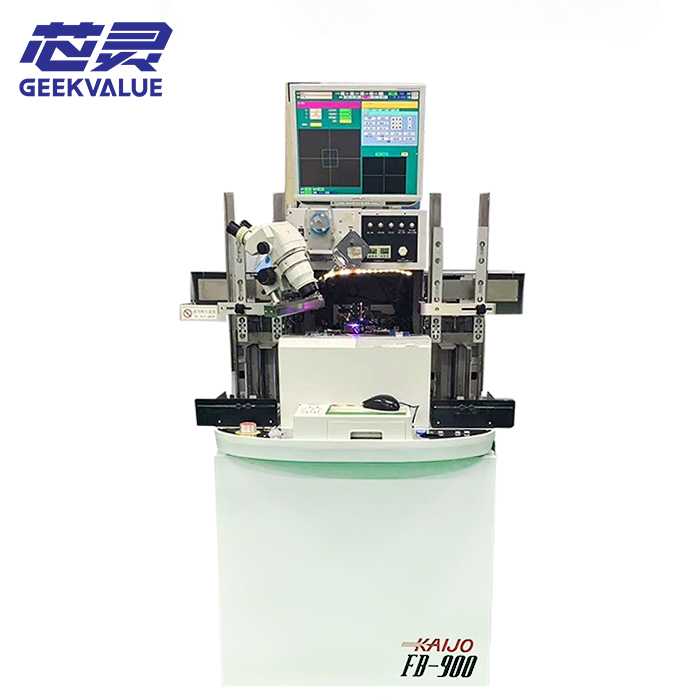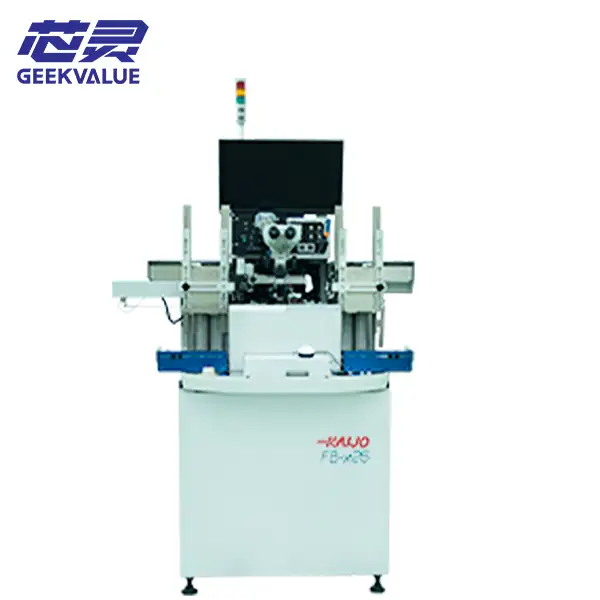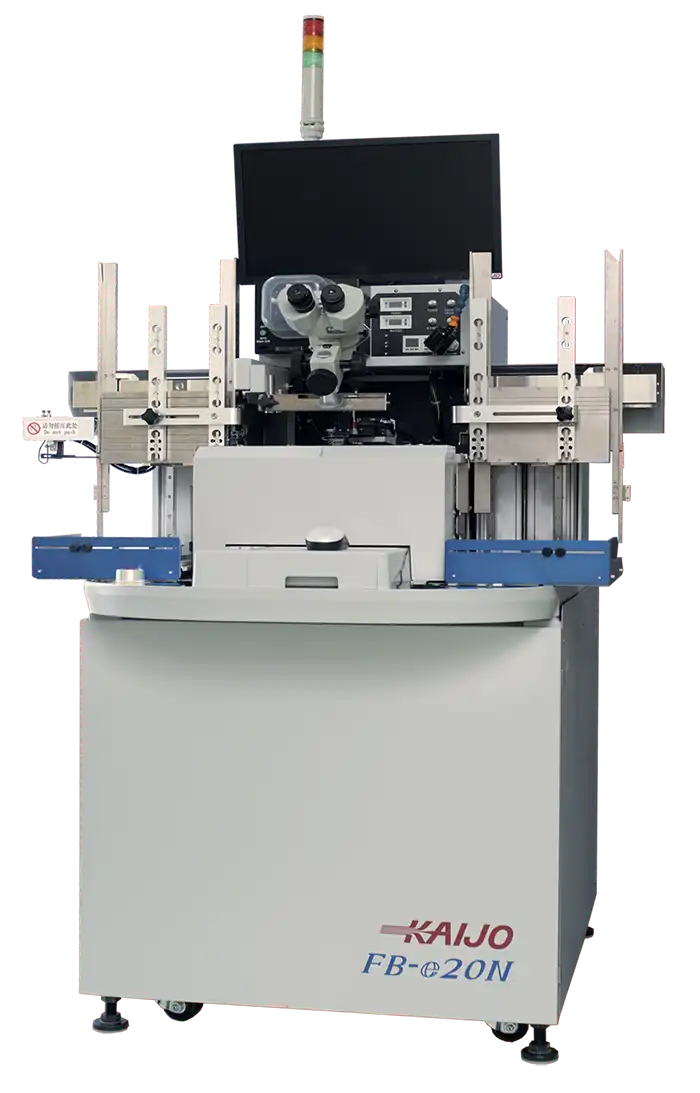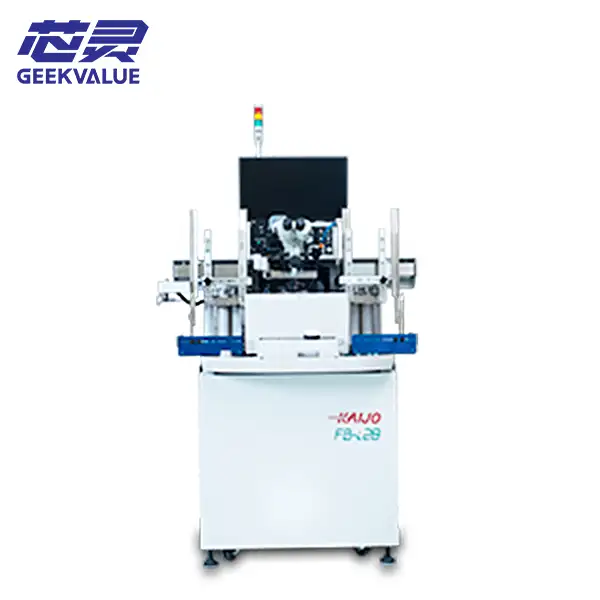
The KAIJO FB-i28 is a fully automatic thermosonic ball bonder. Its bonding head combines a rigid mechanical arm with a lightweight ultrasonic transducer, helping maintain precise tool movement and stable bonding performance. This makes the machine suitable for evaluating fine-pitch interconnects and IC packaging applications with demanding wire loop requirements.
The FB-i28 features a lightweight bonding head that reduces moving mass without compromising structural rigidity. Its specified bonding accuracy is 3σ ≤ 2.0 μm, excluding self-learning accuracy. This figure provides a useful reference when assessing pad positioning requirements, although actual performance depends on the package type, machine configuration, and process conditions.
Wire loop geometry affects package clearance, wire spacing, and the available space around adjacent structures. The FB-i28 supports applications involving short or long wire loops, fine-pitch bonding pads, and overhang structures. For wire material compatibility, the machine supports gold wire as standard, while copper wire and silver alloy wire processing depend on the installed options. Before selecting the FB-i28 for a specific assembly process, buyers should verify wire diameter compatibility, capillary requirements, and package specifications.

KAIJO FB-i28 Technical Specifications
| Specification | Details |
|---|---|
| Equipment Type | Fully Automatic Wire Bonder |
| Bonding Method | Thermosonic Ball Bonding |
| Bonding Accuracy | 3σ ≤ 2.0 μm* |
| Bonding Area | 56 × 88 mm |
| Specified Bonding Time | 45 ms per wire** |
| Workpiece Dimensions | 30–100 mm wide; 90–300 mm long |
| Machine Weight | Approx. 550 kg |
Excludes self-teach accuracy; additional accuracy-related options may be required for certain products.
Actual bonding time and throughput vary with package design, process settings, and operating conditions. Confirm specifications against the documentation for the individual machine.
Used KAIJO FB-i28: What to Check
When purchasing a used FB-i28, check the bonding head, motion system, installed options, software condition, and maintenance history. A bonding test using the intended wire material and package is recommended to verify positioning consistency, bond quality, and loop formation.
For availability and pricing, provide your required wire material, package type, and production specifications so the machine configuration can be assessed against your application.