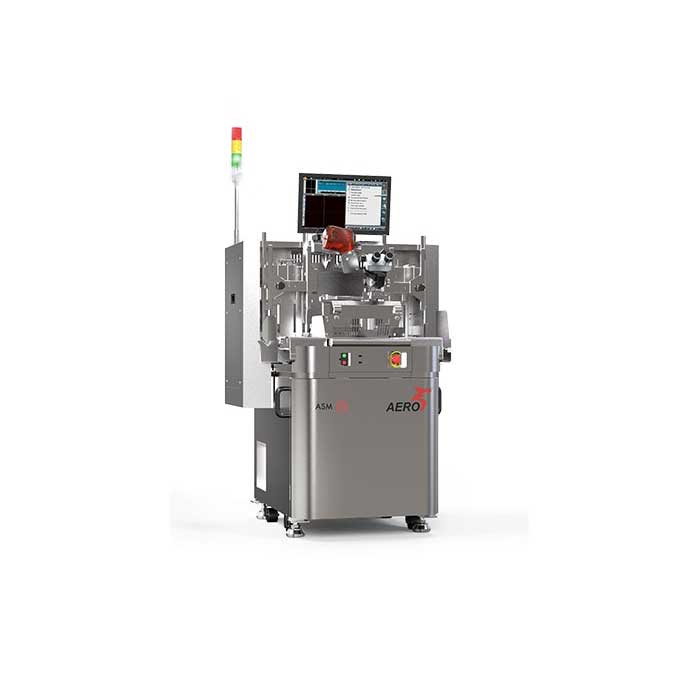
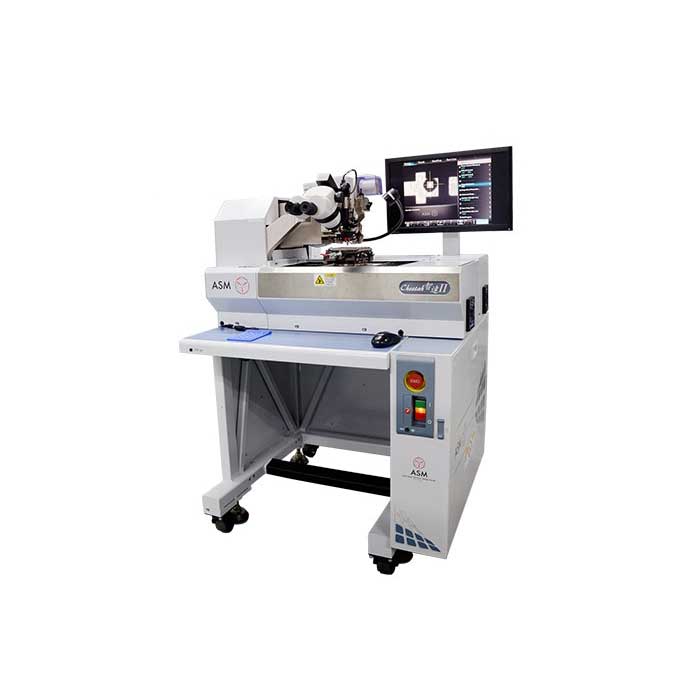
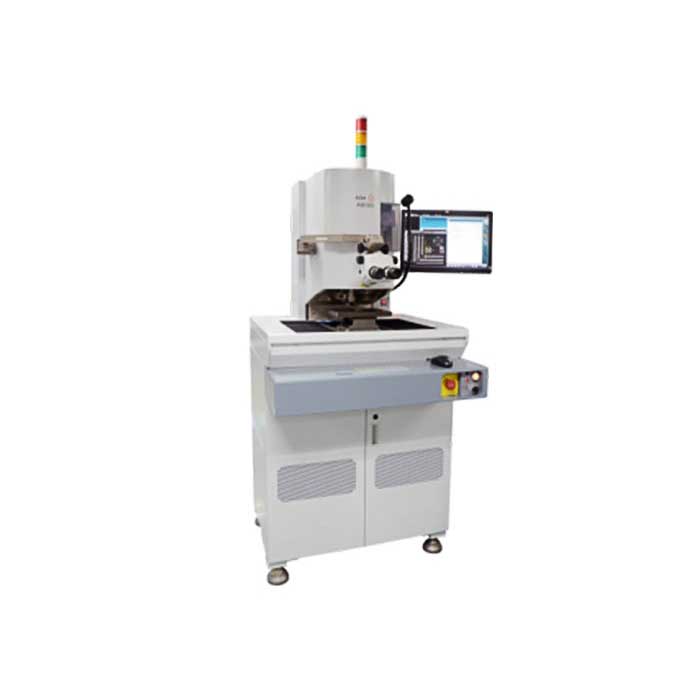
The ASMPT AD211Plus-II is a high-precision heated-collet eutectic die bonder. ASMPT publishes XY placement accuracy of ±7 μm @ 3σ together with heated-collet technology and H₂ forming-gas handling.
For a used AD211Plus-II, successful startup and axis movement provide limited evidence. The value of the machine depends on whether placement, collet temperature, forming-gas delivery and the complete eutectic profile can operate together without unacceptable voiding, oxidation or thermal damage.
The machine should therefore be evaluated as a thermal process system, not only as a precision pick-and-place platform.
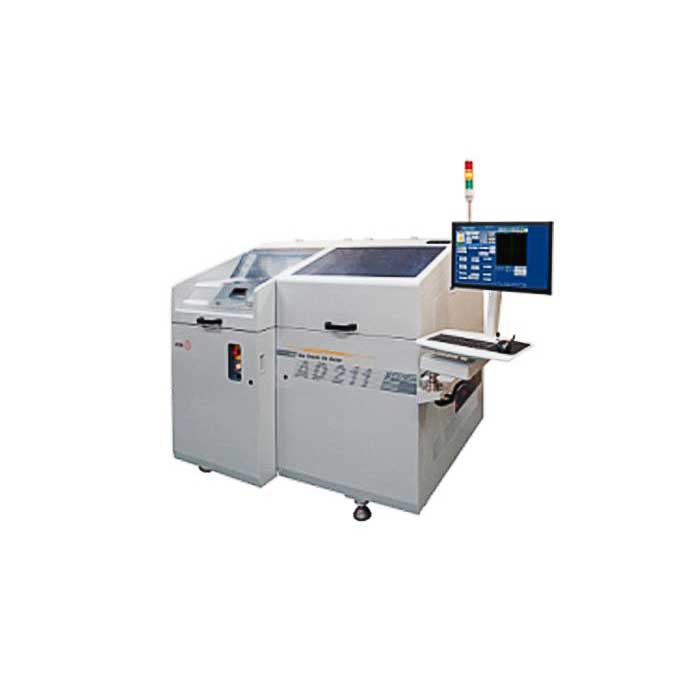
Independent Assessment of a Used AD211Plus-II
| A Relevant Choice When | A Higher-Risk Choice When |
|---|---|
| The product requires heated-collet eutectic die attach. | The intended process is epoxy, soft solder, silver sintering or standard flip chip. |
| The published ±7 μm placement range is compatible with the product. | The assembly requires approximately ±3 μm or sub-micron alignment. |
| The die metallization, eutectic material and substrate are already qualified. | The process materials and required thermal profile are still undefined. |
| Compatible heated collets, substrate fixtures and process recipes are available. | The machine is missing heated-collet tooling or original thermal-process components. |
| The factory can support the required forming gas and exhaust conditions. | The destination facility cannot safely provide the specified gas environment. |
| A representative thermal-process test can be completed before acceptance. | The only available evidence is a cold placement or power-on video. |
The AD211Plus-II is easier to justify when it will reproduce an established eutectic process. It carries substantially more integration risk when the product, metallization, gas conditions and thermal recipe must all be developed after the machine is purchased.
Published AD211Plus-II Data
| Item | Published Information | Used-Machine Evidence |
|---|---|---|
| Manufacturer | ASM / ASMPT | Confirm through the machine nameplate |
| Complete Model | AD211Plus-II | The “-II” suffix must appear on the machine or its original documentation |
| Equipment Type | Heated collet eutectic die bonder | Confirm the complete heated-collet and process configuration |
| XY Placement | ±7 μm @ 3σ | Verify with measured placements under representative process conditions |
| Die Rotation | ±1° @ 3σ for die size above 0.5 mm | Confirm die size and measure rotation on the intended product |
| Thermal Technology | Patented heated-collet technology | Inspect the heater, sensor, controller, wiring and collet tooling |
| Process Atmosphere | H₂ forming-gas handling | Check gas components, interlocks, exhaust and process stability |
| Tip-Tilt Alignment | Optional automatic tip-tilt alignment | Confirm the hardware, software and calibration status |
| Thermal Management | Optional smart heating and anti-baking control | Confirm that the option is installed and operational |
| Temperature Health Check | Optional heated-collet temperature monitoring | Confirm sensor operation, calibration and alarm response |
ASMPT states that all performance is package- and material-dependent. The published figures must not be presented as the measured result of an individual used machine without supporting test data.
Void Control Is a Process Result, Not a Machine Guarantee
ASMPT identifies void control as a key capability of the AD211Plus-II. On a used machine, this does not mean that every product will automatically achieve an acceptable void level.
Eutectic bond quality also depends on:
Die backside metallization
Substrate or carrier surface finish
Eutectic alloy or preform condition
Surface cleanliness and oxidation
Collet temperature and temperature uniformity
Heating rate, contact time and cooling profile
Bond force and die movement during contact
Forming-gas composition and process flow
Collet-to-substrate parallelism
Fixture planarity and thermal expansion
A void result obtained with one die, alloy and substrate cannot be transferred directly to another product. Acceptance criteria and inspection methods should be agreed before testing.
The Heated Collet Is the Critical Used-Machine Component
The heated collet is both a handling tool and part of the thermal process. Its condition should be assessed more carefully than a standard room-temperature bond tool.
| Collet Identity | Part number, dimensions, die-contact surface and compatible die range |
|---|---|
| Heating Element | Resistance, response, wiring and insulation condition |
| Temperature Sensor | Sensor type, response, calibration and signal stability |
| Temperature Uniformity | Difference between the displayed value and the actual collet surface temperature |
| Mechanical Condition | Wear, contamination, flatness, damage and mounting repeatability |
| Vacuum Performance | Pickup stability at room temperature and process temperature |
| Thermal Expansion | Placement change between cold and heated operating conditions |
A cold pickup-and-placement test cannot reveal temperature drift, heater instability or hot-vacuum problems. The collet must be evaluated at the intended process temperature.
Forming-Gas Capability Must Include the Complete Safety Chain
H₂ forming-gas handling should not be described as operational simply because gas connections are visible on the machine.
The review should include:
Gas inlet and required supply specification
Regulators, valves, tubing and fittings
Flow monitoring and control components
Leak condition and pressure stability
Process chamber or local gas delivery components
Exhaust and ventilation requirements
Gas-related alarms and safety interlocks
Purging and shutdown sequence
Compatibility with the destination factory’s gas system
The supplied gas concentration, operating procedure and safety requirements should follow the exact machine documentation and local facility rules. These values should not be estimated from a generic eutectic process.
Optional Functions Can Materially Change Machine Value
Auto Tip-Tilt Alignment
The optional tip-tilt system can improve collet-to-substrate contact, but it must be confirmed physically. The quotation should state whether the option is installed, enabled, calibrated and tested.
Smart Heating and Anti-Baking Control
This option is relevant when excessive thermal exposure may damage the product or create material degradation. Confirm the installed heating hardware, controller, software and available recipes.
Heated-Collet Temperature Health Check
This function can help detect abnormal collet temperature behavior. It does not replace external calibration or a representative process test.
These options should never be copied from the ASMPT brochure into a used-machine listing unless they can be identified on the actual equipment.
How to Test a Used AD211Plus-II
The test should be performed in stages, with cold mechanical operation separated from heated process verification.
Cold Functional Check
Start the control system and record unresolved alarms
Home and operate the wafer, die-pick and bonding axes
Check cameras, lighting and pattern recognition
Check substrate loading and positioning
Confirm collet vacuum and die release
Record software, licenses and available machine backups
Heated Process Check
Raise the collet to the required process temperature
Compare displayed and independently measured temperature
Check temperature stability over time
Operate the forming-gas system and safety interlocks
Check hot pickup, placement and vacuum performance
Monitor placement change caused by thermal expansion
Representative Eutectic Test
Use the intended or technically comparable die and substrate
Use matching metallization and eutectic material
Run the required temperature, force, time and gas profile
Measure XY position and die rotation
Inspect bond coverage and voiding
Perform shear testing when required by the acceptance plan
Record rejected units and actual production output
The machine should only be described as process-tested when the heated collet, forming gas, eutectic material and representative product have been operated together.
AD211Plus-II, AD280 Plus or SD8312?
| Model | Primary Strength | More Relevant When |
|---|---|---|
| ASMPT AD211Plus-II | Heated-collet eutectic bonding with ±7 μm @ 3σ placement | The process requires localized heated-collet eutectic bonding and forming gas |
| ASMPT AD280 Plus | ±3 μm @ 3σ placement and flexible material handling | Placement accuracy and optical alignment are more important than heated-collet eutectic processing |
| ASMPT SD8312 | 12-inch soft-solder processing for high-density power-device leadframes | The product uses a volume soft-solder leadframe process rather than heated-collet eutectic bonding |
These machines should not be selected only by the word “eutectic” or “solder.” The actual attach material, heating method, substrate format, atmosphere and placement requirement determine which platform is appropriate.
Used ASMPT AD211Plus-II Availability
The price and practical value of a used AD211Plus-II depend heavily on the heated-collet condition, forming-gas system, installed thermal options, vision system, software, substrate handling and included product tooling.
Exact model: Confirm AD211Plus-II from the nameplate
Condition: Separate cold functional testing from heated process testing
Configuration: Provide an itemized list of standard and optional components
Process evidence: State the material, temperature and gas conditions used for testing
Price: Quote according to the physical machine and included tooling
Export: International packing and shipment can be arranged
Send the die dimensions, backside metallization, substrate drawing, eutectic material, required temperature profile, forming-gas requirement, placement tolerance and destination through our equipment inquiry form.