Semiconductor Equipment Service
Heater Repair
& Refurbishment
Semiconductor ceramic and pedestal heater repair support. Failed power connections, damaged ceramic surfaces and uneven heating can drive chamber downtime. GK-SEMI reviews the original heater assembly for targeted repair or refurbishment, with matched sourcing when a safe recovery is not appropriate.
Fault Analysis
Heater Failures Worth Repairing
The right service depends on whether the defect is electrical, mechanical or thermal. A working resistance reading alone does not confirm that the heater will perform correctly in its chamber.
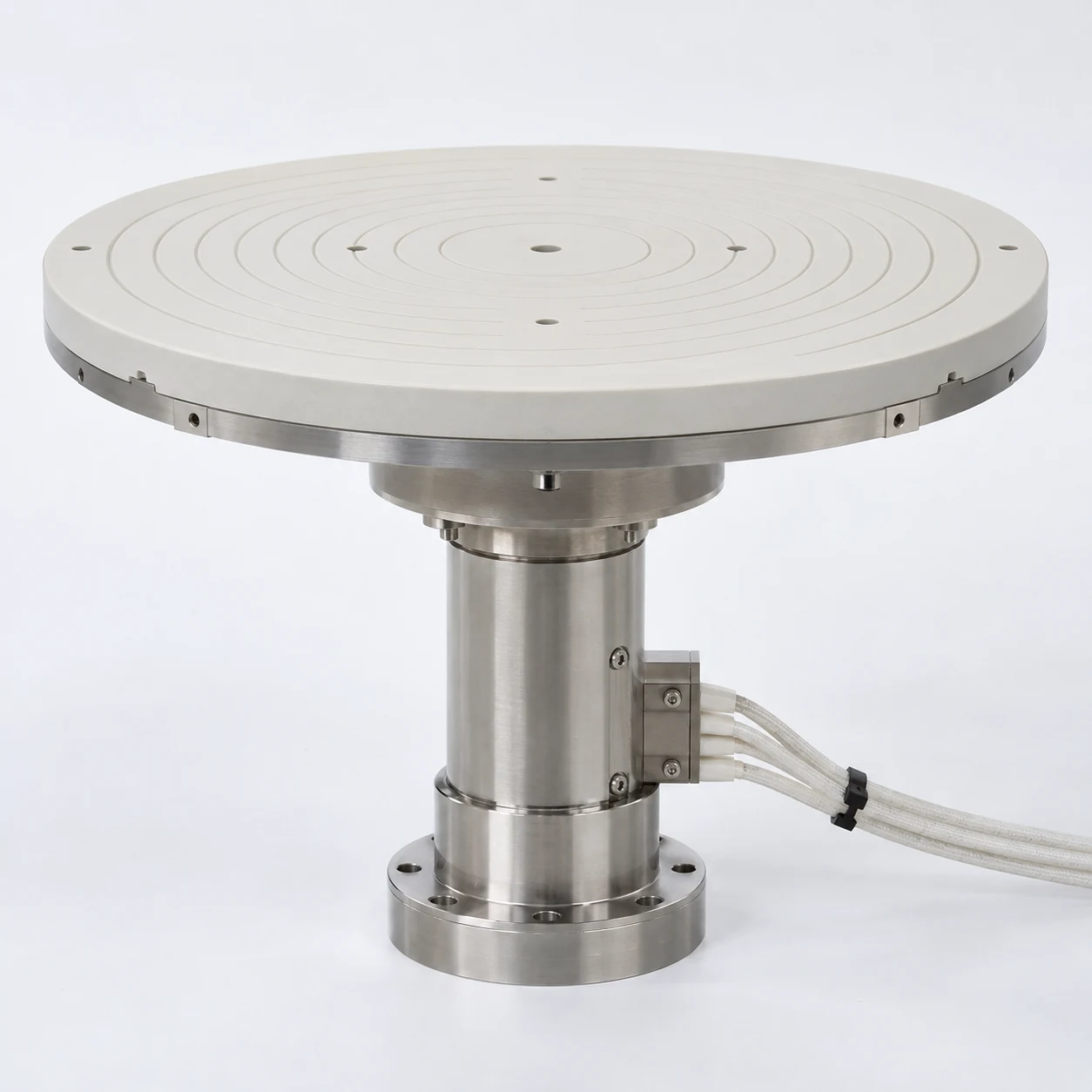
01 / Open Circuit & Pin Failure
Typical failure: Thermal cycling can affect pin joints or heater circuits, leading to an open, short or unstable zone.
Repair focus: Inspect the electrical joint and heater element; restore accessible power connections where the construction and joining method permit a reliable repair.
02 / Thermal Uniformity Loss
Possible contributors: Zone faults and surface deterioration can disrupt heating; the actual cause depends on the assembly.
Repair focus: Assess zone electrical behavior and wafer-pocket condition. Surface work or thermal verification is selected only where appropriate to the original design.
03 / Ceramic Surface Damage
Root Cause: Wafer handling impacts or thermal shock induce micro-fractures in the ceramic body, risking particle generation.
Our Fix: We evaluate the depth of the damage. If structurally sound, we clean and refinish; if not, we source a replacement.
Service Levels
Repair by Damage Type
A pedestal heater with an accessible electrical connection fault is different from a fractured ceramic body or a failed embedded element. The repair extent is set by inspection and the part design.
Electrical Connections
Inspect power pins, feedthroughs, resistance and insulation condition. Joining or re-brazing is considered only for assemblies where it is technically suitable.
- Connection repair where technically suitable
- Element and insulation assessment
- Insulation resistance test
Ceramic Surface & Geometry
Review wafer-pocket wear, coating damage, flatness and cracks. Cleaning and surface restoration are subject to the original material, damage depth and remaining structure.
- Ceramic cleaning & refinishing
- Surface geometry restoration where feasible
- Flatness measurement
Thermal Performance Review
Compare zone behavior, sensor response and available temperature evidence; establish which checks can be completed off-tool and which require the customer chamber.
- Level 1 + Level 2 work
- Agreed thermal-profile verification
- Uniformity data report
Engineering Assurance
Why Repair the Original Heater?
The installed assembly already matches a demanding chamber interface. We focus on preserving that fit where repair is sound, while identifying faults that require replacement.
Electrical Failure Isolation
Review power leads, continuity, resistance and insulation to identify repairable faults. Embedded elements require a design-specific feasibility check.
Surface & Structure Review
Surface damage and ceramic cracks are evaluated against material and structural integrity. Not every cracked or degraded heater can be safely reworked.
Verification by Scope
Define electrical and thermal checks according to the heater, available setup and application. Off-tool electrical checks do not substitute for chamber temperature uniformity confirmation.
Repair + Sourcing Options
When the original heater cannot be recovered economically, the sourcing route preserves the match against part number, wafer size, number of zones, mounting, power and sensor connections.
Commercial Reality
Repair or Replace the Heater?
Select the path by damage extent, technical feasibility, evidence and the total impact on the process tool. Different channels have different support and replacement options.
Original Manufacturer
- Approach: May offer factory repair or a replacement/exchange according to part and support policy.
- Lead Time: Lead time depends on model, availability and the factory service route.
- Legacy Support: Legacy support varies with the manufacturer and part status.
Precision Component Repair
- Approach: Evaluate electrical connections, ceramic condition and viable repair scope.
- Verification: Agree electrical and thermal verification limits for the specific heater.
- Supply Chain: If repair is not viable, source an alternative matched to the tool.
General Electronics Repair
- Approach: General-purpose repair may address the electrical connection without assessing the complete assembly.
- Verification: Thermal verification facilities and methods vary by provider.
- Risk: A repair without adequate follow-up checks can leave process risk unresolved.
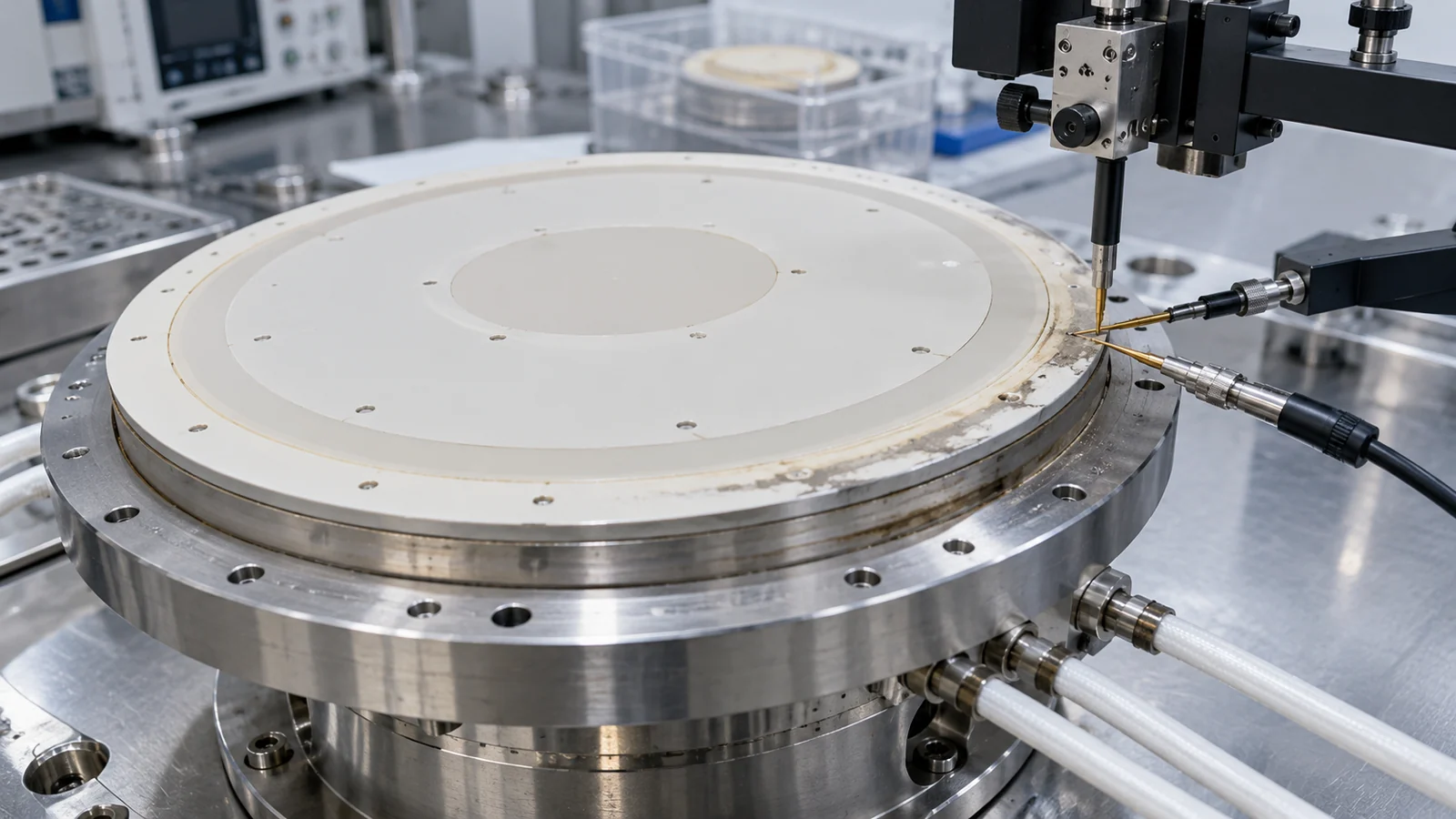 CASE CONTEXT · HEATER EDGE
Diagnostic Case Report
Restoring Edge Uniformity on 8-Inch CVD Heater
Severe edge yield loss, traced to a 15°C temperature drop at the outer zone. OEM recommended full replacement.
Electrical testing showed an abnormally low resistance in the outer heating zone, indicating a partial short. Teardown revealed carbonized insulation and damaged connector pins, alongside localized ceramic surface degradation.
We removed the carbonized insulation, replaced the damaged pins, and restored the electrical resistance to specification. The ceramic surface was cleaned and polished to restore uniform thermal radiation before power adjustment.
Post-repair thermal mapping confirmed the edge uniformity within ±1.5°C, and the original heater was returned to service.
Before You Ship
Heater Repair FAQs
Clear answers on thermal testing, ceramic repair, and sourcing fallback.
Which semiconductor heaters can be assessed?
We can review ceramic pedestal and related chamber-heater assemblies by part number, construction and actual failure. Service coverage and specialist work are confirmed for the specific assembly.
Can a failed heater power pin be repaired?
Some power-lead or pin faults can be restored when the joint, materials and access allow a sound repair. Brazing or other joining methods are not assumed suitable for every heater.
Can surface wear and wafer-pocket damage be repaired?
Minor damage may permit cleaning, refinishing or specialist surface work. Depth of damage, flatness, material and the chamber application determine whether restoration is feasible.
What if the ceramic heater is cracked?
Superficial wear and a structural fracture are not the same. We assess whether the crack threatens mechanical, electrical or vacuum integrity and recommend replacement when repair would be unreliable.
How is thermal performance checked?
Electrical resistance, insulation and sensor behavior may be checked off-tool. Temperature uniformity may require additional thermal equipment or final customer tool validation; the agreed check scope is stated clearly.
Will a repaired heater preserve the installed fit?
Repairing the original assembly can retain the existing mechanical and electrical interfaces, but any replaced components and process parameters must be checked before reinstallation.
Can you source a legacy or discontinued pedestal heater?
We can review alternatives against part number, wafer size, heater zones, mounting pattern, electrical ratings, thermocouple details and chamber application.
What information helps with assessment?
Send the heater part number, clear front/back photos, resistance or insulation measurements if available, heating zones, tool model and the reported thermal or electrical symptom.
Next Step
Need Heater Repair?
Share the heater model, part number, and the fault symptoms. Our engineers will provide a clear assessment, thermal testing plan, and recovery route.
Talk to GK-SEMI Online ↗