Semiconductor Equipment Service
MFC Repair
& Calibration
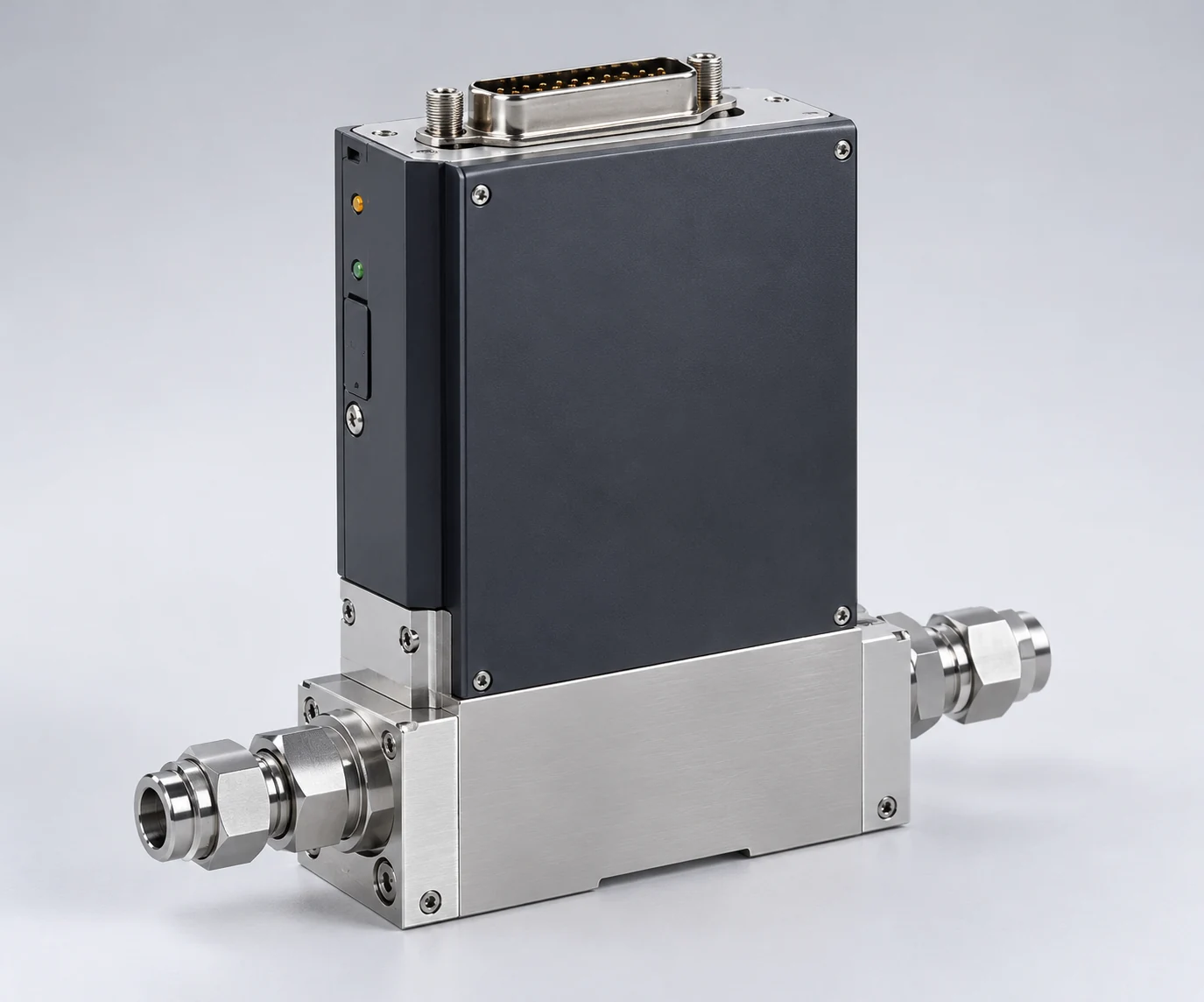
Mass flow controller repair and calibration support for semiconductor gas delivery. Zero drift, valve leakage, unstable response and controller faults can change the actual process flow. GK-SEMI reviews the original MFC and its gas, range and interface, then defines a repair, checking or matched-sourcing route.
Fault Analysis
Common MFC Failure Signs
A zero error, flow mismatch or valve leak may stem from different causes. We distinguish contamination and component faults from calibration and application mismatch.
Flow Drift & Span Loss
Contamination or sensor drift can disturb the zero reading and affect process flow.
Valve Seat Micro-Leaks
Particles at the valve seat can prevent full shutoff and disturb chamber pressure at zero setpoint.
Capillary Clogs
Flow-path deposits can restrict delivery, delay response or prevent full-scale flow.
Electrical & Comms Faults
PCB or connector faults can interrupt the analog signal or tool communication.
Service Levels
MFC Repair & Calibration Routes
One unit may need only a performance check; another requires valve or electronics work before recalibration. Service depends on the actual model and contamination history.
Flow Check & Adjustment
For a unit with stable mechanics but a reported zero/span shift: review the gas, full-scale range, operating conditions and available reference checks.
- Flow checks at agreed setpoints
- Zero and span adjustment
- Agreed flow-check results and scope
Cleaning & Valve Service
For restricted flow, slow response or valve leakage: inspect internal flow path, seals and valve assembly before model-appropriate cleaning or replacement.
- Model-appropriate contamination cleaning
- Filter service where fitted
- Post-service flow checks
Electronics & Sensor Repair
For loss of drive, sensor faults or communication errors: check electronics and restore repairable circuits before any required adjustment and validation.
- Targeted circuit or sensor work
- Sensor or PCB repair
- Flow verification where supported
Calibration Deliverables & Service Boundary. We provide internal flow verification, zero/span adjustment, and an internal calibration report traceable to our reference standards. For specific fabs requiring third-party ISO 17025 accredited certification, we can coordinate sub-contract calibration. Repair and sourcing remain in one conversation.
Why GK-SEMI
Repair Without Guesswork
Flow accuracy, gas compatibility and controller integration are all part of a useful recovery route. We address the MFC as a process component, not just an electronic box.
Keep the Original Fit
- Installed setup: Preserve part number, full-scale range, gas configuration and tool interface.
- Gas compatibility: Flow behavior changes with gas correction, seals and operating conditions.
- Repair goal: First find whether the original unit can regain stable valve, sensor and control operation.
GK-SEMI Repair + Sourcing
- Targeted repair: Examine flow sensor, valve sealing and electronics rather than replacing every component.
- Verification: Agree reference checks, measured conditions and documentation; accredited calibration is a separate confirmed service.
- Sourcing: When repair is not viable, coordinate matched spare or controller sourcing in the same inquiry.
Matched Replacement
- Compatibility: Match gas, range, inlet/outlet fittings, seals, power and analog/digital communication.
- Change impact: Explain any required recipe, calibration or controller-configuration changes.
- Acceptance: Confirm available test records, supply condition and acceptance checks before ordering.
Diagnostic Case Report
Resolving a Zero-Flow Micro-Leak
Reported Symptom
Etch tool MFC indicated 0% flow, but chamber base pressure was unstable. OEM recommended full replacement.
Bench Diagnostic
Teardown revealed particulate buildup on the valve seat preventing complete closure. The thermal sensor was healthy.
Repair Action
Ultrasonic cleaning of the valve body, replaced elastomer seals, and performed recorded flow verification and adjustment.
Before You Ship
MFC Service FAQs
Clear answers on calibration traceability, repair limits, and sourcing fallback.
Can an MFC be repaired instead of replaced?
Many valve, connector and electronic faults can be reviewed for repair. A damaged sensor, contamination level or unavailable parts may change the route. We first identify the unit and its exact failure.
Does zero drift always mean the sensor is damaged?
No. Zero behavior can be influenced by temperature, valve leakage, contamination and electrical offsets. The root cause should be checked before replacing the sensor.
How is calibration different from repair?
Repair addresses a failed physical or electronic function. Calibration compares flow performance with reference measurements under defined conditions; adjustment and certificate availability depend on the actual service scope.
Can you clean a restricted capillary or valve?
Contamination can affect response and shutoff, but cleaning methods depend on the MFC construction and process exposure. Sensitive flow paths should not receive indiscriminate ultrasonic or chemical cleaning.
Do you offer ISO/IEC 17025-accredited calibration?
Accredited calibration is not assumed for every model or service. Tell us the documentation requirement and we will confirm whether a suitable accredited route is available before quotation.
Can the MFC be converted to another gas or range?
Some MFC families support re-range or gas change under specific conditions. Gas correction, elastomer compatibility, valve characteristics and controller parameters must be reviewed; it is not a universal setting change.
What if the original MFC is discontinued?
We can review sourcing by manufacturer, part number, gas type, full-scale range, physical fittings, command/output signals and process use, with substitute status disclosed.
What information is needed to start?
Send the MFC label, gas and full-scale range, reported zero/flow issue, tool model and any error or pressure observations. Disclose hazardous process-gas exposure before shipment.
Next Step
Need MFC Repair?
Share the MFC model, the gas type, and the fault symptoms. Our engineers will provide a clear assessment and calibration plan.
Talk to GK-SEMI Online ↗