Servo Amplifier Repair · Semiconductor Equipment

Servo Drive Repair

Power-stage faults, repeated trips or missing feedback can stop a motion axis. GK-SEMI repairs servo-drive electronics and helps source compatible amplifiers for older equipment.

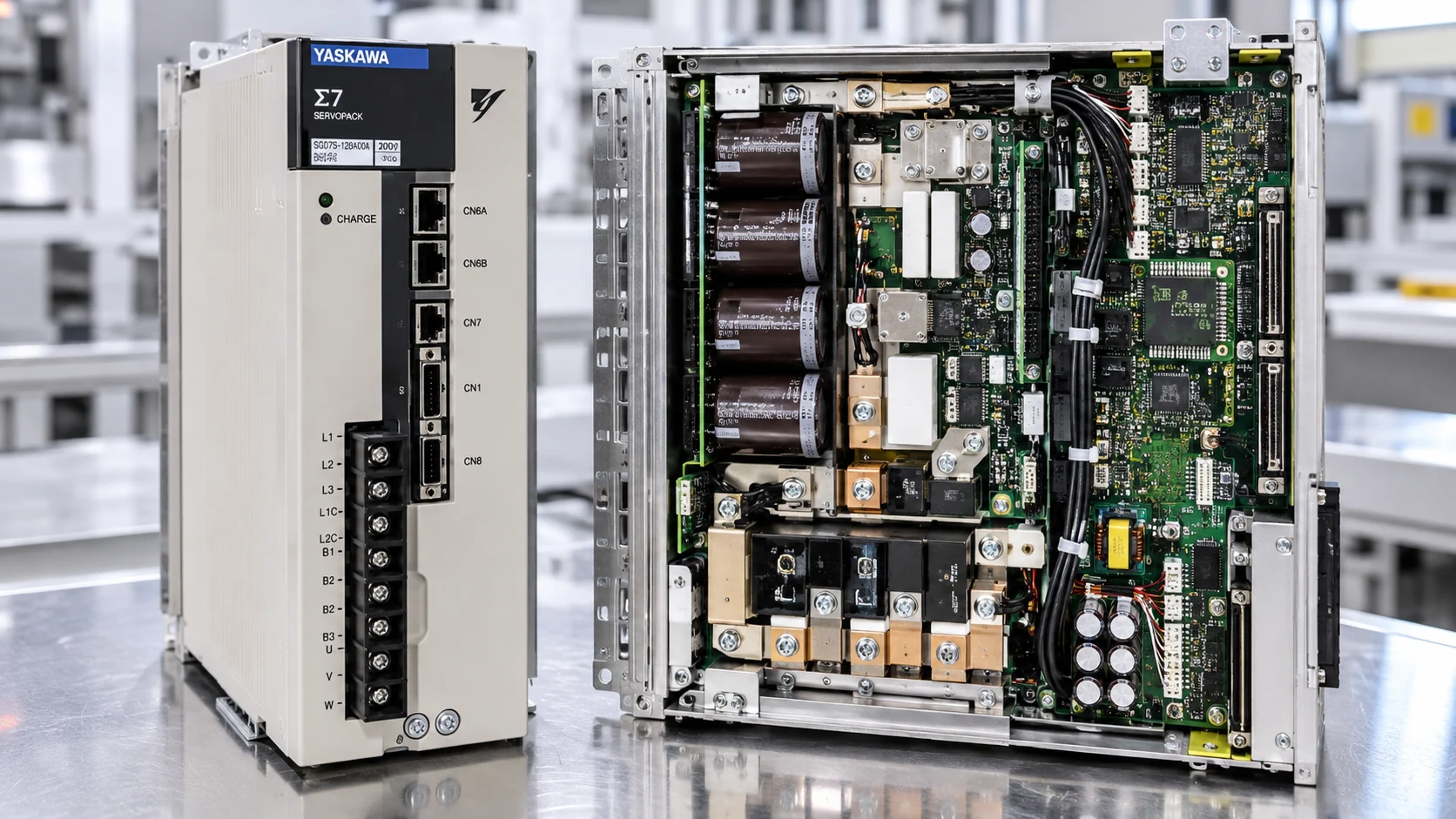
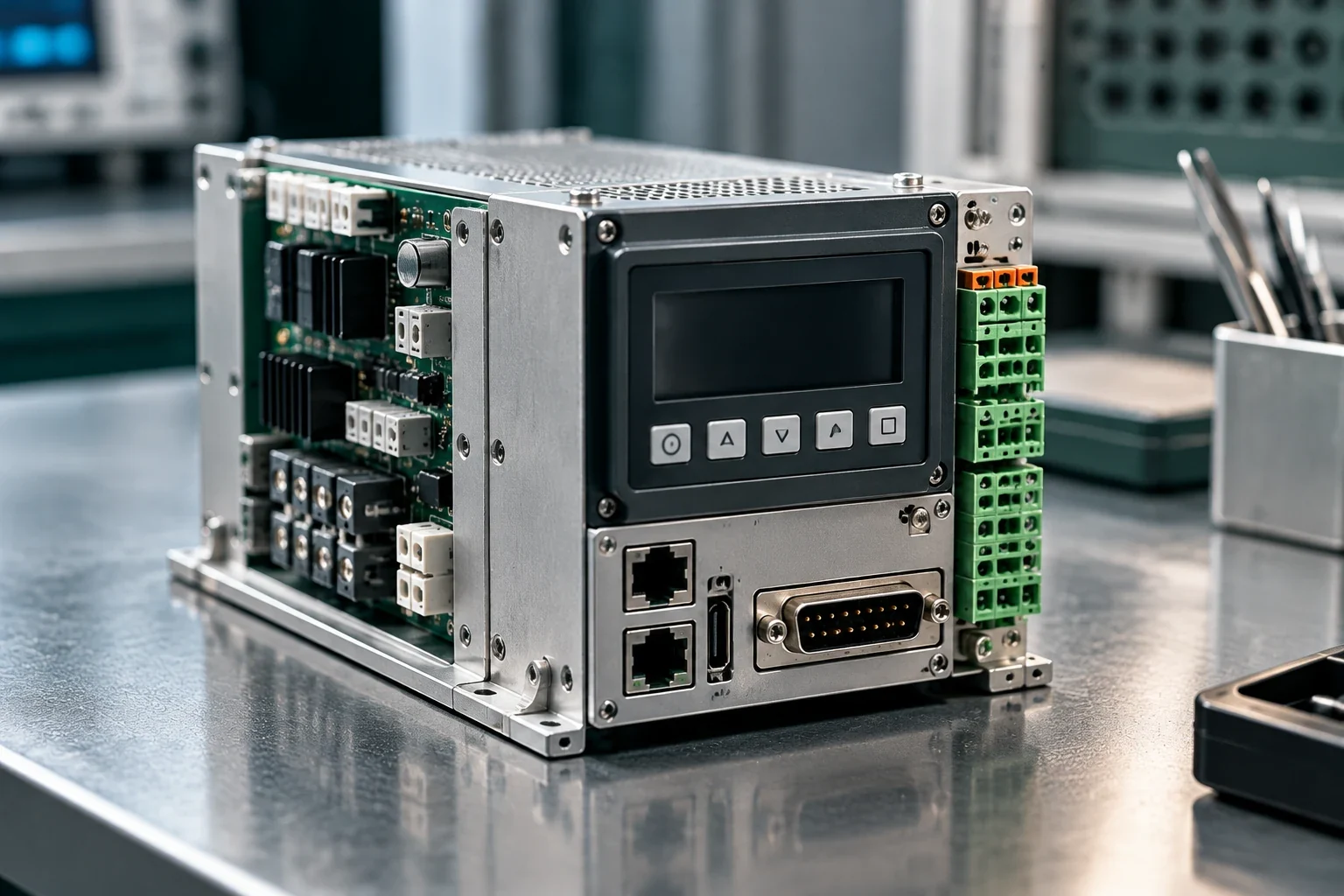
Illustrative servo amplifier power electronics for a semiconductor motion axis
Fault Triage Send drive model and alarm codes
Parameter Preservation Consider parameter and revision fit
Drive Repair Review Review matched to drive and fault
Parts Support Matching amplifiers and parts

Symptoms & Repair Scope

Drive Repairs

An amplifier problem can stop wafer handling, probe positioning, or automated motion. These are the symptoms worth bringing to a repair discussion—and the specific components we address.

Dead on Startup

No display or "Ready" status leaves the drive completely unavailable, halting the axis immediately.

Our Repair Scope: Startup power supply circuitry, DC bus faults, and blown internal fuses.

Repeated Trips

Overcurrent, overvoltage, or communication alarms interrupt production cycles and cannot be solved by resetting.

Our Repair Scope: Degraded IGBT/IPM power modules, shorted drive circuits, and fault detection logic.

Lost Enable or Feedback

The drive powers up, but the axis refuses to enable or position correctly due to signal loss.

Our Repair Scope: Encoder/resolver interfaces, signal conversion ICs, and communication I/O chips.

Fault After Swapping

If the alarm remains after a drive swap, check parameter compatibility, feedback, wiring and motor condition before replacing more parts.

Our Repair Scope: Drive-side enable, feedback and wiring checks; motor or harness causes are considered separately.

The Commercial Decision

Repair Options

Compare power-stage repair, parameter handling and return checks before choosing a drive route.

OEM Replacement

Action

OEM replacement or exchange may be available for the supported drive model.

Parameters

A substitute drive may need firmware and axis-parameter checks.

Cost & Time

Replacement pricing and availability depend on the exact model and supplier.

Standard Repair Shop

Action

Repair depth and configuration handling depend on the shop's test access and documented procedure.

Testing

Available functional checks vary by provider and the drive's accessible interfaces.

Risk

Ask what drive functions were verified and how parameter data was handled.

Our Repair Work

Action

Targeted repair of serviceable power-stage, sensing and control circuits.

Testing

Return checks cover accessible repaired circuits; loaded motion is verified on a compatible setup or machine.

Setup

Configuration and parameter dependencies are reviewed before affected control circuits are serviced.

Repair Checks

Return checks address the repaired power, current-sense or feedback function.

Power Path

Check the repaired DC-bus, supply and protective circuit functions accessible on the bench.

Sensing & Feedback

Check current-sense and relevant control responses with the compatible interface.

Return to Tool

Machine-side loaded motion and parameter validation remain separate from bench electrical checks.

Illustrative servo amplifier used for semiconductor equipment axes
Case Study

Repair Case

The Misdiagnosis

A semiconductor handler reported repeated overcurrent alarms. A complete drive replacement was being considered.

Our Diagnostic

Circuit-level inspection found no evidence of a power-stage failure within the checks carried out. The root cause was an aged shunt resistor on the current detection circuit, causing false triggers.

The Resolution

The damaged current-sense resistor was replaced, followed by checks of the detection circuit and the relevant drive response. The original drive and its configuration were retained; machine-side operation was assessed after return.
Buyer Questions

Drive FAQs

Clear answers for maintenance and purchasing teams evaluating the repair path.

Can you repair IGBT and DC-bus faults?

We assess power-stage devices, DC-bus components, driver circuitry and related electronic failures. The repair work depends on the damaged parts and board condition.

Can a false overcurrent fault come from a sensing circuit?

Yes. Current-sense components or their supporting circuitry can produce a misleading overload report even when the power stage is not the source of the fault.

What checks are made after servo-drive repair?

Our repair checks focus on the affected electronic functions. Where matched motor or load testing is available, the suitable test scope is agreed; final operation is confirmed in the installed machine.

Will the drive parameters be retained?

We assess parameter memory and configuration implications before work on programmable parts. Any required backup or restoration depends on access to the original unit and records.

What makes repair preferable to a new drive?

Component-level repair may retain the installed hardware version, interfaces and machine configuration while avoiding the integration work of a different drive.

Can you support discontinued drive amplifiers?

We investigate repairable boards and hard-to-find replacement units using our electronics repair and sourcing resources.

What if the problem returns after swapping the drive?

The motor, encoder, harness and enable signals may also be involved. Our related motion repair support helps narrow the next step rather than repeating drive replacement.

Is an urgent exchange unit always available?

Exchange or temporary replacement support depends on matching inventory and mutual agreement. Availability is checked against the drive part number and machine requirements.

KEEP THE AXIS MOVING

Drive Repair?

From a dead amplifier to a hard-to-find replacement, start with the drive you have. Talk to our team about an electronic repair path and the next step for your semiconductor equipment.

WhatsApp the Repair Desk ↗