Rotary Motion · Precision Positioning
Theta Axis Repair
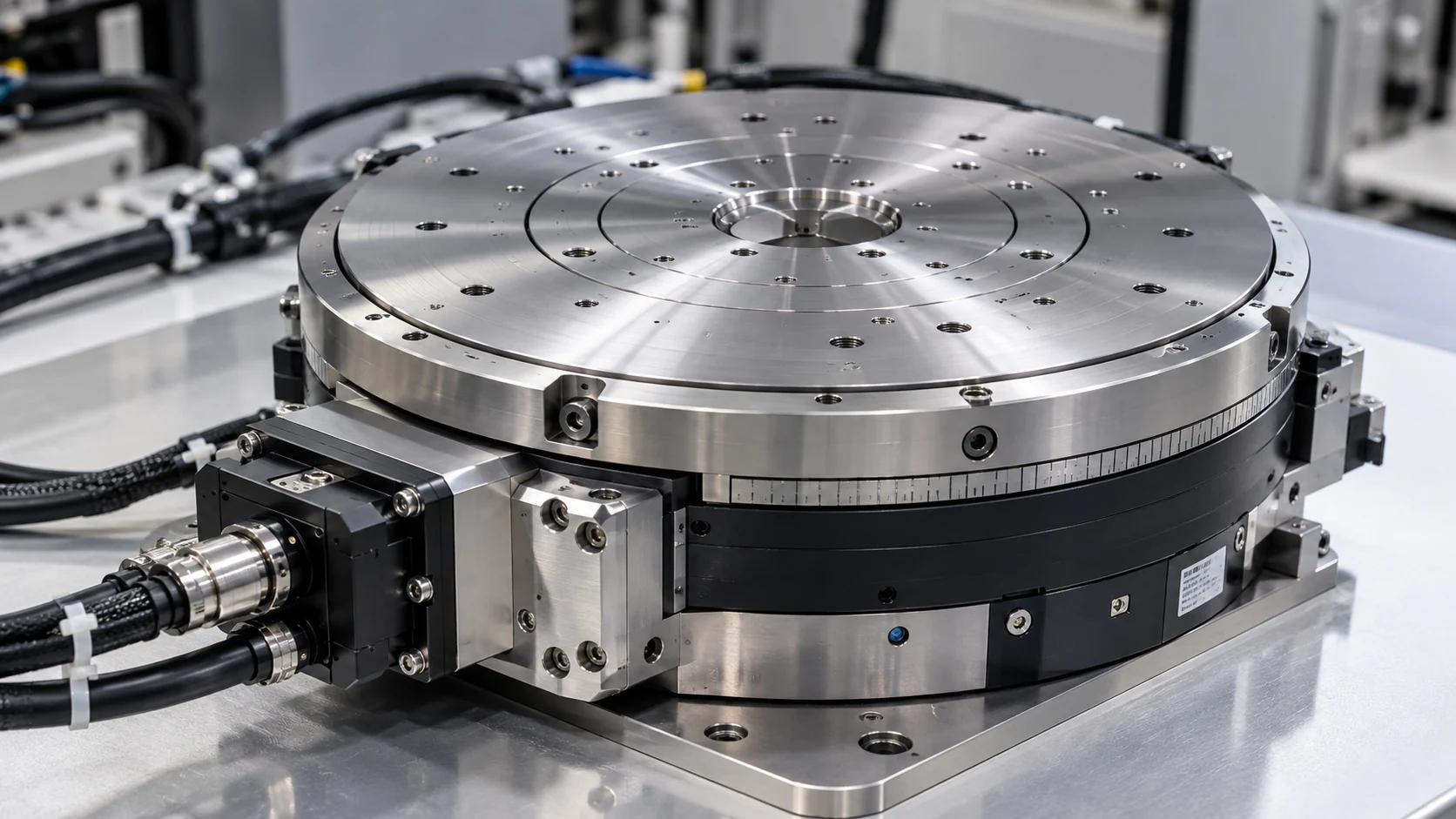
Homing failures and position drift on rotary stages. When a Theta axis loses its zero-point or triggers limit alarms, replacing the motor or the entire assembly is not the only option. We isolate the feedback, drive and mechanical linkage to restore the original axis.
Fault Triage
Where Theta Motion Fails
Rotary positioning faults can originate in the feedback, drive or mechanical path. The symptoms below guide the isolation process before any hardware is replaced.
Theta Limit Alarm
Rotary movement stops and reports a soft or hard limit during operation.
- Check limit sensor signal state and wiring.
- Verify axis position against the controller configuration.
- Rule out mechanical binding at the rotation limits.
Zero-point Lost
The stage fails to complete the homing sequence, or the reference mark is not detected.
- Inspect home reference sensor and connector integrity.
- Trace feedback signal dropout during rotation.
- Verify the encoder index pulse or absolute data path.
Lost Repeatability
The axis positions and homes successfully, but angular accuracy drifts over time or after a load change.
- Review rotary transmission and coupling for mechanical play.
- Check encoder mounting and coupling integrity.
- Assess bearing or reducer wear causing positioning loss.
Fault After Swap
A motor or drive was replaced, but the same axis alarm persists.
- Inspect cable harness and connector pins for intermittent shorts.
- Verify the replacement component matches the feedback type.
- Check the controller's axis configuration parameters.
Engineering Assurance
Before Replacing the Axis
Blindly replacing the motor or the whole stage can bury the actual failure. We isolate the mechanical, electronic and feedback paths to make the repair decision practical.
Motor & Mechanical Isolation
Distinguish motor winding failures from mechanical binding (bearing drag or coupling seizure) before swapping the axis.
Feedback & Cable Checks
Trace encoder or resolver signals to locate intermittent shorts, contamination, or loose connectors. Repair the harness instead of replacing the entire motor assembly.
Home & Limit Inputs
Verify reference switches and limit sensors. A failed sensor can trigger a zero-point alarm; restoring the input is often enough.
Repair Case
Theta Axis Repair Case
A wafer prober's Theta axis triggered recurring limit and zero-point alarms. A replacement motor was installed, but the exact same error returned. This prompted us to continue investigating the feedback path, cable harness, and mechanical transmission, instead of assuming the motor was the sole cause.
Testing confirmed the original motor was functioning normally. We then used an oscilloscope to monitor the feedback signal while rotating the axis, which revealed random dropouts. The root cause was traced to an intermittent short within the flexible cable harness, triggered by mechanical flexing at a specific bend point during rotation.
We repaired the damaged harness section, verified the home reference continuity, and confirmed the homing response on the installed machine. The customer avoided the cost of further axis replacements.
Before You Ship
Theta Axis FAQs
Clear answers on diagnostic steps, repair boundaries, and sourcing fallback.
Can you repair the original motor instead of replacing it?
Yes, if the fault is in the winding, brake or encoder coupling. We inspect the assembly first and only recommend replacement if the core mechanics are irreparably damaged.
How do you determine if the motor or the encoder is failing?
We isolate the motor on a test bench and monitor the feedback signals with an oscilloscope. A stable motor that fails to hold position or home correctly usually points to the encoder, wiring, or controller configuration.
What if the problem returns after swapping the motor?
That usually indicates a cable harness fault, an encoder mismatch, or a mechanical binding in the stage itself. We check the full drive path to identify why the fault persists.
Can you help with discontinued Theta stage components?
If the original part is obsolete, we can match a replacement motor, encoder, or complete stage by torque, encoder type, mechanical envelope, and interface.
What information is needed to start a repair?
Send the axis model, the exact alarm code, when the fault occurs (e.g., during homing, high-speed rotation, or after warm-up), and whether any components have already been swapped.
Next Step
Need Theta Axis Repair?
Share the stage model, the alarm code, and the fault behavior. Our engineers will review the isolation steps and outline a clear repair or sourcing route.
Discuss Your Theta Fault ↗