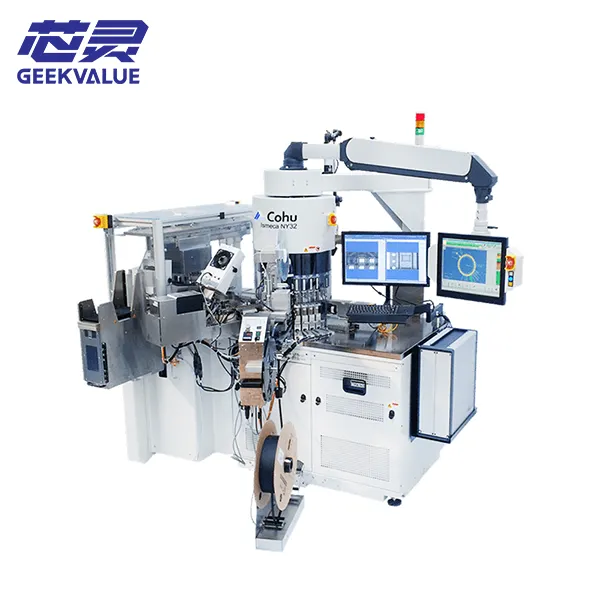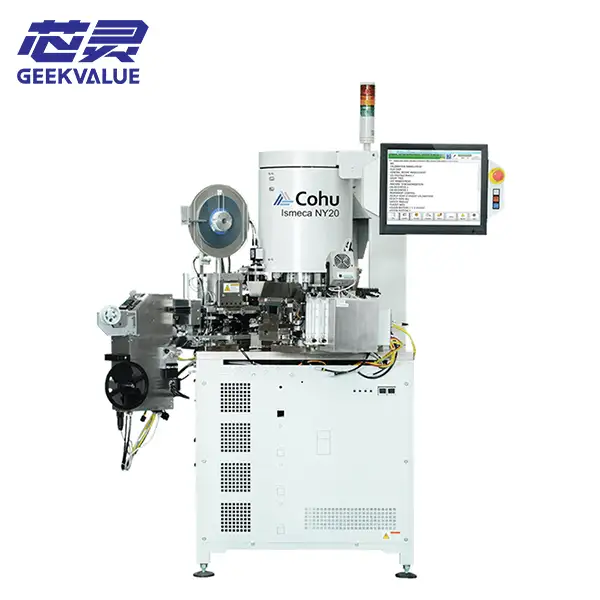
The Cohu Ismeca NY20 Test Handler is a semiconductor handling platform built around a 20-position rotary turret architecture. It supports automated device handling and testing workflows, with inspection and other process functions depending on the machine's installed configuration. For semiconductor manufacturers and equipment buyers, the key consideration is how the turret mechanism, test interface, and available tooling work together to meet specific production requirements.
20-Position Turret Handling and Process Integration
The NY20 uses a rotary turret to move devices through a sequence of processing positions. Instead of transferring each device between multiple independent handling units, the turret coordinates movement across designated stations within one system. This arrangement allows device handling and configured process operations to follow a repeatable sequence while keeping the equipment footprint relatively compact.
The number of turret positions alone does not determine production output. Actual throughput depends on the configured process sequence, test duration, device transfer behavior, changeover requirements, and any inspection or handling steps included in the cycle. These factors should be evaluated together when assessing the machine for a particular semiconductor production line.
Cohu Ismeca NY20 Test Handler: Technical Overview
The following table summarizes the main equipment characteristics and the points buyers should verify before purchasing a used machine.
| Item | Technical Overview |
|---|---|
| Equipment Type | Semiconductor Test Handler |
| Handling Architecture | 20-position rotary turret |
| Core Operation | Automated device transfer between configured process stations |
| Test Integration | Depends on installed test interface and contactor configuration |
| Inspection Capability | Verify available vision hardware and inspection software |
| Device Compatibility | Confirm package dimensions, feeding method, and handling requirements |
| Changeover Considerations | Check available tooling, setup components, and product configuration |
| Pre-Purchase Inspection | Evaluate turret indexing, device transfer, station alignment, and control system operation |
The table describes the equipment at a functional level rather than presenting unverified performance specifications. Buyers should confirm the exact hardware, software, and options fitted to the individual machine, as equipment carrying the same model designation may not have identical configurations.

Evaluating a Used Cohu Ismeca NY20 Test Handler
A used Cohu Ismeca NY20 Test Handler can be considered when its handling architecture and installed options match the intended production process. However, the model designation by itself does not establish the condition, completeness, or production readiness of an individual machine.
A practical pre-purchase assessment should cover the following areas:
Turret operation: Check indexing consistency, abnormal movement, and mechanical wear.
Device transfer: Verify stable feeding, positioning, and discharge under representative operating conditions.
Station alignment: Inspect the positioning of devices at the relevant processing and test stations.
Test interface: Confirm compatibility with the target package, contactor, and existing test equipment.
Tooling and accessories: Establish which product-specific components, fixtures, and changeover parts are included.
Control system: Check software operation, available documentation, alarms, and any configuration restrictions.
Maintenance history: Review service records and identify components that may require replacement or adjustment.
Where possible, request a functional demonstration using a representative device or an agreed acceptance procedure. This provides more useful evidence of operating condition than a visual inspection alone.