Semiconductor Electrostatic Chuck Service

ESC Repair

When wafer clamping, backside helium control or dechucking becomes unstable, the ESC requires a condition-based engineering decision—not merely a standard repair quote.

We do not repair every chuck. If the ceramic structure or internal bond is compromised, a temporary fix causes later arcing or particle contamination. We assess condition first, then define a repair scope or source a matched replacement.

Request an ESC Assessment Start with the ESC part number, tool model and reported fault.
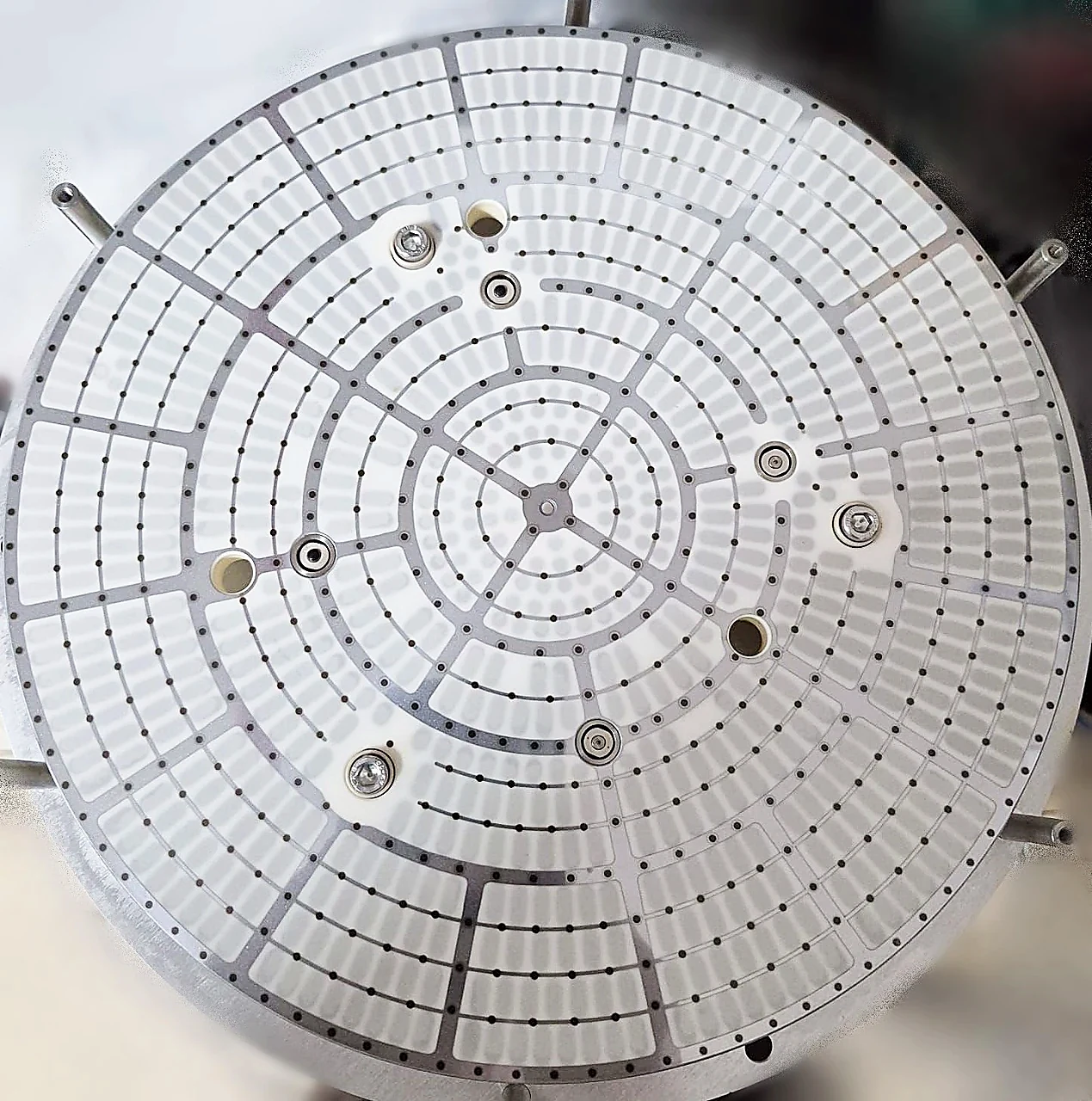
Circular ceramic electrostatic chuck with patterned wafer contact surface, gas openings and metal fittings
Representative semiconductor electrostatic chuck product photograph supplied for this page.
Breakdown-Voltage Checks
Dechucking Calibration
Helium Leak-back Test
Surface & Geometry Assessment

01 / Scope of Service

What We Inspect & Repair

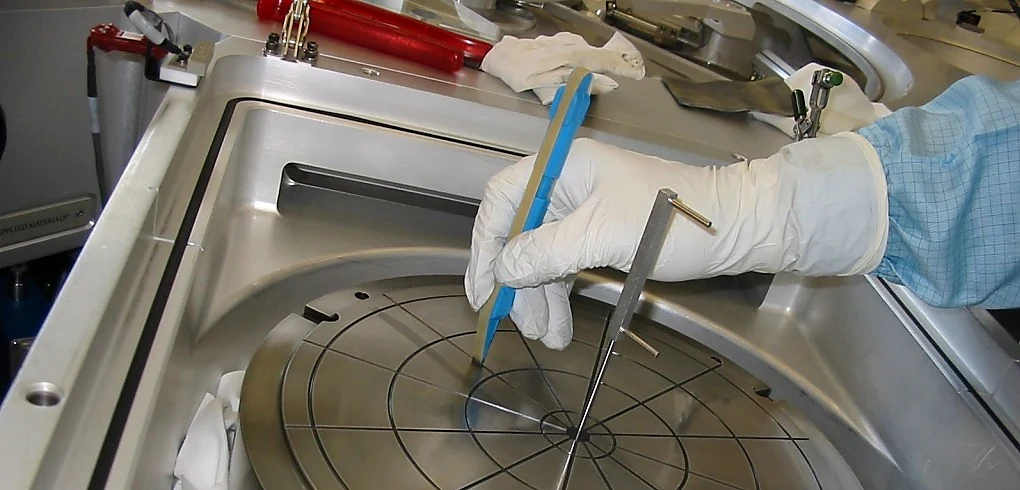
An electrostatic chuck is a layered precision assembly. We evaluate the specific functional layers tied to your reported fault, rather than assuming every ESC requires the same surface treatment.

Technician inspecting ESC surface
01

Ceramic Contact Surface

The wafer-facing surface dictates contact and particle behavior. We evaluate deposit severity, erosion, mesa/groove geometry, and flatness to determine if surface reconditioning is technically viable.

02

Bond, Seal & Helium Path

We assess ceramic-to-base bond condition, helium passages, and sealing areas. This identifies delamination or structural leakage paths that cannot be corrected by surface work alone.

03

Electrode, Heater & Baseplate

Electrical and thermal structures are reviewed where they form part of the fault. We check insulation integrity, feedthrough condition, breakdown-voltage, and heater interfaces.

02 / Engineering Boundaries

Evaluation Criteria & Repair Boundaries

A repair decision is an engineering risk assessment. It requires balancing production downtime against the risk of secondary wafer scrap, ensuring the chuck meets exact chamber validation criteria before return.

Advantages of Component-Level Repair

1. Upstream Lead Time Mitigation

New OEM replacements involve lengthy procurement cycles. Our targeted repair returns a tested ESC to your line faster, avoiding extended tool downtime.

2. Preserving Tool Traceability

Repairing your original chuck eliminates the risk of hardware revision mismatch or the need to re-qualify an entirely new assembly interface.

3. Data-Driven Verification

We do not rely on visual inspection alone. Return data is compared against the incoming baseline and applicable OEM specifications, with test conditions documented alongside the results.
Conditions Recommended for Replacement

1. Structural Ceramic Failure

Deep, propagating micro-cracks or structural chipping near gas channels will fail again under thermal cycling. Sourcing a replacement is the recommended option.

2. Irreversible Bond Degradation

Extensive delamination between the ceramic and baseplate compromises the thermal path. Surface work cannot restore a broken bond interface.

3. Cost-Prohibitive Restoration

If the scope requires rebuilding the internal electrical stack beyond a certain threshold, the risk of future failure outweighs the cost of a matched replacement.

If your chuck falls into the replacement category, we transition immediately to sourcing a compatible match using our parts network, reducing the risk of extended line downtime.

03 / Our Repair Approach

Our ESC Restoration Process

The work is built around the identified ESC and its fault history. Each stage helps define a repair scope that can be reviewed before the unit moves forward.

01

Confirm the Assembly

Review manufacturer, part number, revision, wafer size, chamber application and chuck construction.

02

Diagnostic Gating

Compare alarm history with observed clamp behavior and dechuck timing. Decide if it meets the criteria for repair.

03

Define the Repair Scope

Identify the affected surface, gas, or electrical areas. If not feasible, pivot directly to replacement sourcing.

04

Complete Agreed Work

Proceed with the confirmed repair scope and the applicable data-driven return checks before shipment.

Evaluation Basis

Evaluation is not a one-size-fits-all package. The repair scope is defined exclusively by the affected functional layer (surface, gas-path, bond, or electrical) and the corresponding physical test data.

04 / Return Criteria

Verification Before Return

The return test plan follows the repair scope and ESC specifications. Our standard verification includes breakdown-voltage and dechucking calibration; other checks depend on unit design and agreed criteria.

Breakdown-Voltage Check Review electrical withstand behavior against the applicable specification and test setup.
Dechucking Calibration Check residual clamp force and release timing under agreed test conditions.
Helium Leak-back Verify gas path integrity and seal performance where fixture support allows.
Surface & Geometry Flatness, roughness or MCA/mesa geometry checks where specified and measurable.

Bench checks do not qualify chamber thermal uniformity or complete installed system results. Final process confirmation remains tool-side.

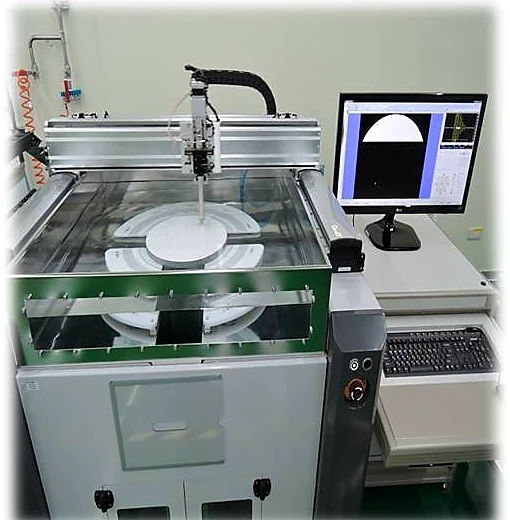
Electrostatic chuck inspection and measurement equipment with a probe gantry and monitor
Electrostatic chuck inspection equipment reference.

05 / Typical Service Scenarios

Typical ESC Repair Scenarios

These examples connect reported production symptoms with the diagnostic focus and decision points that matter to an ESC repair assessment.

SCENARIO 01

Backside Helium Leak-Up

Reported condition: Helium leak-up rises or becomes unstable, affecting wafer cooling and causing center-to-edge uniformity drift.

Diagnostic Focus: Distinguish contact-face micro-erosion, passage blockage, seal degradation, and ceramic-to-base bond delamination.

Route: Seal/Passage repair or Deep-level cleaning
SCENARIO 02

Weak Clamping or Slow Dechuck

Reported condition: Wafer holding becomes inconsistent or release takes longer than expected, causing wafer transfer alarms.

Diagnostic Focus: Review electrical integrity, dielectric degradation, electrode/feedthrough condition, and tool-side discharge controls.

Route: Electrode restoration or Dechuck calibration
SCENARIO 03

Surface Wear or Particle Increase

Reported condition: Deposits, erosion or contact-face wear coincide with particle excursions or wafer-contact concerns.

Diagnostic Focus: Measure surface roughness, groove/mesa geometry, and remaining ceramic thickness to assess reconditioning feasibility.

Route: Surface reconditioning
SCENARIO 04

Electrical Leakage or Arcing

Reported condition: High leakage current or voltage instability triggers hard alarms, or visible arcing damage is observed.

Diagnostic Focus: Rule out external tool-side leakage paths first. If the ESC body is confirmed, inspect insulation breakdown, feedthrough integrity, and structural ceramic failure.

Route: Evaluation for Replacement

06 / Fault Identification

Common ESC Failure Symptoms

These symptoms narrow the inspection scope. However, the cause may sit in the ceramic face, gas path, electrical stack or connected tool controls.

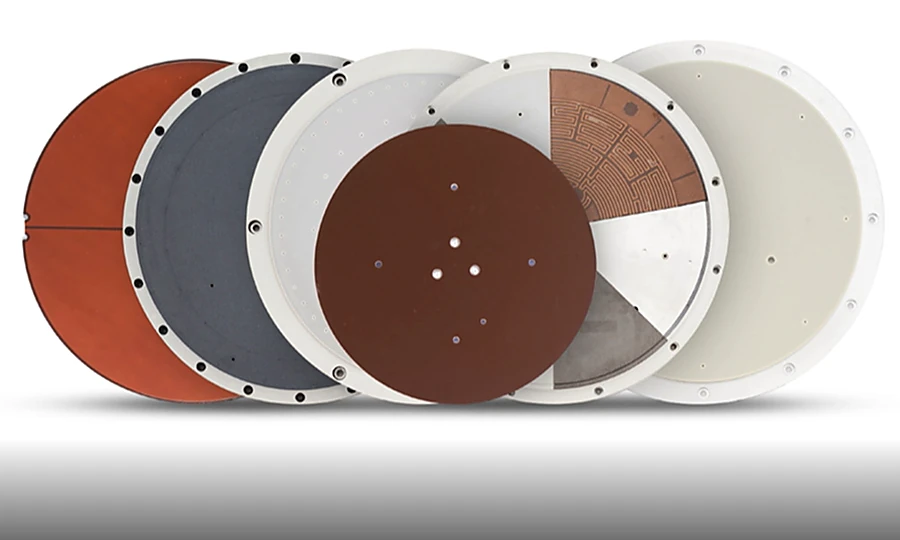
Component-level inspection and repair capability

Backside Helium Leak-Up

Review Focus: Contact face, gas passages, sealing areas, and ceramic-to-base interface.

Weak Wafer Clamping

Review Focus: Surface contact, dielectric condition, electrode integrity, and voltage response.

Slow or Failed Dechuck

Review Focus: Discharge sequence, high-voltage condition, and dechucking response.

Surface Wear & Particles

Review Focus: Ceramic surface condition, roughness, and remaining material thickness.

Electrical or Thermal Drift

Review Focus: Insulation, electrode/feedthrough condition, and heater interfaces.

Diagnostic Note: A small wafer shift or a delayed dechuck may not trigger an immediate hard alarm. These symptoms are often mistaken for process recipe issues until the ESC's electrical or thermal path is systematically checked.

Commercial & Process

Service & Support

Practical information regarding turnaround time, evaluation process, and service guarantees to support your procurement planning.

What is the typical turnaround time for an ESC repair?

Standard turnaround time depends on the required service scope (surface reconditioning vs. deep electrical restoration) and component availability. We provide an estimated delivery date after the initial diagnostic evaluation and confirm it in the final quotation.

How does the evaluation and quoting process work?

You send us the ESC part number and fault symptoms. We perform an incoming inspection and baseline test. Based on this, we provide a formal engineering report stating whether it can be repaired, the recommended scope, the quote, and the lead time. No work proceeds without your written approval.

Do you provide a warranty for the repaired ESC?

Yes. All component-level repairs and refurbishments carry a standard warranty against workmanship and replaced components under normal operating conditions. Specific warranty terms are detailed in the repair agreement.

Can you assist if the OEM lead time is too long and we need a backup unit?

Yes. If your existing chuck is beyond repair or the repair timeline does not meet your production needs, our parts sourcing network can help locate a compatible replacement or refurbished unit as a bridge solution.

How should we ship the ESC to your facility safely?

Electrostatic chucks are highly sensitive to particulate contamination and physical shock. We recommend using the original OEM shipping box and ESD-safe packaging. Contact our team for specific packaging guidelines if the original packaging is unavailable.

Are you able to support high-volume refurbishment programs?

Yes. We support both urgent single-piece repairs and scheduled high-volume refurbishment programs for fabs and OEMs. We can align our production slots with your chamber maintenance cycles.

Semiconductor ESC Repair

Discuss Your ESC Repair

Share the ESC identity, tool application and fault behavior to review repair feasibility, applicable verification and a matched replacement route if needed.

ESC part number and revision Tool model and chamber process Wafer size and reported fault Available test data or repair history
Request ESC Repair Support