Automatic dicing saw prices depend on the model, installed configuration, machine condition and supply scope. Two offers for the same model can differ because one includes inspection, repairs and accessories while the other covers an untested machine awaiting collection.
For buyers, the useful figure is the cost of obtaining a machine that can complete the intended cutting process. A low purchase price is attractive only when the remaining work is understood.
Start by separating three questions: what equipment is being offered, what has been verified, and what must still be supplied before production?
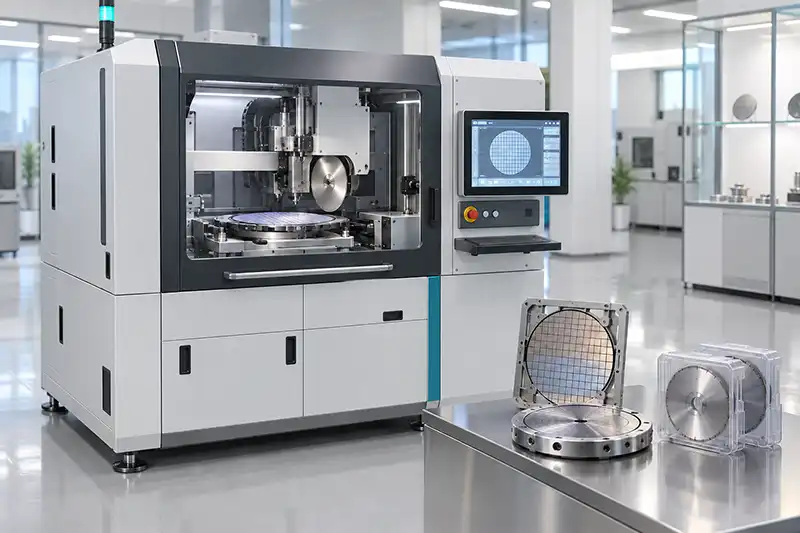
What Should an Automatic Dicing Saw Quotation Include?
A price without a configuration list leaves too much open to interpretation.
When comparing wafer dicing saw equipment, ask suppliers to identify the machine and define the commercial scope in writing.
| Quotation item | Information to confirm |
|---|---|
| Machine identity | Manufacturer, full model, serial number and available build information |
| Configuration | Spindles, handling system, vision, workholding and installed options |
| Condition | Known faults, repairs, refurbishment and untested functions |
| Inspection | Checks completed and available results |
| Accessories | Chucks, frames, tools and supporting equipment |
| Software | Installed version, licenses where relevant and recovery information |
| Delivery | Packing, collection, freight and insurance responsibilities |
| Installation | Positioning, utilities, commissioning and training |
| Warranty | Coverage, exclusions and service arrangements |
| Price basis | Currency, validity, payment terms and applicable delivery terms |
Also distinguish an advertised asking price from a quotation for a defined project. A historical listing does not establish current availability or the cost of preparing another machine.
Configuration Changes the Price Before Condition Is Considered
Machines sold under a similar description may have different handling arrangements, work areas and process options.
Single- and dual-spindle configurations
Spindle count affects machine architecture and the available cutting strategies. It should not be treated as a simple guarantee that one machine will deliver twice the output of another.
The production benefit depends on the cutting sequence, material, blade arrangement, indexing and handling cycle.
For a model such as the DISCO DFD6341, review the installed configuration and intended process before estimating capacity or payback.
Workholding and frame handling
Nominal wafer diameter is only one part of compatibility.
The offered machine must accommodate the intended frame, chuck arrangement, workpiece thickness and handling sequence. Missing or incompatible workholding can introduce additional tooling costs.
Ask for photographs and identifying information for the supplied chucks and accessories. Where custom tooling is proposed, clarify its price and delivery time separately.
Automation and process options
Automatic alignment, loading, blade setup, monitoring and cleaning functions vary between platforms and individual machines.
Identify which functions the process requires and confirm whether they are installed, operational and included in the inspection.
The term “automatic” does not establish the complete operating sequence.
Why Used Dicing Saw Prices Differ Within the Same Model
Once configuration is matched, condition becomes a major part of the comparison.
Spindle condition and inspection evidence
Review available service records, operating checks, alarms and relevant measurements.
Spindle hours can provide background, but they do not independently establish remaining service life. The operating environment, maintenance and current condition also matter.
If repair or replacement is included, ask:
Which component will be repaired or replaced?
Who will carry out the work?
What evidence will be provided afterward?
Is the work included in the quoted price?
How does it affect delivery and warranty?
“Spindle checked” is less useful than a record explaining the check and its result.
Motion, vision and cutting functions
A machine that starts successfully may still need work on alignment, movement, blade setup or material handling.
The inspection should identify which functions were demonstrated with material and which were checked without a cutting trial.
For buyers comparing compact equipment such as the DISCO DAD3230, the model name is a starting point. The supplied tooling and evidence from the offered machine determine the next purchasing steps.

Controller and software recovery
Review software, machine parameters, backups and controller hardware.
A working controller does not establish that the system can be restored after a storage-device or computer failure. Missing recovery information can turn a relatively small hardware problem into a longer interruption.
Include unresolved recovery requirements in the cost assessment.
New, Refurbished and As-Is Offers Need Different Questions
| Supply condition | Main purchasing questions |
|---|---|
| New | Which options, acceptance tests, installation and support are included? |
| Refurbished | What work was completed, what was replaced and what was measured? |
| As-is | What is known, what remains untested and what resources are needed for recovery? |
Refurbishment is not a uniform specification. One offer may include cleaning and selected repairs; another may include broader component replacement and process testing.
Ask for the completed work scope rather than relying on the label.
An as-is machine can still be a reasonable purchase when the condition is understood and the buyer has a practical recovery plan. Its price should be compared with the expected cost of reaching the required operating condition.
Calculate the Cost of Reaching Production
The machine invoice and the project budget are different figures.
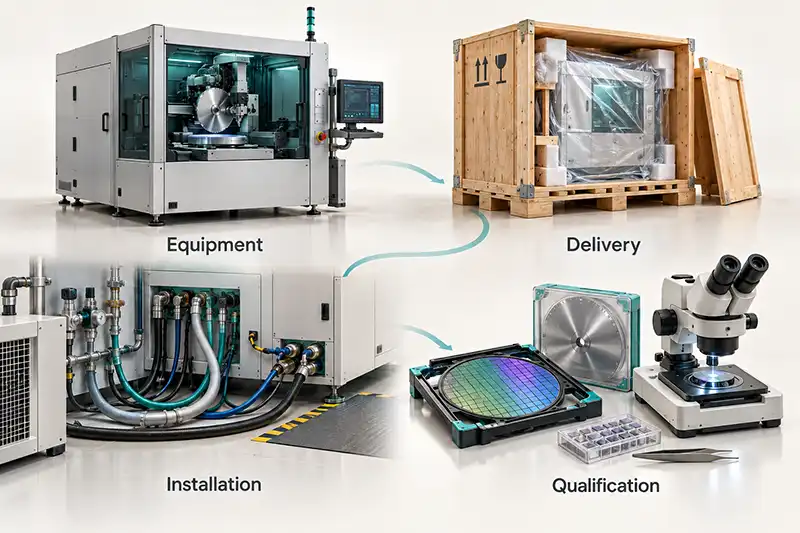
A useful budget separates acquisition, delivery, installation and qualification.
| Budget stage | Potential cost items |
|---|---|
| Acquisition | Machine, options, required repairs and missing accessories |
| Delivery | Deinstallation, packing, freight, insurance and applicable import costs |
| Installation | Unloading, positioning, utilities and commissioning |
| Qualification | Blades, fixtures, sample trials, recipes and engineering time |
A working calculation is:
Total project cost = equipment + required repairs + tooling + logistics + installation + qualification
Check inclusions before adding costs. For example, export packing already included in the quotation should not appear again as a separate allowance.
Compare Two Offers by Their Missing Items
Suppose one offer includes a machine at the seller’s location without a cutting test. Another includes inspection, the required accessories and export packing.
The difference does not automatically make either offer better.
The buyer should first price and verify the missing work. If the first machine can be completed economically, it may remain attractive. If it needs difficult-to-source tooling or substantial repair, the initial saving may disappear.
Use a comparison sheet with three columns: confirmed inclusions, additional costs and unresolved items. This makes uncertainty visible before purchase.
Material and Cut Quality Affect the Final Equipment Requirement
Silicon, glass, ceramics and compound-semiconductor materials can require different cutting conditions and process development.
Material name alone does not define a suitable blade, spindle setting or machine configuration. Thickness, surface structures, mounting and permitted damage also matter.
Before requesting a quotation, provide:
Material composition and relevant layers.
Workpiece diameter or panel dimensions.
Thickness and mounting arrangement.
Street width and cutting layout.
Chipping, cracking and kerf requirements.
Expected production output.
Cleaning, drying and downstream handling requirements.
Where practical, request a representative cutting trial. Record the material, blade, conditions and measurement method so the result can be evaluated.
A trial on a different material should be identified as reference evidence.
Compare Operating Cost Using the Same Product
Purchase price is only one component of production cost.
Blade consumption, maintenance, utilities, labor, downtime and cutting yield can change the financial result. Candidate machines should be compared using the same product and acceptance criteria.
Maximum advertised output does not establish the production rate for a particular wafer. Cutting length, feed conditions, indexing, handling and inspection affect the actual cycle.
If operating data is unavailable, state the assumptions. A transparent estimate is more useful than a precise-looking figure based on unknown inputs.
Information Needed for a Useful Quote
Send the preferred model if known, material and dimensions, mounting format, cut-quality requirements, output target, destination and required supply scope.
When replacing an existing machine, photographs of its nameplate, chuck, frame and utilities can help clarify the requirement.
We review these details before comparing equipment offers because a lower machine price has limited value when essential tooling or process capability remains unresolved.
Frequently Asked Questions
How much does an automatic dicing saw cost?
The price depends on the exact model, configuration, condition and supply scope. Request a dated quotation identifying the machine, inspection evidence, accessories and delivery responsibilities.
Is used equipment always cheaper overall?
Its purchase price may be lower, but repairs, missing tooling, installation and qualification can change the total project cost.
Does a dual-spindle machine always provide twice the output?
No. The benefit depends on the cutting process and complete machine cycle. Compare results under the intended operating conditions.
Is semi-automatic equipment sufficient for low-volume work?
Possibly, but volume alone does not decide suitability. Alignment, handling, quality requirements and operator involvement also matter.
What should be checked before accepting the lowest quotation?
Confirm configuration, condition, included items, test evidence and the cost of completing any missing work.