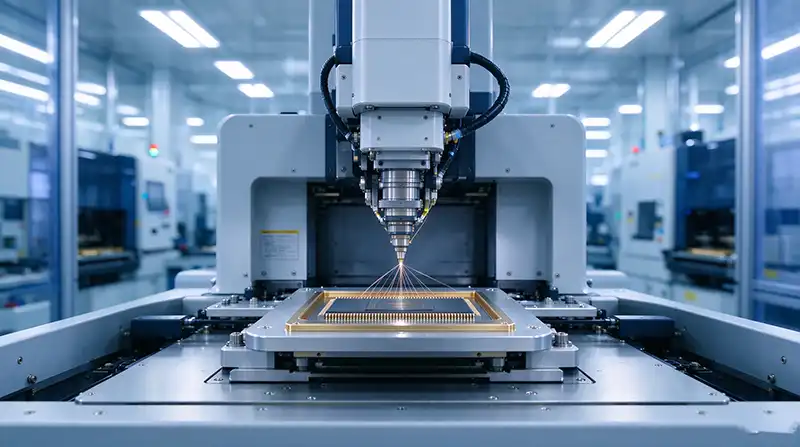
A semiconductor die cannot work by itself. It needs electrical connections to the package, substrate, lead frame, or another part of the device before it can become a functional electronic component. A wire bonder is the equipment used to make many of those small but essential connections.
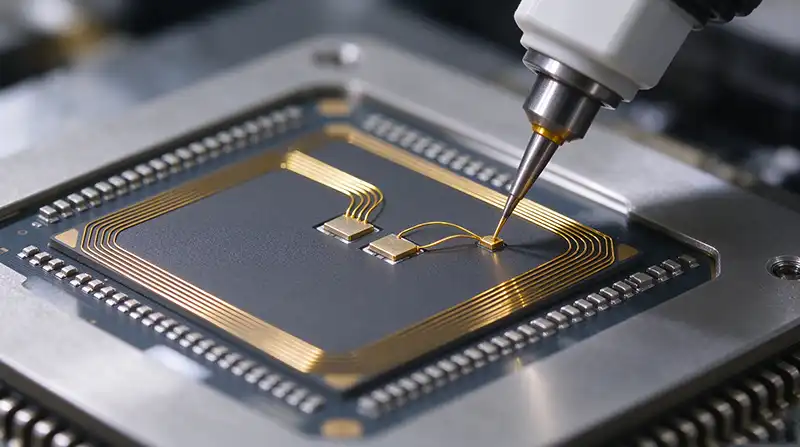
The idea behind wire bonding is simple: a very fine metal wire connects a bonding pad on the semiconductor die with a second electrical contact. The difficult part is doing this accurately and consistently when the bonding points may be extremely small and closely spaced.
A wire bonder controls the movement of the bonding tool, the force applied to the wire, the bonding energy, and the shape of the finished wire loop. In production, the same operation may need to be repeated thousands of times with very little variation.
That is why wire bonding equipment is an important part of semiconductor assembly and packaging.
What Is the Main Purpose of a Wire Bonder?
The main purpose of a wire bonder is to create a reliable electrical connection between a semiconductor die and the surrounding package or substrate.
After the die has been attached to its intended location, the bonding machine connects the pads on the die to external contacts. These connections provide the electrical path between the semiconductor device and the rest of the circuit.
A typical wire bonding operation involves two bonding points. The first is usually located on the die, while the second may be on a lead frame, substrate, package terminal, or another conductive surface.
The machine guides the wire between these points and forms the required loop. It then moves on to the next connection.
The process may look straightforward from the outside, but several variables have to be controlled at the same time. Bond placement, wire length, loop height, bonding force, ultrasonic energy, temperature, and tool movement can all affect the finished connection.
In other words, a wire bonder is not simply placing a wire. It is controlling a precision interconnection process.
Where Does Wire Bonding Fit in Semiconductor Packaging?
Wire bonding normally takes place after the semiconductor die has been attached.
A simplified assembly sequence may look like this:
Die attach → Wire bonding → Encapsulation or package finishing → Testing
The exact process varies by device and package type, but wire bonding occupies an important position between die attachment and the later packaging steps.
During die attach, the semiconductor chip is positioned and secured to the appropriate surface. Wire bonding then establishes the electrical connections. Subsequent processes protect the device and prepare it for testing and final use.
This distinction also explains why a wire bonder and a die bonder are different pieces of equipment.
A die bonder handles the placement and attachment of the chip. A wire bonder handles the electrical interconnections.
How Does a Wire Bonder Make the Connection?
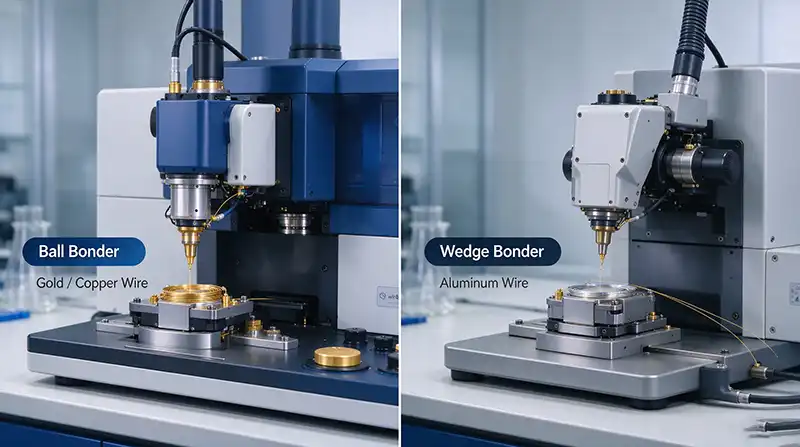
The bonding method depends on the equipment and the application. Ball bonding and wedge bonding are two widely used approaches.
In a typical ball bonding process, the fine wire passes through a capillary. The machine forms the first bond on the bonding pad and then moves the capillary along a programmed path to create the desired wire loop. A second bond is made at the next connection point, after which the wire is terminated.
The machine then repeats the sequence for the next connection.
The wire loop is an important part of the process. It needs to provide enough clearance from the die and neighboring wires without taking up unnecessary space.
A package with tight spacing may require careful control of loop height and wire trajectory. A power device using heavier wire has different requirements from a fine-pitch integrated circuit.
This is why the bonding process needs to be considered together with the package design.
Ball Bonding and Wedge Bonding
The terms ball bonding and wedge bonding refer to different bonding methods and tool designs.
| Feature | Ball Bonding | Wedge Bonding |
|---|---|---|
| Main tool | Capillary | Wedge tool |
| Bond formation | Ball-based first bond | Wedge-shaped bond |
| Common materials | Gold, copper and related fine wires | Aluminum, gold, copper and other wire types |
| Typical applications | ICs, LEDs, discrete semiconductor devices | Power devices, RF, hybrids and specialized assemblies |
| Process characteristics | Well suited to automated fine-wire production | Flexible for fine-wire, heavy-wire and specialized bonding |
Neither method is universally suitable for every device. The package structure, wire material, pad design, production volume, and electrical requirements all influence the choice.
Why Does Wire Material Matter?
The wire is part of the electrical connection, so its material affects both the bonding process and the finished device.
Gold Wire
Gold wire has been used extensively in semiconductor and microelectronic assembly. It is associated with many established fine-wire bonding processes and remains suitable for applications where its material and processing characteristics fit the device.
Copper Wire
Copper provides good electrical and thermal conductivity and is widely used in modern semiconductor packaging. Copper bonding has its own process requirements, so equipment configuration and bonding conditions need to be matched to the wire.
Aluminum Wire
Aluminum wire is commonly used in wedge bonding applications, particularly where larger wire sizes are required. It can be found in various power semiconductor and specialized electronic assemblies.
The wire material alone does not determine whether a machine is suitable. Wire diameter, bonding tool, pad metallization, package structure, and process parameters also have to be considered.
What Controls the Quality of a Wire Bond?
A good wire bond is the result of several process variables working together.
Bonding Force
The tool must apply enough force to form the connection without causing unnecessary damage to the bonding pad or underlying structure.
Ultrasonic Energy
For thermosonic and ultrasonic bonding processes, the amount of energy delivered to the bond affects how the wire and bonding surface interact.
Temperature
Some bonding processes use controlled heating to improve bond formation. The required temperature depends on the process and materials.
Wire Diameter
Fine wire and heavy wire behave differently during bonding. The machine, tooling, and process settings need to correspond to the selected wire size.
Loop Profile
The wire needs to follow the intended path between the two bonding points. Loop height and shape can become especially important in compact packages.
Tool Condition
The capillary or wedge is a consumable precision component. Wear or damage can affect bond quality and repeatability.
Alignment
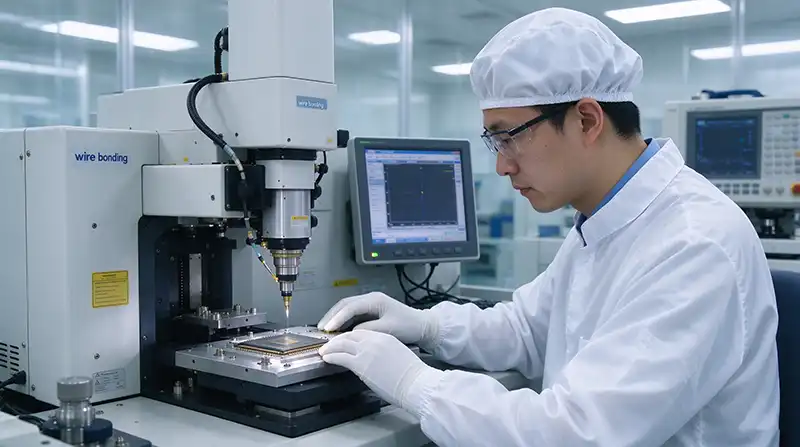
Modern wire bonding machines use vision and motion systems to locate bonding points accurately. This becomes increasingly important as pad dimensions and pitch decrease.
For this reason, judging a wire bonder by bonding speed alone can be misleading. Process control and machine configuration are equally important.
Where Are Wire Bonders Used?
Wire bonding is used across several areas of semiconductor and electronic assembly.
Integrated circuits are one of the most familiar applications. Wire bonds connect the die to the package structure so that signals and power can move between the chip and the external circuit.
LED packages may use fine wire connections between the LED die and conductive contacts.
Power semiconductor devices can require larger wire or ribbon bonding to handle higher current levels.
Sensors and MEMS devices may use wire bonding where compact and accurately positioned interconnections are required.
Wire bonders are also used in research and development. Engineers developing a new package or device may need flexible bonding equipment for prototypes, process development, and low-volume production.
The machine configuration can be quite different between these applications. A production line for high-volume IC packaging has different requirements from a laboratory working with prototype sensor packages.
What Is the Difference Between a Wire Bonder and a Die Bonder?
The easiest way to distinguish the two is to look at their jobs.
A die bonder attaches the semiconductor die.
A wire bonder connects the semiconductor die electrically.
The die bonder positions the chip and attaches it to the required surface. Once the die is in place, the wire bonder creates the connections between the die pads and the package or substrate.
Both processes are important, but they solve different problems in semiconductor assembly.
What Should You Consider When Choosing a Wire Bonder?
The correct machine depends on the bonding application.
Before selecting equipment, it is useful to define the actual process requirements first.
| Selection Factor | Why It Matters |
|---|---|
| Bonding method | Determines the type of machine and tooling required |
| Wire material | Affects bonding parameters and equipment configuration |
| Wire diameter | Determines tooling and process requirements |
| Bond pad pitch | Influences alignment and loop control |
| Package format | Determines handling and workholder requirements |
| Production volume | Helps determine the required level of automation |
| Loop requirements | Affects tool movement and process programming |
| Vision system | Important for accurate bond placement |
| Tooling | Must match the wire and bonding application |
| Machine condition | Particularly important when buying used equipment |
For new equipment, these requirements can be specified during the equipment selection process. For used or refurbished semiconductor equipment, there is an additional consideration: the actual machine configuration matters as much as the model name.
A machine may have been modified, upgraded, or configured differently from another unit carrying the same model number. The bond head, vision system, software, wire feed, tooling, and handling options should therefore be verified before purchase.
Is a Used Wire Bonder Suitable for Production?
A used wire bonder can be suitable for production when the equipment is in appropriate operating condition and its configuration matches the intended process.
This is particularly relevant for companies looking to expand capacity, replace an existing machine, support a legacy package, or establish a development line without purchasing an entirely new system.
When evaluating used Semiconductor equipment, it is worth looking beyond the machine's basic specifications. Questions about operating condition, maintenance history, software, tooling, bond head, vision system, and included accessories can be just as important as the manufacturer's model number.
For refurbished equipment, buyers should also understand what work has been carried out before delivery and whether the machine has been tested under relevant operating conditions.
Frequently Asked Questions
What is the purpose of a wire bonder?
A wire bonder creates electrical and mechanical connections between semiconductor bonding pads and a package, substrate, lead frame, or other conductive structure.
What does a wire bonding machine connect?
Depending on the application, a wire bonding machine can connect a semiconductor die to a lead frame, substrate, package contact, or another electrical connection point.
What materials are used for wire bonding?
Common wire materials include gold, copper, and aluminum. The appropriate choice depends on the device, wire size, bonding method, pad structure, and electrical requirements.
What is the difference between ball bonding and wedge bonding?
Ball bonding uses a capillary and forms a ball-based first bond, while wedge bonding uses a wedge tool to form the connection. The two methods are used with different device designs, wire sizes, and production requirements.
Can a used wire bonder be used for semiconductor production?
Yes, provided the machine's condition and configuration are appropriate for the intended process. The wire type, bonding method, tooling, vision system, software, and other installed options should be checked before purchase.
The purpose of a wire bonder is straightforward: it creates the small electrical connections that allow a semiconductor die to become part of a working electronic device.
What makes the process technically demanding is the level of control required. The machine has to position the bonding tool accurately, form the connection under controlled conditions, and reproduce the same result across a large number of bonds.
For that reason, selecting a wire bonding machine should begin with the device and bonding process rather than with the machine brand alone.
Wire material, diameter, bonding method, pad pitch, package format, loop requirements, automation level, and machine configuration all deserve consideration. This is especially important when evaluating used or refurbished semiconductor equipment, where two machines with the same model number may not necessarily have the same installed options.
For buyers comparing available wire bonding equipment, reviewing the actual configuration against the intended application is a practical first step before moving on to price, availability, and delivery.