A used ACCRETECH wafer prober can be a practical option for semiconductor manufacturers, OSAT companies, test houses, and engineering teams that need wafer-level electrical testing equipment without purchasing a new system. The right machine, however, is not determined by the brand name alone. Wafer diameter, probe-card compatibility, chuck temperature, alignment performance, tester interface, automation requirements, software support, and the condition of the individual unit all affect whether a pre-owned prober can be integrated into an existing test operation.
ACCRETECH, the semiconductor equipment brand of Tokyo Seimitsu, offers wafer probing systems for different wafer formats and test requirements. Its product range includes platforms associated with 200 mm and 300 mm wafer testing, along with specialized configurations. Model names such as UF3000EX, UF3000EX-e, and AP3000/AP3000e can appear in the used-equipment market, but a model name does not establish the exact configuration or condition of a machine currently offered for sale.
For buyers evaluating a used ACCRETECH wafer prober, the most useful starting point is the test process the machine must support. Confirming the intended wafer format, device type, probe-card setup, temperature range, and tester connection before comparing machines can prevent expensive compatibility problems later. The same principle applies to installation and acceptance: a prober that powers on is not necessarily ready for production.
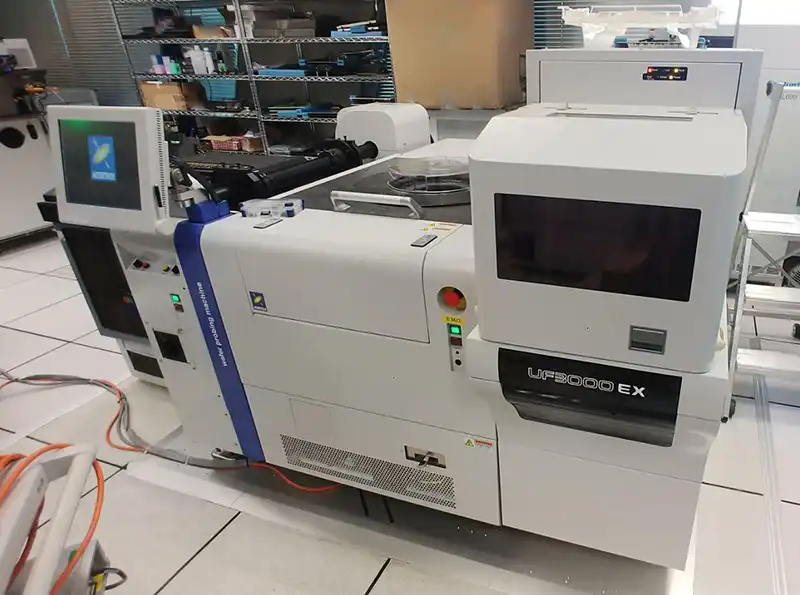
Used ACCRETECH Wafer Probers for Sale: What Buyers Should Confirm First
A used wafer prober listing should provide enough information for a buyer to judge whether the equipment is worth further evaluation. A model number and a few exterior photographs are useful starting points, but they are not sufficient for a technical purchasing decision.
Before requesting a quotation, establish the following information:
Exact model and identification: Confirm the complete model designation, machine serial number where available, and nameplate information.
Wafer format: Verify the supported wafer diameter and whether the configuration matches the intended process.
Probe-card arrangement: Check the probe-card holder, interface, mechanical clearances, and compatibility with the planned test setup.
Chuck configuration: Determine whether the machine has an ambient-temperature chuck, a hot or cold chuck, or another temperature-related option required by the application.
Wafer handling: Confirm the loader arrangement, cassette compatibility, wafer mapping, and automation interfaces.
Alignment and positioning: Establish what optical alignment functions and calibration checks can be demonstrated on the actual unit.
Tester communication: Verify the required tester interface and the condition of the relevant cables, interface hardware, and software.
Operating status: Ask whether the machine is stored, powered on, tested, refurbished, or demonstrated under an agreed acceptance procedure.
Included accessories: Record which probe-card holders, chuck components, cables, manuals, interface modules, and other parts are included in the sale.
Installation requirements: Confirm utilities, facility connections, transport dimensions, lifting requirements, and commissioning responsibilities.
These details help distinguish a machine that merely resembles the required platform from one that can realistically support the buyer’s test operation.
Is a used ACCRETECH wafer prober available now?
Availability changes as equipment is sold, removed from production, refurbished, or listed by different suppliers. A general article cannot confirm that a particular UF3000EX, UF3000EX-e, AP3000, or other model is in stock today. Buyers should request the current inventory list and unit-specific information rather than assume that every model mentioned in a buying guide is available.
When contacting a supplier, provide the wafer diameter, device type, test temperature, probe-card requirements, tester model or interface, and desired delivery location. If a specific ACCRETECH model is preferred, include that designation but indicate whether a technically compatible alternative can also be considered. This gives the supplier enough information to identify relevant equipment without treating every prober as interchangeable.
A useful quotation should identify the actual machine being offered. If photographs, test records, configuration sheets, or a demonstration are available, they should relate to that unit rather than to a different machine of the same model family.
Which ACCRETECH Wafer Prober Model Fits the Application?
Model selection should begin with the required wafer format and test process, not with a list of model names. Two machines from the same manufacturer can differ in supported wafer sizes, chuck options, loading arrangements, interfaces, and installed software. Even units carrying the same model designation may have different options because of their original production configuration or subsequent modifications.
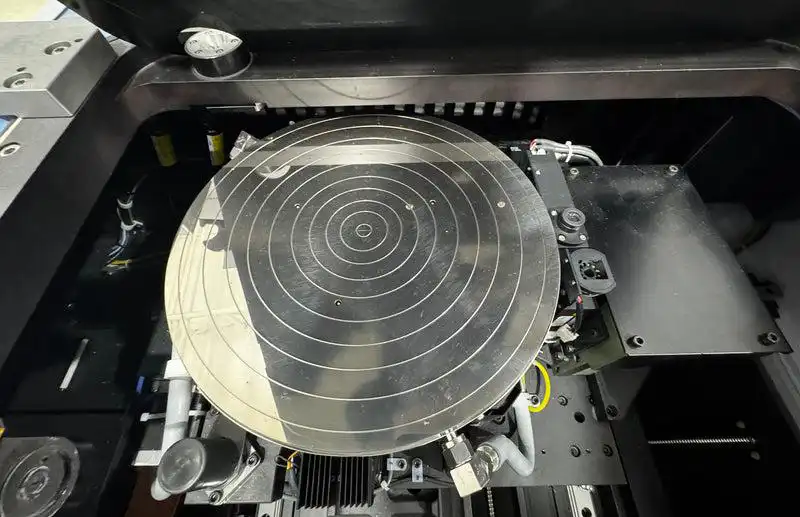
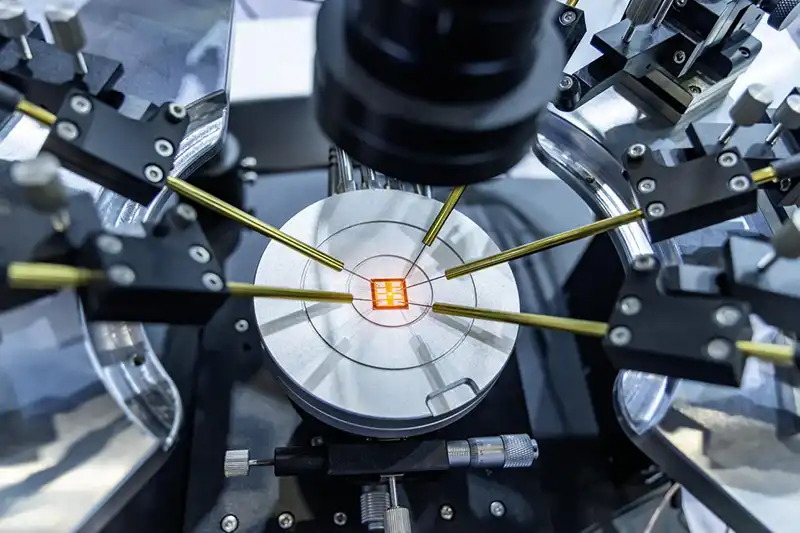
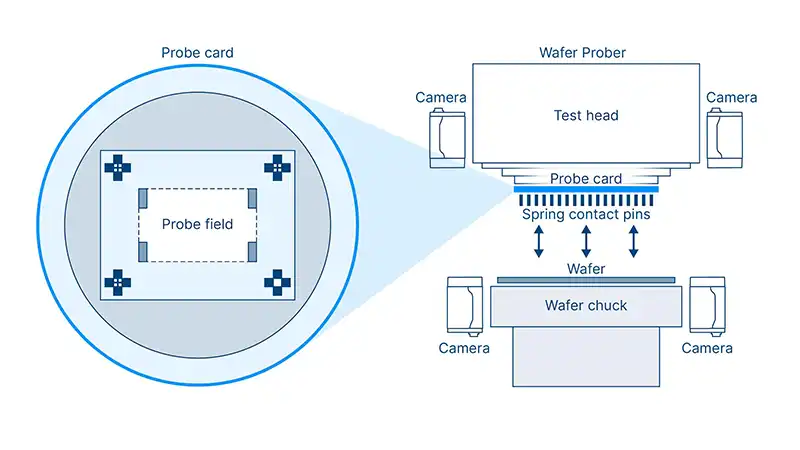
ACCRETECH’s official product information describes wafer probing systems for semiconductor electrical testing before wafer singulation. During probing, the wafer is positioned on the stage, and probe needles contact device pads so electrical measurements can be performed. The exact features available on an individual used machine still need to be confirmed against its configuration. See the manufacturer’s wafer probing systems overview.
UF3000EX: Check the actual production and probe-card requirements
The UF3000EX is associated with automatic wafer probing and demanding production applications. ACCRETECH’s published information highlights areas such as throughput, Z-platform performance, optical measurement, and navigation functions. These capabilities can be relevant when the test process requires repeatable positioning and stable contact with a probe card.
For a used UF3000EX, the buyer should focus on whether the machine’s installed configuration matches the intended operation. Confirm the wafer diameter, stage and chuck arrangement, probe-card interface, temperature functions, wafer handling system, and tester connection. If the application uses a high-pin-count probe card or requires a particular contact-force arrangement, request evidence that the actual unit can support the intended setup.
Do not assume that every feature described for the product family is installed on every pre-owned machine. Optional hardware, software revisions, service history, and previous modifications can affect the system delivered.
UF3000EX-e: Confirm the application-specific configuration
The UF3000EX-e is another platform that buyers may encounter when looking for a used ACCRETECH wafer prober. The manufacturer describes it as an automatic wafer prober that can be configured for different applications, including wafer formats from 200 mm to 300 mm and certain special wafer types.
That broad capability does not eliminate the need for unit-level checks. A buyer should confirm the exact wafer handling arrangement, chuck specifications, alignment options, probe-card compatibility, temperature control, and communication interfaces on the machine offered. Special wafer formats or non-standard process requirements deserve particular attention because mechanical support and software capability may depend on specific options.
If the production process relies on a particular recipe or wafer-map workflow, verify whether the relevant files, software environment, and transfer method are available and usable. Do not assume that a recipe from another prober can be transferred without validation.
AP3000/AP3000e: Evaluate the complete test-cell configuration
ACCRETECH identifies the AP3000/AP3000e family as high-performance probing equipment for 300 mm wafers. Its published options include different chuck temperature arrangements, probe-card-related functions, wafer identification, and automation-related configurations. Which options matter depends on the production line and the machine’s actual build.
For a used AP3000 or AP3000e, the key issue is not simply whether the platform supports 300 mm wafers. It is whether the unit can connect to the intended tester and operate with the required probe card, handling process, temperature conditions, and factory automation environment.
Check whether the quoted equipment includes the necessary interface hardware and whether any required options are installed, disabled, missing, or available only through additional purchases. If automatic handling or factory integration is part of the plan, confirm the specific interface and integration scope before committing to the machine.
Older and other ACCRETECH/TSK platforms
The used market may also include older ACCRETECH or TSK-labelled wafer probers, including machines from the UF200 family and other generations. Older equipment can be relevant for established test processes, laboratory use, engineering development, or operations where the required wafer format and interfaces are supported.
The main purchasing question is whether the equipment remains compatible with the current process and whether it can be maintained over the expected service period. Legacy software, obsolete computer hardware, unavailable interface boards, and limited service documentation may create costs that are not obvious from the asking price.
Before selecting an older model, ask for the software and operating-system details, available backups, interface specifications, maintenance history, and a list of components that have been replaced or modified. Where a test process depends on an older tester or proprietary communication arrangement, validate that arrangement before arranging shipment.
Model comparison: Use it as a screening tool, not a specification sheet
| Model or family | What to investigate | Important purchasing question |
|---|---|---|
| UF3000EX | Wafer format, probe-card arrangement, Z-axis performance, optics, chuck, loader, and tester interface | Can the actual unit support the required production test and contact conditions? |
| UF3000EX-e | Wafer format, special application options, alignment, temperature control, and handling configuration | Does the installed configuration match the wafer and process requirements? |
| AP3000/AP3000e | 300 mm wafer setup, chuck options, identification functions, automation, and tester connection | Are the required options and interfaces included and operational? |
| UF200 family and older platforms | Supported wafer sizes, legacy software, stage condition, interfaces, and spare-part availability | Can the machine be maintained and integrated for the expected operating period? |
| Other ACCRETECH/TSK models | Exact designation, configuration, application history, and technical documentation | Is the model suitable for this specific test process rather than merely similar to the required machine? |
This comparison is intentionally a selection aid rather than a complete specification table. The exact configuration of the individual unit takes precedence over a general description of the model family.
Match the Wafer Prober to the Test Process Before Comparing Prices
A wafer prober is part of a test cell. Its value depends on how well it works with the wafer, probe card, tester, handling process, software, and facility environment around it. Buyers who compare used machines based only on model name or purchase price may overlook integration costs that are more significant than the initial difference between quotations.
Wafer diameter and mechanical compatibility
Start with the wafer formats used in production. A machine suitable for one wafer diameter should not be assumed to handle another merely because the platform family includes multiple configurations. Confirm the actual chuck, loader, wafer cassette arrangement, and any special mechanical fixtures supplied with the unit.
If the process uses warped wafers, thin wafers, unusual substrates, or other non-standard materials, ask for confirmation of the relevant handling and chuck capabilities. A special wafer requirement may involve more than changing a software setting; it can depend on hardware, vacuum arrangements, support fixtures, and validated process conditions.
Also clarify whether the equipment is intended for full-wafer testing, partial-wafer operation, engineering work, or a specific production flow. These distinctions influence the required handling arrangement and the way acceptance should be demonstrated.
Probe-card compatibility and contact requirements
Probe-card compatibility is one of the most important checks in a used wafer prober purchase. The machine must accommodate the intended probe card mechanically and position the wafer and card correctly for electrical contact.
Confirm the probe-card holder and interface, mounting dimensions, available clearance, and any special hardware required by the application. If the process uses a card with demanding contact-force requirements or a large number of pins, ask what can be demonstrated on the actual machine. Do not treat a general statement that the prober is suitable for semiconductor testing as proof of compatibility with a particular card.
Probe-card condition also matters. A buyer should establish whether the card is included in the sale, whether it is a known-good production card, and whether the seller is supplying only the prober or a broader test setup. Probe cards are often application-specific; their presence should not be assumed from a photograph of the machine.
Tester interface and software communication
The prober and tester must communicate in the way required by the test process. A machine can be mechanically sound but unsuitable for the intended test cell if a required interface, communication option, or control component is missing.
Before purchase, identify the tester model, required interface, and any communication protocol or control arrangement that must be retained. Ask whether the corresponding interface hardware and cables are included. If integration depends on a legacy computer, proprietary software, or an older operating environment, document that dependency and determine how it will be supported.
The acceptance procedure should establish what constitutes successful communication. Depending on the application, that may involve loading the correct setup, initiating a controlled sequence, confirming wafer-position commands, checking result or map exchange, and verifying that the machine responds correctly to the test system. The exact procedure should be agreed by the buyer and seller rather than assumed.
Chuck temperature and thermal testing
Some wafer-level tests require controlled temperatures rather than ambient conditions. If the process includes hot or cold testing, confirm the temperature range required by the application and compare it with the actual chuck and temperature-control configuration of the used prober.
Ask whether the temperature option is installed, whether the required external equipment is included, and whether the system can demonstrate stable control under the agreed conditions. The presence of a temperature-capable chuck does not automatically establish that the complete temperature system is operational.
For temperature-sensitive applications, define the acceptance criteria before purchase. These may include the requested setpoint, stabilization period, control behaviour, and relevant measurement method. The criteria should reflect the process requirement and the capabilities that the seller has agreed to demonstrate.
Wafer alignment, stage movement, and repeatability
Alignment and positioning affect whether probe needles reach the intended contact locations. Buyers should ask how the machine’s alignment functions will be demonstrated and what calibration or performance records are available.
A practical evaluation can include a review of the stage movement, alignment camera or optical system, chuck condition, and any available calibration records. Where the application requires a defined positioning tolerance, agree on the test method and acceptance threshold before the demonstration.
Avoid relying solely on a statement that the equipment is “high precision.” Precision is meaningful only in relation to a defined measurement method, test setup, and acceptance requirement. For a used machine, current demonstrated performance is more useful than an unqualified claim about the original product family.
Wafer maps, recipes, and process continuity
Existing test operations may depend on established wafer maps, recipes, job files, or process settings. These files can be essential to transferring a machine into production, but their availability and compatibility must be checked.
Ask what files are included, which software version is installed, and whether the relevant formats can be backed up or exported. If the operation requires compatibility with an existing test system, validate the transfer process rather than assuming that file names or extensions alone establish compatibility.
A complete handover should identify which software and configuration files are included, any license or access restrictions, and who is responsible for restoring or validating the operating environment after installation.
How to Inspect a Used ACCRETECH Wafer Prober Before Purchase
A structured inspection reduces uncertainty and creates a common basis for comparing offers. It should cover the machine’s physical condition, motion system, optics, chuck, wafer handling, software, interfaces, and demonstrated operation. The inspection scope depends on whether the equipment is being sold as-is, tested, or refurbished.
1. Confirm the machine identity and configuration
Begin with the nameplate, model designation, serial number where available, and configuration records. Compare these details with the quotation, photographs, and any test documentation. If the equipment has been modified, ask for a clear list of changes and identify which original components are still installed.
Request photographs of the complete machine and key assemblies, not only polished exterior panels. Useful views include the machine identification plate, stage area, chuck, loader, probe-card interface, control computer, electrical cabinets where safe and appropriate, and accessories included in the sale.
A configuration list should distinguish installed features from options that are not present. It should also identify missing parts, substitute components, and any known limitations. This prevents later disputes about whether a required option was part of the original quotation.
2. Review the XY stage and Z-axis operation
The stage system positions the wafer for probing, while the Z-axis and associated mechanisms contribute to the contact process. Wear, contamination, mechanical damage, or calibration problems can affect the machine’s suitability.
During an agreed demonstration, observe stage movement across the required travel range and look for abnormal noise, sticking, inconsistent movement, or visible damage. Ask whether available calibration or maintenance records can be provided. If the process depends on specific positioning performance, define a suitable verification method rather than relying on visual observation alone.
The Z-axis and contact-related functions should be checked according to the machine’s configuration and the agreed safety procedure. The objective is to determine whether the system can perform the required motion and contact operations, not to infer performance from the machine’s age or exterior condition.
3. Examine the chuck and wafer-support surface
The chuck is central to wafer support and positioning. Its condition should be assessed for visible contamination, damage, signs of wear, and suitability for the intended wafer type.
Confirm the chuck diameter and configuration, vacuum or wafer-holding arrangement, and any required temperature functions. If the application uses thin or special wafers, check whether the supplied support arrangement matches that process.
If the chuck has been replaced or repaired, request relevant service details. A visually clean surface is useful, but it does not establish flatness, temperature performance, vacuum integrity, or suitability for a demanding process. Those items require appropriate verification.
4. Check optical alignment and viewing functions
Optical systems help the operator or automated functions locate the wafer and establish the relationship between the wafer and probe card. Their condition can affect setup time and positioning confidence.
Inspect the viewing system for visible damage, contamination, unstable images, lighting problems, and control issues. Ask the seller to demonstrate the alignment functions relevant to the intended application. If the machine includes an optical measurement or target-scope function, confirm whether it is installed and working on the actual unit.
Where calibration records exist, review them for date, scope, and relevance to the machine being sold. Do not assume that a function is available merely because it appears in published documentation for the model family.
5. Test the wafer loader and handling sequence
Wafer handling can become a bottleneck even when the stage and optics appear to work correctly. The inspection should establish whether the loader, cassette arrangement, wafer identification, and handling sequence match the intended production flow.
Confirm the supported cassette or wafer carrier, loader configuration, sensors, and any identification or mapping functions required by the process. If the machine will operate in a more automated test cell, review the interfaces and dependencies needed for integration.
Ask the seller to demonstrate a representative handling sequence where practical. Any missing cassette hardware, interface module, sensor, or special fixture should be recorded as an exclusion or a required purchase before installation.
6. Verify the tester connection and operating software
The control system, software environment, and tester interface should be treated as part of the equipment package. Determine whether the computer starts normally, whether the required software is accessible, and whether the machine can execute the functions included in the agreed demonstration.
Ask for the software version and a record of any known faults or workarounds. Confirm whether backups, configuration files, operating manuals, and recovery media are included where available. If licenses or credentials are needed, establish what can legally and practically be transferred with the machine.
A seller’s demonstration should use the agreed configuration and should identify any functions that cannot be tested before shipment. Those limitations can then be considered in the commercial terms and acceptance procedure.
7. Review maintenance history and known faults
Maintenance history provides context that exterior photographs cannot. Ask when the machine was last operated, what type of process it supported, whether it was removed from production or stored, and what service work has been performed.
Request details of replaced parts, recurring alarms, known limitations, and any work that remains outstanding. If the machine has been in storage, ask how it was preserved and what checks have been completed before sale.
A long period without operation does not automatically make a machine unusable, but it increases the importance of a suitable inspection and restart plan. The buyer should understand which functions have actually been tested and which remain unverified.
8. Agree on a written acceptance procedure
An acceptance procedure should turn general statements about condition into observable checks. It can cover machine identity, movement, alignment, handling, interface communication, required temperature functions, and the process-specific test agreed by both parties.
Not every application needs the same acceptance criteria. A research setup may have different priorities from a high-volume production line. The buyer should define the essential functions, the test method, the evidence to be recorded, and the consequences if an agreed item fails.
If a full production demonstration is not possible before shipment, record that limitation explicitly. The parties can then agree on alternatives, such as a limited functional demonstration, a third-party inspection, a documented as-is sale, or post-installation acceptance terms.
Used, Tested, Refurbished, or As-Is: What Does the Seller’s Description Mean?
Condition terms are not always used consistently across the used-equipment market. Buyers should ask what each description means for the particular unit and what evidence supports it.
| Condition description | What it may indicate | What the buyer should request |
|---|---|---|
| Used | The machine has been previously owned or operated; current performance may not be fully established | Current photographs, configuration details, known faults, and inspection access |
| Power-on tested | The system has been powered on and basic startup has been checked | A list of functions tested and any functions not verified |
| Functionally tested | Certain operating functions have been demonstrated | Test scope, results, test date, and any limitations |
| Refurbished | Some repair, maintenance, cleaning, or replacement work has been completed | A written work scope, replaced-parts list, and post-service test results |
| As-is | The machine is offered in its existing condition, often with limited assurances | A clear statement of exclusions, known issues, and buyer responsibilities |
These descriptions should not be treated as universal certification categories. A “refurbished” label alone does not reveal which components were replaced or whether the machine passed a process-specific test. Likewise, “tested” is incomplete unless the seller explains what was tested and what the results were.
For a buyer, the most useful evidence is specific to the unit: dated photographs, a configuration list, inspection notes, test records, and a written description of the agreed condition. If the supplier cannot verify a particular function, it is better for that limitation to be stated clearly than concealed by a broad condition label.
How Much Does a Used ACCRETECH Wafer Prober Cost?
There is no single price that applies to every used ACCRETECH wafer prober. The final quotation depends on the model, installed options, machine condition, included accessories, service work, availability, location, and delivery terms. A machine with a lower initial asking price may require substantial spending before it can support the intended test process.
For that reason, buyers should compare the total cost of obtaining a working test setup rather than compare machine prices alone.
Main factors that affect the purchase price
Model and configuration. Different platforms and configurations serve different requirements. A machine with the required chuck, handling system, interface hardware, and software may be more valuable to a particular buyer than a nominally similar unit missing those components.
Condition and demonstrated performance. A machine with documented test results and a clearly defined condition may carry a different price from equipment sold without inspection or operational evidence. The value of the documentation depends on whether the demonstrated functions match the buyer’s needs.
Installed options. Temperature-control functions, wafer identification, automation interfaces, probe-card-related hardware, and other options can affect both the price and the cost of preparing the machine for use. Confirm which items are actually included.
Maintenance and refurbishment scope. Repair work, calibration, cleaning, and replacement of worn components may affect the purchase price. Buyers should ask what work has been completed rather than rely on the term “refurbished.”
Software and interface requirements. Missing control hardware, obsolete computers, or unavailable interface components can create additional costs. These issues should be identified before comparing quotations.
Logistics and commissioning. Crating, transport, insurance, rigging, installation, facility connections, and integration with the test system can materially affect the overall budget.
Build a total-cost comparison
| Cost category | Questions to resolve before purchase |
|---|---|
| Equipment price | Which exact machine and configuration are included? |
| Missing options or parts | Are required holders, interface modules, cables, fixtures, or accessories excluded? |
| Inspection and testing | Is a demonstration included, or is independent inspection needed? |
| Repair or refurbishment | What work is complete, and what remains the buyer’s responsibility? |
| Packing and shipping | Who handles export packing, insurance, freight, and delivery? |
| Installation | Are rigging, positioning, facility connections, and setup included? |
| Test-cell integration | Is tester communication or factory automation integration required? |
| Training and documentation | Are manuals, backups, and operator guidance available? |
| Contingency | What allowance is needed for faults discovered after delivery? |
A useful comparison records the same cost categories for every offer. If one supplier quotes only the machine and another includes inspection, packing, and installation, the headline prices are not directly comparable.
How to request a meaningful quotation
A quotation request should contain enough technical information to avoid an unnecessary round of clarification. Include:
The preferred ACCRETECH model or acceptable model range.
Wafer diameter and any non-standard wafer requirements.
Device type and the general test application.
Required chuck temperature range, if applicable.
Probe-card holder or interface requirements.
Tester make, model, and required communication arrangement.
Loader, cassette, wafer-map, and automation needs.
Required accessories, software, and documentation.
Delivery destination and expected installation scope.
The level of testing or acceptance evidence required before shipment.
If some details are not yet known, state that openly. The supplier can then identify which information is essential before a suitable machine can be confirmed. This approach is more productive than requesting a price based only on the brand name.
Choosing a Supplier for Used ACCRETECH Wafer Probers
A used-equipment supplier should be able to explain what is being sold, what has been verified, and what the buyer should expect after delivery. A low quotation is not necessarily a poor offer, and a high quotation is not automatically evidence of better quality. The comparison should be based on the machine, documentation, condition, commercial terms, and support scope.
Ask for unit-specific evidence
Start by requesting photographs and configuration information for the actual unit. Confirm the model designation and identify the accessories included. If the supplier uses stock images or photographs of a similar machine, ask for current images of the equipment being offered.
Where possible, request a demonstration or inspection record that identifies the functions checked. The evidence should make clear whether the machine was merely powered on or whether key functions were tested. For a process-critical purchase, a written acceptance scope is more useful than a general assurance that the machine is in good condition.
Clarify what “ready for use” means
Suppliers may use phrases such as “ready to run” or “production ready,” but those phrases should be tied to a defined scope. Does the offer cover power-on, basic motion, alignment, wafer handling, tester communication, and the required temperature functions? Has the machine been tested with the buyer’s probe card or an equivalent setup? Is installation included?
If a seller cannot demonstrate the complete intended process before shipment, ask which parts have been verified and which remain the buyer’s responsibility. A transparent limitation is easier to manage than an undefined promise.
Review packing, shipping, and installation responsibilities
Wafer probers are precision systems, and transport and reinstallation should be planned carefully. Clarify who is responsible for disconnection, packing, crating, shipping, insurance, unloading, rigging, positioning, and commissioning.
Ask whether the supplier provides handling instructions or identifies components that must be removed or secured before transport. Confirm that the delivery location has the required access and facilities. If the machine is being shipped internationally, clarify export documentation, import responsibilities, and any other costs that are not included in the quotation.
Installation and recommissioning may require qualified personnel familiar with the equipment and the buyer’s test environment. If that support is not included, the buyer should plan for it before scheduling production.
Check documentation and after-sales support
Documentation can make a significant difference when integrating older semiconductor equipment. Ask what manuals, configuration records, software backups, maintenance records, and interface information are available. Confirm whether the supplier can help identify replacement parts or troubleshoot issues after delivery.
Do not assume that every legacy component will remain available indefinitely. If the machine relies on a particular controller, interface board, or computer platform, consider the risk of a future failure and the options for repair or replacement.
A professional supplier should be willing to state the boundaries of its support. It is better to know in advance whether help is available for installation, troubleshooting, or spare-part sourcing than to discover those limitations after the machine has arrived.
As a manufacturer and supplier of used semiconductor equipment, we recognize that the machine’s configuration and the buyer’s process requirements need to be evaluated together. A useful quotation should therefore identify the available unit, its known configuration, the evidence available for its condition, and any limitations that the buyer should consider before placing an order.
Preparing a Used Wafer Prober for Installation
Purchase approval is only one stage of the process. Before delivery, the buyer should make sure that the site, test system, handling arrangements, and acceptance plan are ready for the equipment.
Confirm facility requirements
Request the machine’s applicable utility and installation information and compare it with the intended site. This may include electrical supply, compressed air, vacuum, exhaust or environmental requirements where applicable, floor loading, access clearance, and the space needed for service and operation. The exact requirements must be verified for the individual configuration.
Do not plan a move based only on the machine’s external dimensions. Consider the crate dimensions, lifting points, access route, door openings, lift capacity, and any constraints at the final installation location. The logistics provider and the personnel responsible for installation should agree on the handling plan before shipment.
Plan the test-cell connection
Identify the tester, probe card, control computer, software environment, and any automation equipment that must connect to the prober. Confirm which items are being transferred from the existing setup and which are included in the purchase.
Where production continuity matters, schedule time for interface validation and recipe verification. A machine may need alignment checks, software configuration, and test-cell adjustments after being moved. The installation schedule should allow for these activities instead of assuming that the system can immediately resume production.
Preserve configuration information
Before the machine leaves its current location, record the configuration and any available software or recipe backups that can legally and practically be transferred. Photograph cable connections and relevant assemblies where appropriate, and make an inventory of loose accessories.
The goal is to reduce uncertainty during reinstallation. If a component is removed for transport, the buyer and seller should know what was removed, how it was packed, and where it belongs. A clear inventory also helps identify missing items at delivery.
Separate shipping acceptance from operational acceptance
Delivery confirmation and successful operation are different milestones. A machine can arrive with its major assemblies present but still require setup, calibration, or integration before it meets the buyer’s process requirements.
The purchase agreement should clarify when the equipment is considered delivered and how any agreed operational acceptance is handled. If post-installation testing is part of the agreement, define the test scope, time frame, responsibilities, and method for recording results.
Common Mistakes When Buying a Used ACCRETECH Wafer Prober
Choosing by model number alone
A model designation narrows the search, but it does not prove that the available unit has the required options. Confirm the actual build and the functions that matter to the process.
Treating every option as standard
Published product pages often describe features across a product family or identify optional functions. Ask the seller to distinguish installed options from features that are not present on the offered machine.
Assuming power-on means production-ready
Startup is only one part of an inspection. Stage movement, alignment, handling, software, tester communication, and process-specific requirements may still need verification.
Comparing prices without installation costs
Packing, freight, rigging, integration, missing parts, and service work can change the overall economics. Use a total-cost comparison for each offer.
Overlooking software and legacy interfaces
Older equipment may depend on specific computers, software versions, communication boards, or file formats. Identify these dependencies before committing to a purchase.
Failing to agree on acceptance criteria
Vague statements about condition create room for disagreement. Define what will be demonstrated, what evidence will be supplied, and how unverified functions will be handled.
Waiting until delivery to identify missing accessories
A machine may be offered without items that are essential to the buyer’s setup. Record included and excluded components in the quotation and purchase documents.
Buyer’s Checklist: Information to Collect Before Ordering
Use this checklist to compare suppliers and reduce the chance of overlooking an important requirement.
Exact model designation and machine identification
Current photographs of the actual unit
Configuration list showing installed options
Supported wafer diameter and any special-wafer requirements
Chuck type and required temperature capability
Probe-card holder and mechanical interface details
Tester interface and communication requirements
Loader, cassette, wafer identification, and mapping configuration
Software version and available backups or documentation
Maintenance history and known faults
Functional test or demonstration records
List of included accessories and excluded components
Packing, transport, insurance, and delivery responsibilities
Installation and commissioning scope
Written acceptance criteria and any exclusions
Total expected cost, including preparation and integration
The checklist should be adapted to the intended application. A laboratory or engineering setup may not need the same automation capability as a high-volume production line, while a temperature-sensitive process may require more detailed thermal acceptance testing. The aim is to verify the requirements that matter to the buyer, not to demand every possible option.
Frequently Asked Questions About Used ACCRETECH Wafer Probers
What should I check before buying a used ACCRETECH wafer prober?
Start with the exact model and installed configuration, then verify wafer format, probe-card compatibility, chuck and temperature options, wafer handling, tester interface, software, and operating condition. Request current photographs and unit-specific test evidence. Before purchase, agree on which functions will be demonstrated and what the seller is responsible for supplying.
Which ACCRETECH wafer prober models are worth considering?
The right model depends on the wafer format, test process, and configuration required. Buyers may encounter platforms such as the UF3000EX, UF3000EX-e, AP3000/AP3000e, and older UF200-family machines in the used market. These names are starting points for evaluation, not proof that a particular unit is available or suitable. Compare the actual configuration with the process requirements before making a decision.
Can a used ACCRETECH wafer prober support 300 mm wafers?
Some ACCRETECH platforms are specified for 300 mm wafer applications, including models in the UF3000 and AP3000 families. However, buyers should confirm the exact model and configuration of the machine being offered. The wafer-handling system, chuck, loader, and related options should be verified rather than inferred from the brand or family name.
Is a tested machine better than an untested machine?
A tested machine provides more information if the seller documents what was tested and supplies relevant results. The word “tested” alone is not enough. Ask whether the checks covered only startup or also the functions essential to the intended application, such as stage movement, alignment, wafer handling, and tester communication.
What is the difference between used and refurbished wafer probing equipment?
“Used” generally indicates previous ownership or operation, while “refurbished” suggests that some maintenance, repair, or restoration work has been completed. These terms do not establish a universal condition standard. Ask for the work scope, replaced-parts list, current test results, and any remaining limitations.
How can I determine the price of a used ACCRETECH wafer prober?
The price depends on the model, installed options, condition, included accessories, service work, and commercial terms. Total cost also includes packing, freight, installation, integration, and any missing hardware or repairs. Request a quotation tied to a specific unit and compare offers using the same cost categories.
Can I use my existing probe card and tester?
Possibly, but compatibility must be confirmed. Check the mechanical probe-card interface, clearance, tester connection, control arrangement, and any required communication hardware or software. If the process depends on specific settings or recipes, validate the intended setup before shipment or include it in an agreed acceptance procedure.
Should I buy a machine with a hot or cold chuck?
That depends on the test process. If testing must be performed at elevated or reduced temperatures, verify that the required chuck and temperature-control arrangement are installed and operational. If the application only requires ambient testing, a temperature option may not be necessary. Confirm the process requirement first, then compare the cost and condition of the relevant configuration.
What documents should accompany a used wafer prober?
Useful documents may include the configuration list, available operating manuals, maintenance records, software and interface information, test results, and an inventory of included accessories. The actual documents available will vary by machine. Ask the supplier to identify any missing documentation before purchase.
Can a used wafer prober be installed directly into production?
Not automatically. The machine may need transport preparation, installation, calibration checks, software configuration, tester integration, and acceptance testing. Whether it can enter production quickly depends on its condition, the completeness of the configuration, the compatibility of the test cell, and the scope of commissioning support.
What if the required ACCRETECH model is not available?
State the required wafer format, device type, probe-card arrangement, temperature conditions, tester interface, and automation needs. A supplier may be able to identify another configuration that meets the same functional requirements. Any alternative should be evaluated against the process and verified technically; a similar model name is not enough to establish equivalence.
Final Buying Advice
Buying a used ACCRETECH wafer prober is a configuration and integration decision as much as an equipment purchase. The best candidate is not necessarily the newest machine, the most feature-rich platform, or the lowest-priced listing. It is the unit whose verified configuration matches the test process and whose condition, documentation, logistics, and support arrangements fit the buyer’s operating needs.
Start by defining the wafer format, probe-card setup, tester interface, temperature requirements, and expected handling workflow. Use those requirements to screen model families, then request evidence for the specific machine being offered. Confirm which options are installed, which accessories are included, and what the seller has actually tested. Finally, compare the full cost of acquiring, installing, and integrating the equipment—not only the initial quotation.
For buyers sourcing used semiconductor equipment, a clear exchange of technical requirements and unit-specific information is the most effective way to narrow the options. A well-documented machine with an agreed acceptance scope gives both sides a more concrete basis for the purchase and helps reduce avoidable surprises during installation.