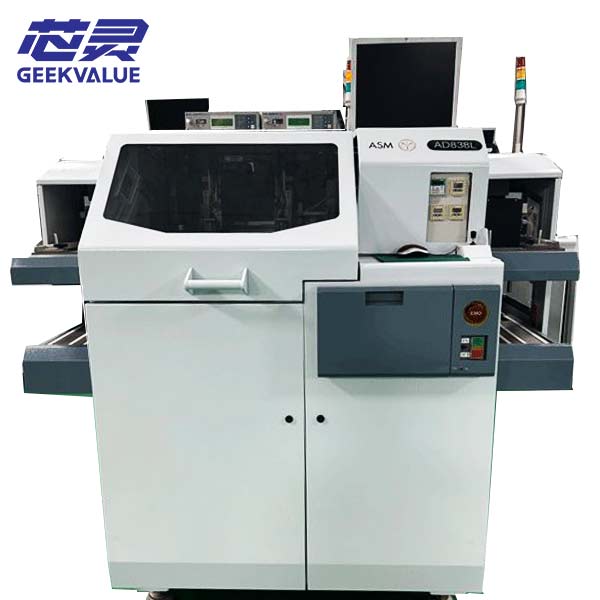
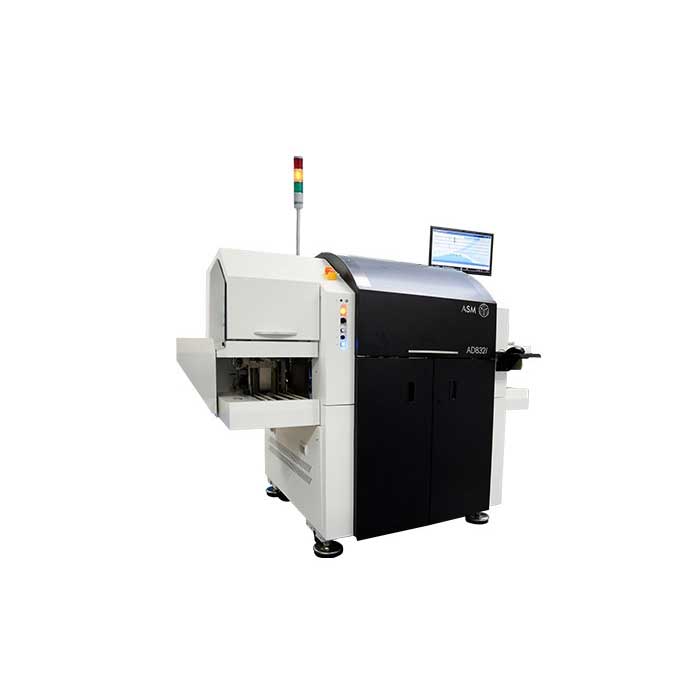
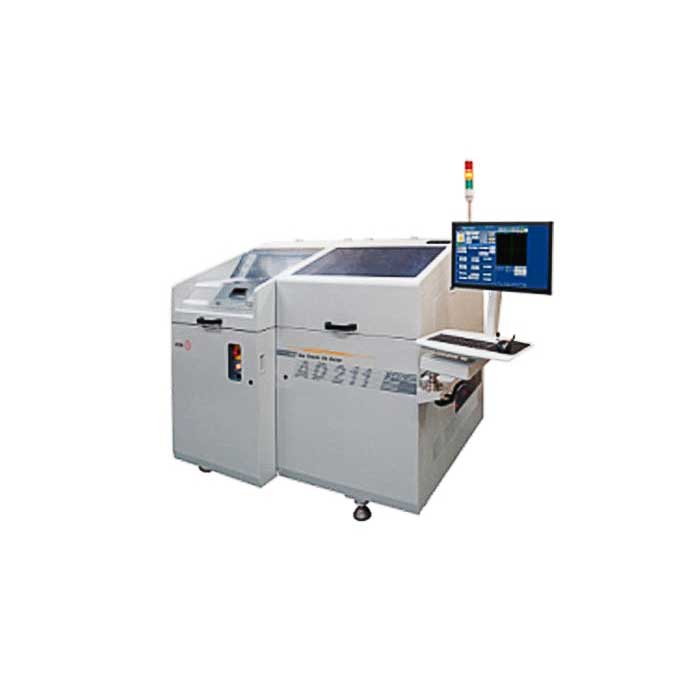
Choosing between a new and a used die bonder is not simply a comparison of purchase prices. The better investment depends on the bonding process, production schedule, equipment requirements, engineering resources, and the cost of bringing the machine into production.
For semiconductor manufacturers and packaging facilities, a new die bonder may offer advantages in configuration planning, documentation, warranty coverage, and access to current manufacturer support. A used die bonder, on the other hand, may provide a more economical route to additional capacity, equipment replacement, or production of established products.
Neither option is automatically the better choice. The important question is how much each machine will contribute to the intended production process—and what additional investment is required before it can do so.
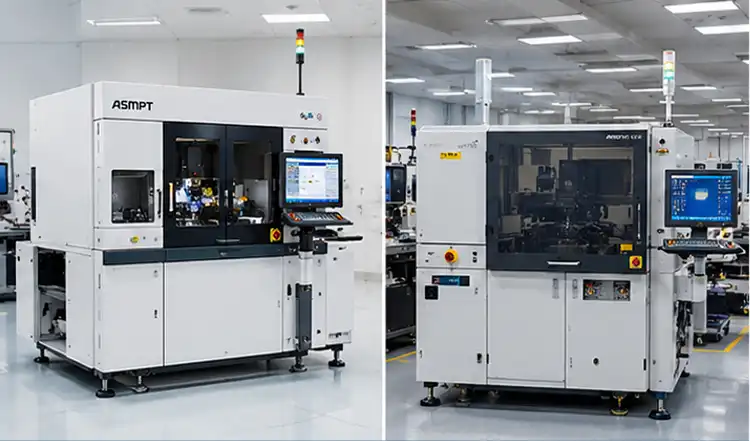
Start With the Production Requirement, Not the Machine's Age
Before comparing new and used die bonding equipment, define the job the machine needs to perform.
A facility adding a new advanced packaging process may have very different requirements from a manufacturer replacing a die bonder that has supported the same product family for years. The first project may depend on current process capabilities and application engineering, while the second may prioritize compatibility, delivery time, and continuity with existing production.
Several questions help establish the right starting point:
Is the machine intended for an existing production line, a capacity expansion, or a new process?
Which bonding method is required, such as epoxy die attach, eutectic bonding, or flip-chip bonding?
What die dimensions, substrate formats, placement accuracy, and throughput are necessary?
Can existing tooling, recipes, and material-handling arrangements be retained?
How much engineering time is available for installation, troubleshooting, and process qualification?
These answers establish a practical comparison. A machine with newer hardware is not necessarily a better investment if its configuration does not match the application. Likewise, an older platform is not automatically suitable simply because its specifications appear sufficient.
Where a New Die Bonder Can Justify the Higher Initial Investment
New equipment is often worth considering when the production requirement cannot be met reliably by an available used platform or when the project depends heavily on manufacturer support.
A specific configuration is essential
A new machine can offer greater flexibility when defining the required bonding head, vision package, heating module, automation options, material handling, and software functions. The exact options depend on the manufacturer and model.
This matters when a production process has narrow tolerances or requires a combination of features that is difficult to find in the secondary equipment market.
Buying new does not eliminate the need for application verification, but it can make it easier to specify the intended configuration before delivery.
Support and documentation affect production risk
Current documentation, software access, warranty terms, and technical support can be important when a machine is part of a critical manufacturing process. These benefits vary by supplier, model, and service agreement, so they should be confirmed rather than assumed.
For facilities without in-house expertise on a particular platform, the availability of qualified service personnel may influence the decision as much as the machine's technical specifications.
The process requires a long-term equipment plan
When a die bonder will support a new product line for many years, its future compatibility matters. Production volumes may change, package designs may evolve, and process requirements may become more demanding.
A new machine can be a sensible investment when its available options, software roadmap, and support arrangements align with those anticipated changes. However, buyers should verify the actual upgrade path instead of treating newer equipment as automatically future-proof.
When a Used Die Bonder Can Deliver Better Value
A used die bonder becomes attractive when its existing capabilities match the production requirement and the buyer can establish its actual condition and configuration.
Established processes may not need the newest platform
Many production applications rely on mature bonding processes with well-understood material combinations, tooling requirements, and process windows. In such cases, the latest equipment generation may not provide enough additional value to justify its higher acquisition cost.
A previous-generation die bonder can be a practical option if it meets the required placement performance, supports the necessary bonding method, and can maintain stable operation under the intended production conditions.
The key is to evaluate the individual machine—not just the model name or the age listed in a quotation.
Existing production capacity needs to increase
A used machine may allow a manufacturer to add another bonding station without committing the entire equipment budget to a new platform. The remaining capital can then be allocated to tooling, spare parts, process development, or other production bottlenecks.
This approach is particularly relevant when the new capacity will support a known product rather than an entirely new bonding process.
The financial benefit depends on whether the available machine can enter production without extensive modification. Missing tooling, incompatible material handling, unavailable software, or unexpected repairs can reduce the apparent saving.
Replacement timing matters
When an existing machine fails or a production schedule changes, equipment availability can become a major consideration. A suitable used die bonder may be available sooner than a newly manufactured system, although inspection, refurbishment, shipping, installation, and qualification still take time.
Buyers should compare realistic delivery-to-production timelines, not simply the date on which the machine can leave the seller's facility.
The Real Comparison: Total Cost Before Production
The quoted machine price is only one part of the investment. A useful comparison includes all the costs and work required to achieve the intended production capability.
| Cost or requirement | New die bonder | Used die bonder |
|---|---|---|
| Initial purchase | Generally higher for a comparable configuration, subject to model and options | May offer a lower entry cost, depending on condition and configuration |
| Configuration | Options can be specified when ordering | Available features depend on the individual machine |
| Tooling and fixtures | Required items must still be confirmed | Existing tooling may be incomplete or incompatible |
| Installation and qualification | Depends on application, integration, and acceptance scope | May require additional inspection, repairs, calibration, or process adjustment |
| Warranty and service | Depends on the supplier's contract | Depends on the seller, refurbishment scope, and support arrangement |
| Software and parts | Confirm license terms, availability, and support period | Check access, version compatibility, backups, and parts availability |
| Production risk | Reduced uncertainty in some areas, but not eliminated | Depends heavily on documented condition and the work remaining |
| Long-term suitability | Depends on process fit and upgrade options | Depends on capability, supportability, and the expected production life |
A fair comparison should use equivalent scope. For example, a used machine sold as-is should not be compared directly with a new system that includes installation, training, acceptance testing, and a defined warranty without accounting for those differences.
Calculate the cost of making the machine production-ready
A practical budget can be expressed as:
Total acquisition cost = purchase price + required repairs or refurbishment + tooling and software + logistics and installation + qualification costs.
Depending on the project, the analysis may also include spare-parts inventory, maintenance, expected downtime, and the engineering time needed to transfer or establish the process.
This does not mean every used machine requires major refurbishment, or that every new machine is delivered ready for immediate production. The purpose is to identify which costs are included, which remain with the buyer, and which are uncertain.
For a more meaningful decision, compare the expected cost over the same operating period and against the same production requirements.
A Machine That Meets the Specification May Still Be the Wrong Investment
Die bonding performance depends on the complete process configuration. Placement accuracy alone cannot establish whether a machine will work for a particular product.
For example, a buyer transferring an existing process should verify whether the candidate machine supports the current die dimensions, substrate format, bonding material, heating requirements, tooling interfaces, and vision functions. Differences in these areas can require process development or new fixtures even when the headline specifications look similar.
A new application introduces a different challenge. The required process window may not yet be fully established, and the buyer may need application support, trials, or additional validation before committing to production.
In either case, machine selection should follow the actual process requirements. The equipment's age and price are secondary to whether it can produce the required result consistently.
How Maintenance Capability Changes the Decision
The engineering resources available at the buyer's facility can substantially influence the value of a used die bonder.
A team familiar with the platform may be able to evaluate wear, troubleshoot common faults, manage preventive maintenance, and handle some configuration changes internally. This can make a used machine more attractive.
A facility with limited maintenance resources may place greater value on a clear service arrangement, accessible spare parts, documented repair work, and responsive technical support. Under those conditions, a new machine—or a properly refurbished used machine with a clearly defined support scope—may be worth the additional cost.
Before purchasing used equipment, establish the availability of critical components, the status of the control system and software, the completeness of maintenance records, and the scope of any functional or bonding tests. A machine that powers on successfully has not necessarily demonstrated production capability.
New or Used: Which Option Fits Your Situation?
The following situations provide a practical starting point for the decision.
A new die bonder may be the stronger option when:
The process requires a specific configuration that is not readily available used.
Current manufacturer support or defined warranty coverage is a major requirement.
The project involves a new production process with demanding qualification needs.
The expected production life and utilization justify the higher initial investment.
A used die bonder may be the stronger option when:
The bonding process is established and its requirements are clearly defined.
An available machine can meet the application without excessive modification.
The project needs additional capacity or a replacement machine within a controlled budget.
The buyer can verify condition, configuration, tooling, software, and support arrangements.
A third possibility is a refurbished die bonder. This may bridge the gap between an as-is used machine and a new system, but the term refurbished has no single universal scope. Ask for a specific list of completed work, replaced parts, calibration activities, test results, and any warranty provided.
Questions to Resolve Before Requesting a Quotation
To compare equipment offers accurately, prepare the following information:
Required bonding process and target product
Die dimensions, substrate type, and material format
Placement accuracy and throughput requirements
Necessary vision, heating, dispensing, and automation functions
Available tooling and compatibility with the candidate machine
Preferred condition: new, used, or refurbished
Required inspection, acceptance testing, installation, and delivery scope
Expected production start date and available maintenance resources
This information helps suppliers identify relevant configurations and makes quotations easier to compare. It also reduces the risk of selecting a machine based on a low price only to discover that essential functions or accessories are missing.
Finding a Suitable Used Die Bonder
For manufacturers considering the secondary equipment market, GK-SEMI supplies used semiconductor equipment for production replacement, capacity expansion, and other equipment sourcing requirements. The relevant question is not simply whether a particular model is available, but whether its configuration and documented condition match the buyer's process.
When reviewing a candidate machine, request the exact model and configuration, current operating status, available maintenance history, included tooling, software information, inspection evidence, and delivery scope. Confirm any performance claims against the specific machine being offered.
The same principle applies when comparing used equipment with a new quotation: evaluate the complete production solution rather than the equipment label alone.
Frequently Asked Questions
Is a used die bonder worth buying?
It can be, provided the machine meets the required bonding process and its condition, configuration, supportability, and remaining costs are understood. The savings depend on the specific machine and the work needed before production.
Is a new die bonder more reliable than a used one?
New equipment generally offers a different starting point in terms of operating history and may come with warranty coverage, but reliability depends on the model, configuration, maintenance, process conditions, and support. A well-maintained used machine may be suitable for an established process, provided its condition is verified.
What should buyers compare besides the purchase price?
Compare tooling, software access, machine condition, refurbishment scope, installation, qualification, spare parts, maintenance, and expected downtime. Make sure both quotations cover equivalent functions and services.
Should I buy a used or refurbished die bonder?
The choice depends on the machine's condition and the buyer's technical resources. A used machine with a clear operating history may be suitable as offered. Refurbished equipment may reduce some risks if the work and test scope are documented, but the label alone does not guarantee performance.
How can I determine whether a used die bonder will meet my process requirements?
Match the machine's bonding method, die and substrate handling, placement performance, vision system, heating or dispensing options, tooling, and software to the intended product. Request relevant inspection or application-test evidence and identify any process qualification still required.
Conclusion
The better investment is the die bonder that meets the production requirement with an acceptable balance of acquisition cost, process capability, support, and operating risk. New equipment may justify its premium when configuration, support, or long-term process planning demands it. Used equipment may deliver stronger value when an established application can be supported by a verified machine at a lower total cost.
Compare the complete route to production—not just the purchase price—and base the final decision on the specific machine, its documented condition, and the work required to make it productive.