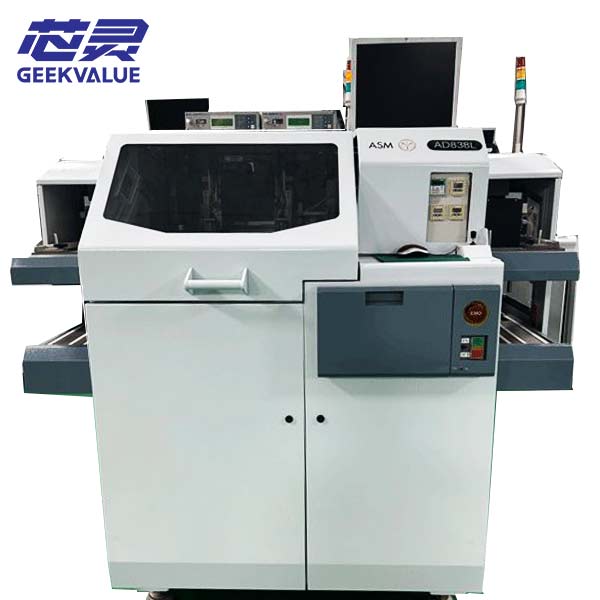
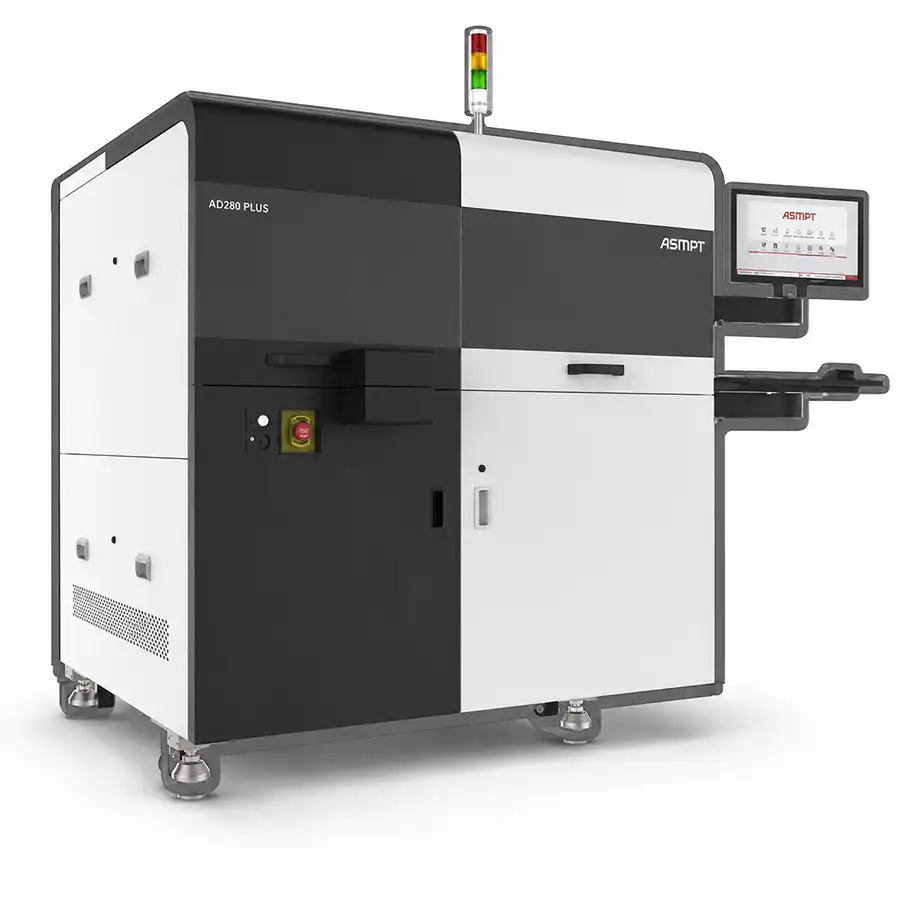
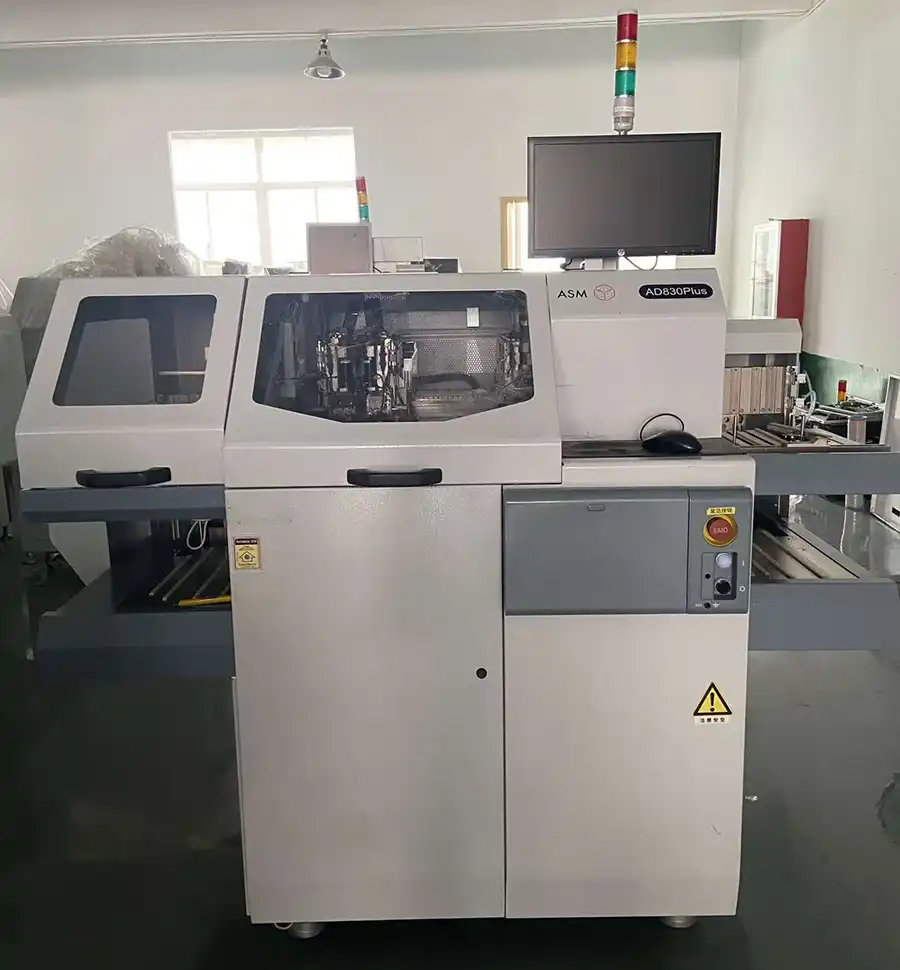
A discontinued die bonder can remain a practical investment for semiconductor manufacturers, packaging facilities, and electronics production companies. The end of a model's commercial life does not automatically mean that the equipment has lost its production value. A machine that already matches an established bonding process may be more practical than replacing the entire production setup with a newer platform.
The difficulty lies in determining whether a particular machine can continue to perform the required work after purchase. A model name alone cannot answer that question. Two machines from the same product family may differ in installed options, control hardware, bonding tools, software versions, vision capabilities, or interface configurations. Even when the equipment powers on and completes basic movements, it may still lack the configuration or support needed for actual production.
For buyers considering discontinued die bonder models, the central issue is therefore not simply the machine's age or appearance. It is whether the equipment's process capabilities, control system, critical components, and maintenance requirements remain manageable throughout its expected service life.
A sound sourcing decision should establish what the machine can do today, what may fail tomorrow, and what resources would be needed to keep it operating. These questions become particularly important when original equipment manufacturer support has changed, replacement parts are harder to obtain, or technical documentation is incomplete.
Why a Discontinued Die Bonder Needs a Different Evaluation Approach
A discontinued model presents a different purchasing challenge from a machine that remains in active production and receives regular manufacturer support.
With a current model, buyers may be able to compare published configurations, request standard service packages, and obtain replacement components through established channels. For older equipment, the availability of these resources can vary significantly. Some components may remain obtainable through existing inventories or specialist suppliers, while others may require repair, refurbishment, or a technically verified alternative.
This changes the meaning of equipment value.
A lower purchase price may look attractive, but the financial advantage can disappear if the machine requires extensive troubleshooting, missing accessories, control-system recovery, or unexpected modifications before it can be used. Conversely, a discontinued die bonder with a suitable configuration, documented operating history, and accessible critical components may still offer a useful production solution.
The evaluation should separate three questions:
Process suitability: Can the machine handle the buyer's actual products, materials, bonding method, and production requirements?
Operational recoverability: Can the equipment be installed, configured, tested, and returned to production using resources that are realistically available?
Long-term maintainability: Can the owner address likely failures without facing unacceptable repair costs or extended downtime?
These questions are related, but they are not interchangeable. A machine may be mechanically sound yet difficult to operate because its software or configuration files are unavailable. Another may have an aging control system but remain a viable purchase because the relevant components can be repaired and the production process is already well established.
The goal is to identify which risks are manageable before the purchase and which could undermine the investment after delivery.
Confirm the Exact Model, Revision, and Installed Configuration
The first step is to identify the actual machine being offered, not merely the model family stated in the listing.
Die bonders often exist in multiple configurations. Options can differ by production generation, customer specification, bonding technology, tooling arrangement, vision system, and automation interface. A machine's commercial model designation may therefore reveal less than buyers expect.
Start by recording the complete model number, serial number, manufacturing information where available, and relevant configuration identifiers. Ask for photographs of the equipment nameplate and other identification labels. Compare these details with the seller's description and any available technical documentation.
The next step is to establish which options are physically installed.
Depending on the machine, relevant items may include:
Die pickup and placement assemblies
Bonding heads and available tool interfaces
Substrate or leadframe handling arrangements
Wafer handling and alignment functions
Optical recognition and vision hardware
Heating or temperature-control assemblies
Workholding fixtures and product-specific tooling
Automatic loading, unloading, or transfer interfaces
Controller hardware and installed operating software
Not every die bonder contains these features, and the presence of one option should never be assumed from the model name alone.
Why configuration differences matter
Consider a buyer who needs to continue a bonding process that relies on a particular substrate fixture, placement head, or vision arrangement. A machine from the correct product family may still be unsuitable if that component is absent or if the installed version cannot accommodate the required workpiece.
The same problem can arise when a buyer expects automated material handling but receives a configuration intended for a different workflow. Retrofitting the machine may be possible, but the cost and technical effort could change the purchasing decision.
Ask the supplier to distinguish between three categories:
| Configuration category | What to establish |
|---|---|
| Included hardware | Which assemblies, tools, fixtures, and accessories are physically supplied? |
| Installed options | Which capabilities are present and enabled on the specific machine? |
| Additional requirements | Which items would need to be sourced, restored, configured, or purchased separately? |
A clear configuration record also becomes useful during installation and acceptance testing. It establishes what was agreed upon and reduces the risk of disputes over missing components.
Practical rule: Do not approve a discontinued die bonder solely because its model number appears in a specification sheet. Verify the configuration of the actual unit, including the options needed for your production process.
Match the Bonding Process Before Comparing Machine Specifications
A machine's historical specifications matter only when they correspond to the intended application.
Die bonding can involve different combinations of die materials, substrate types, attachment methods, placement requirements, and downstream assembly processes. A machine that performs well in one production environment may not be an appropriate substitute for equipment used in another.
Before evaluating individual models, define the work the machine must perform.
Relevant production information may include:
Die dimensions and thickness
Substrate, leadframe, or wafer format
Die attachment material and bonding method
Required placement accuracy
Product geometry and alignment references
Bonding force and temperature requirements, where applicable
Expected throughput and changeover frequency
Existing tooling and process recipes
Downstream inspection and assembly requirements
The aim is not to collect every possible specification. It is to identify which technical requirements determine whether the machine can complete the actual process.
Distinguish essential requirements from desirable features
A buyer may prefer a newer vision system or higher nominal throughput, but neither should automatically outweigh process compatibility.
For example, if the production line already uses a stable bonding process with established tooling and documented parameters, preserving that process may be more valuable than acquiring a machine with additional features that the line does not need. In another situation, an older machine may lack a required handling capability, making the apparent cost savings irrelevant.
A useful way to organize the evaluation is to divide requirements into three groups:
| Requirement level | Meaning | Purchasing implication |
|---|---|---|
| Mandatory | Without this capability, the product cannot be processed correctly | Verify before considering the machine suitable |
| Operationally important | Its absence would reduce output, flexibility, or process stability | Quantify the workaround and its cost |
| Optional | Useful but not necessary for the intended production workload | Consider only after essential requirements are met |
This distinction prevents buyers from becoming distracted by long specification lists while overlooking a single critical incompatibility.
Check the actual product envelope
Nominal placement accuracy or maximum throughput does not prove that the equipment can handle every product within a broad category. Die size, workpiece dimensions, bonding materials, tooling, and process conditions can affect the practical operating range.
Where possible, compare the intended product against documentation for the exact machine configuration. If the available information is incomplete, ask the supplier to identify the limits of what has been verified rather than treating unconfirmed capabilities as established facts.
If the equipment is expected to replace a machine already in production, document the differences between the current setup and the proposed replacement. These may include workholding, recipe structure, operator procedures, material presentation, and interfaces with neighboring equipment.
A discontinued die bonder should not be considered a drop-in replacement until these differences have been assessed.
Investigate the Control System, Software, and Recipe Accessibility
A die bonder can appear mechanically complete while remaining difficult to recover operationally because its control system is inaccessible or incomplete.
This is one of the most important risks when sourcing older semiconductor equipment. Production depends not only on mechanical assemblies but also on the software, configuration data, motion-control settings, machine parameters, and supporting files that coordinate the process.
A powered-on controller is not proof that all required software functions are available.
Before purchase, establish the condition and accessibility of the machine's control environment.
Questions to investigate include:
Does the machine start and reach its normal operating interface?
Are there unresolved software errors or controller alarms?
Is the installed software version identifiable?
Are relevant configuration files and production recipes available?
Can the machine retain its settings after a normal shutdown?
Are passwords, license information, or authorization requirements relevant to continued operation?
Is the original computer or controller still installed?
Are backup copies available for essential machine data?
Can the controller and software environment be recovered if a critical component fails?
The answers will depend on the model and its control architecture. Some older systems may rely on hardware or software components that are no longer easy to replace. Others may remain serviceable because their control environment is well documented and can be maintained by qualified technicians.
Recipe access deserves particular attention
Production recipes may contain parameters and settings that have been refined over many years. If these files are missing, incomplete, or tied to unavailable hardware, transferring an established process to the purchased machine may take considerably more effort than expected.
Confirm whether the relevant recipes are included, whether they can be accessed and backed up, and whether they correspond to the installed configuration. If the machine will process new products, determine whether the required setup and qualification work is practical.
Do not assume that a recipe from another machine with the same model designation will work without modification. Differences in options, tooling, calibration, software versions, or mechanical condition may affect the result.
Ask about data recovery before a failure occurs
The availability of backup files can be just as important as the current condition of the controller. If the original computer fails after installation, a machine with no usable configuration backup may require substantial recovery work.
Ask what data can be supplied with the equipment and whether the buyer will have legitimate access to the necessary software and files. Where licensing restrictions apply, clarify them before purchase rather than assuming that software can be freely copied or transferred.
The key distinction is between a machine that currently runs and one whose operating environment can realistically be maintained.
Identify the Components That Could Stop Production
For discontinued die bonder models, the most important spare parts are not necessarily the components that show the most visible wear. They are the components whose failure would prevent production and whose replacement would be difficult, expensive, or slow.
A worn external cover may have little operational impact. A failed controller board, unavailable motion component, damaged bonding head assembly, or missing proprietary interface may stop the machine entirely.
Build a short list of production-critical components based on the specific machine's architecture and intended workload.
Potential categories include:
Motion-control components and associated electronics
Bonding head assemblies and critical mechanical parts
Die pickup and placement mechanisms
Vision cameras, illumination units, and image-processing hardware
Sensors and position feedback components
Heating and temperature-control assemblies
Wafer, substrate, or leadframe handling mechanisms
Controller boards, industrial computers, and interface cards
This list is not a universal bill of materials. The relevant components vary by machine, and some categories may not apply to a particular model.
Classify parts by the consequences of failure
A useful assessment considers three factors together: how likely a component is to fail, what happens if it does, and how difficult it would be to restore its function.
| Part category | Questions to ask | Potential concern |
|---|---|---|
| Critical control hardware | Is an equivalent replacement available? Can settings be restored? | Machine may become inoperable |
| Motion and positioning components | Can the part be repaired, calibrated, or replaced? | Positioning performance or machine availability may be affected |
| Bonding and pickup assemblies | Are compatible assemblies or serviceable parts available? | The required process may become unavailable |
| Vision components | Can the relevant hardware and software still work together? | Recognition or alignment functions may be impaired |
| Wear items and routine consumables | Can suitable replacements be sourced reliably? | Recurring maintenance cost or downtime |
| Dedicated tooling | Is the tooling included, serviceable, and compatible with the product? | Changeover or production setup may be delayed |
Avoid relying on broad statements such as “spare parts are available.” Ask which parts are available, whether they are new, used, refurbished, or repaired, and whether their compatibility has been verified.
A part advertised as compatible may still require modifications, parameter changes, or additional commissioning. These requirements should be established before the purchase wherever possible.
Separate replaceable parts from irreplaceable dependencies
A discontinued machine is easier to maintain when critical components have practical recovery routes. These routes may include existing inventory, qualified repair services, verified compatible parts, or a documented refurbishment process.
The situation is more difficult when a single proprietary component has no known replacement path and its failure would make the machine unusable.
This does not automatically rule out the purchase. A buyer with an in-house repair team, access to a donor machine, or a planned short production run may accept risks that would be unacceptable to a high-volume facility. The important point is to understand the dependency before assigning value to the equipment.
Assess Repairability and the Realistic Support Available
Parts availability and repairability are related, but they are not the same.
A component may no longer be available as a new replacement while still being repairable. In other cases, a replacement part may exist, but installation requires calibration, software access, specialized diagnostic tools, or knowledge of the machine's control architecture.
The relevant question is whether the buyer has a credible route back to production when a failure occurs.
Start by identifying who can diagnose and repair the machine. Depending on the model, potential resources may include the original manufacturer, independent service specialists, component repair providers, the buyer's own engineering team, or an equipment supplier able to clarify the machine's condition and available documentation.
Do not assume that every provider can support every model. Ask which tasks they can actually perform and what evidence supports that capability.
For example, repairing an electronic board is not necessarily equivalent to confirming that the machine will operate correctly after the board is reinstalled. The machine may still need configuration recovery, calibration, functional testing, or process verification.
Similarly, the availability of a technician does not guarantee the availability of proprietary software, specialized fixtures, or discontinued hardware.
Clarify the supplier's role before the transaction
When purchasing a used die bonder that is no longer in production, the supplier should be able to explain the condition of the offered unit and distinguish confirmed information from unknowns.
As a semiconductor equipment manufacturer and supplier of used die bonder machines, GK-SEMI recognizes the importance of evaluating equipment beyond its model number alone. Buyers can assess a machine more effectively when its actual configuration, condition, available documentation, and confirmed scope of support are discussed before purchase. For discontinued models, clarity about what is included—and what may require separate sourcing—is particularly important.
This approach keeps the focus on the individual machine rather than broad claims about a brand or product family.
Before finalizing the purchase, establish what is included in the transaction. This may involve the machine itself, listed accessories, available documentation, operating files, test results, and any support arrangements explicitly agreed upon.
If installation, commissioning, repair, or training is required, confirm whether these services are available and whether they are included in the quoted price. Do not treat them as automatic benefits unless the seller has specifically confirmed them.
Examine the Machine's History, Condition, and Reason for Sale
The age of a discontinued die bonder provides useful context, but it cannot establish the condition of the individual machine.
A machine with many years of service may have received consistent maintenance and operated under relatively stable conditions. A newer unit may have been stored for an extended period, used intermittently, or removed from service because of a problem that has not been fully diagnosed.
The maintenance history should therefore be interpreted alongside the machine's current condition and available test evidence.
Request information about:
Previous production use, where known
Maintenance and repair records
Major components replaced or refurbished
Known alarms, recurring faults, or unresolved issues
Periods of extended storage or inactivity
Changes to the original configuration
The reason the equipment was removed from production
Any restrictions on the tests that can currently be performed
Not every seller will have complete historical records. Missing records do not automatically mean that a machine is unsuitable, but they increase uncertainty and may justify more extensive inspection or a more conservative valuation.
Understand the reason for decommissioning
A facility may remove a die bonder because it is upgrading its production line, consolidating operations, discontinuing a product, or standardizing on another platform. In such cases, the machine may remain mechanically useful.
Other reasons can be more concerning. Repeated breakdowns, declining process performance, unavailable control components, or an inability to maintain the machine may have contributed to its removal.
Ask the seller to explain the reason for decommissioning and distinguish known facts from assumptions. Where the history is uncertain, place more weight on present-day inspection and functional evidence.
Storage condition matters
Long periods without operation can introduce issues that are not obvious from photographs. Depending on the machine, these may involve mechanical movement, electrical connections, lubrication, temperature-control components, sensors, or other assemblies.
A clean exterior is helpful but insufficient. Likewise, cosmetic wear should not be treated as proof of poor performance without supporting evidence.
The most useful assessment connects the machine's history with its current operating condition. A documented repair may be reassuring if the work and results are clear; a missing maintenance record may be manageable if the machine can be tested thoroughly before shipment.
Verify Functionality Through a Meaningful Acceptance Test
An operational demonstration is more informative than a description, but only when the test covers functions relevant to the intended production process.
A machine that powers on, initializes, and completes a few movements has demonstrated a limited set of capabilities. It has not necessarily demonstrated stable bonding performance, repeatability, sustained operation, or compatibility with the buyer's product.
Acceptance testing should be based on the intended application and the condition of the equipment being purchased.
Separate basic operation from production readiness
A useful evaluation distinguishes several levels of evidence:
| Test level | What it can establish | What it cannot establish by itself |
|---|---|---|
| Power-on and initialization | Basic startup and initial controller response | Complete process capability |
| Functional movement test | Selected axes and mechanisms can move | Placement accuracy or bonding quality |
| Vision and alignment check | Relevant recognition functions respond | Stable performance across all products |
| Representative process test | The machine can perform selected operations under stated conditions | Long-term reliability across all production conditions |
| Extended operating test | Behavior over a defined period and workload | A guarantee against future failures |
The appropriate test depends on the machine, the application, and the practical facilities available before shipment.
Where feasible, request a demonstration using representative materials, tooling, or a comparable test setup. If the buyer cannot provide production materials, agree on what the demonstration will cover and which capabilities remain unverified.
Define acceptance criteria before payment or shipment
Acceptance should not depend on an informal statement that the machine is “working.” Agree on the evidence needed to confirm that the delivered equipment matches the transaction.
Depending on the application, criteria may include:
Successful startup without specified critical alarms
Operation of the listed assemblies and installed options
Availability of agreed accessories and documentation
Completion of defined functional tests
Demonstration of specified process steps, where practical
Identification of known defects or limitations
Agreement on how discrepancies will be handled
Avoid promising or expecting production-level performance based on an undefined demonstration. If placement accuracy, bonding quality, or throughput is essential, the relevant test conditions and measurement method should be agreed upon in advance.
Keep a record of the results
Test videos, photographs, alarm records, configuration details, and a written acceptance report can help document the machine's condition before shipment.
This evidence also makes it easier to compare what was demonstrated with what arrives at the destination. If a function could not be tested, record that limitation explicitly rather than treating it as confirmed.
The objective is not to eliminate every uncertainty. It is to ensure that important uncertainties are visible before the buyer commits to the machine.
Check Tooling, Accessories, and Production Integration
A die bonder may be mechanically operational yet require additional work before it can be integrated into an existing line.
This is especially relevant when the buyer intends to replace an older machine without changing the surrounding production process. Fixtures, tooling, material handling, communication interfaces, and operator procedures may all affect the practical cost of installation.
Begin with the accessories required to process the intended product. Confirm whether the necessary fixtures, tools, adapters, and material-handling components are included. If any are missing, determine whether replacements can be sourced or fabricated without compromising the process.
Review the interfaces with surrounding equipment
A standalone machine and a production-line installation are different purchasing situations.
For a standalone setup, the main questions may concern utilities, operator access, material loading, and the ability to run the required process. A line-integrated installation may introduce additional requirements involving upstream and downstream equipment, transfer mechanisms, automation signals, safety arrangements, or factory communication standards.
Do not assume that a discontinued machine will connect directly to a newer line simply because the mechanical footprint appears suitable.
Confirm the relevant interface requirements and identify any changes needed before installation. Depending on the equipment, these may involve electrical connections, communication protocols, material presentation, safety interlocks, or handling arrangements.
Consider the qualification workload
A machine can complete its mechanical functions without automatically reproducing the results of an established production process.
After installation, the buyer may need to verify recipes, adjust parameters, confirm alignment, validate bonding results, and train operators. The amount of work depends on how closely the new machine matches the existing process and how much documentation remains available.
Include this effort in the project plan. If the production line depends on a rapid replacement, installation and qualification time may matter as much as the purchase price.
Calculate the Total Cost of Ownership, Not Just the Purchase Price
Discontinued die bonders are often evaluated partly because of their lower acquisition cost compared with alternatives. However, the purchase price is only one part of the financial decision.
A realistic estimate should include the work and resources needed to bring the machine into service and maintain it during the expected ownership period.
Potential cost categories include:
Machine purchase price
Transportation, handling, and installation
Electrical, utility, and facility preparation
Missing tooling, fixtures, or accessories
Repairs and refurbishment
Software, licenses, or control-system recovery
Commissioning and process qualification
Operator and maintenance training
Routine consumables and spare parts
Expected downtime and production interruption
Future replacement or exit costs
Not every category will apply to every machine. The purpose is to identify the costs relevant to the specific purchase rather than applying a universal percentage to the purchase price.
Compare realistic scenarios
Consider three possible outcomes.
Scenario A: The machine is ready for the intended process. The configuration is correct, essential accessories are included, and testing confirms the functions required for production. In this case, the acquisition price may represent a meaningful cost advantage.
Scenario B: The machine needs limited recovery work. Some parts require repair, tooling is missing, or software configuration needs attention. The machine may still be worthwhile if the costs and timeline are understood and remain acceptable.
Scenario C: Critical dependencies remain unresolved. The controller cannot be recovered, a proprietary component has no credible replacement path, or the intended process cannot be demonstrated. Even a low purchase price may not justify the uncertainty.
These scenarios are more useful than assuming that every older machine is either a bargain or a liability.
Estimate the cost of downtime
Production interruption can be one of the most difficult costs to quantify. A low-volume operation with alternative capacity may tolerate a longer recovery period. A facility that depends on a single machine for a critical process may face substantial disruption if a failure cannot be resolved quickly.
Estimate the consequences of a likely failure based on the actual production environment. Consider alternative equipment, available inventory, internal repair capability, and the expected time required to source critical parts.
The objective is not to predict every possible failure. It is to determine whether the risks are proportionate to the machine's expected contribution.
Use a realistic comparison with newer equipment
A newer machine may offer better support availability or additional capabilities, but it may also require a larger initial investment, different tooling, or process redevelopment. A discontinued machine may preserve an established workflow but carry higher maintenance uncertainty.
Compare both options over a consistent period and against the same production requirements. Include installation, qualification, serviceability, and expected operating costs instead of comparing acquisition prices alone.

Decide Whether the Risk Fits Your Production Strategy
There is no single rule that makes a discontinued die bonder a good or bad purchase. The decision depends on the machine's condition, the intended application, the buyer's engineering resources, and the consequences of downtime.
A machine that is appropriate for a short production run may be unsuitable for a long-term, high-volume commitment. A buyer with experienced maintenance staff may be able to manage risks that would be difficult for a facility without specialist support.
Use the following decision framework to distinguish manageable uncertainty from problems that could undermine the project.
| Evaluation area | Lower-risk indication | Higher-risk indication |
|---|---|---|
| Process compatibility | Required product and bonding process have been checked against the actual configuration | Essential process requirements remain unverified |
| Control system | Startup, software access, and essential data have been checked | Control environment is incomplete or cannot be recovered |
| Critical components | Practical repair or replacement routes have been identified | A production-stopping component has no credible recovery path |
| Machine condition | Functional testing and available records support the stated condition | Serious faults or operating limitations remain unexplained |
| Accessories | Required tooling and interfaces are included or obtainable | Missing items prevent the intended process |
| Acceptance | Test scope and criteria are agreed upon | Purchase relies on vague statements about functionality |
| Ownership cost | Acquisition and recovery costs have been estimated | Major costs and downtime risks remain unknown |
| Support | Responsibilities and available resources are clear | Buyer assumes support that has not been confirmed |
A higher-risk result does not always require immediate rejection. It means the buyer should investigate further, revise the commercial terms, plan for recovery work, or reconsider the machine's role.
Some uncertainties can be addressed through additional testing or a clearer agreement. Others, particularly those involving unavailable proprietary hardware or inaccessible control software, may be difficult to resolve economically.
The distinction is whether the buyer understands the risk and has a credible plan to manage it.
Warning Signs That Deserve Further Investigation
Certain purchasing situations warrant extra scrutiny because they leave important questions unanswered.
The model is identified, but the configuration is unclear
A model name can be a useful starting point, but it does not prove that all required options are present. If the seller cannot provide sufficient identification details or photographs, confirm what information can be verified before proceeding.
The machine powers on, but no meaningful process test is available
Basic startup is useful evidence, but it is not a substitute for testing the functions that matter to the buyer. If a representative test cannot be performed, document the limitation and consider how it affects the purchase decision.
The seller describes parts as available without identifying them
Ask for the specific components, condition, source, and compatibility information. General assurances are less useful than a clear explanation of how critical failures could be addressed.
Software and recipes are excluded without a recovery plan
This can create significant work after delivery, especially if the machine's operating environment depends on proprietary files or configuration data. Determine what is missing and whether the necessary resources can realistically be obtained.
The reason for decommissioning is unclear
An incomplete history does not automatically indicate a defect. However, unexplained removal from production should increase the importance of inspection and testing.
The expected recovery work is not reflected in the price
A machine that needs repair, tooling, or software recovery should be evaluated on the basis of its total expected cost. If the necessary work remains uncertain, a low purchase price may create a misleading impression of value.
No clear agreement defines the supplied equipment
A written record should identify the machine, installed configuration, included accessories, known limitations, and agreed testing scope. Without this information, buyers may have difficulty establishing whether the delivered equipment matches the transaction.
A Practical Verification Plan Before Purchasing
The most efficient way to evaluate a discontinued die bonder is to resolve the highest-impact uncertainties first. There is little value in spending time on minor cosmetic details before confirming that the machine can perform the required process and that its critical control components remain maintainable.
The following sequence keeps the assessment focused.
First, define the production requirement. Record the bonding method, product dimensions, workpiece format, process constraints, and essential performance requirements. Identify which capabilities are mandatory and which are optional.
Second, verify the actual machine. Obtain the model and serial information, photographs, installed-option details, and a list of included accessories. Resolve discrepancies between the listing and the physical unit.
Third, examine operational dependencies. Establish the condition of the controller, software, configuration files, recipes, and essential documentation. Identify any licensing or access restrictions that could affect continued operation.
Fourth, map the critical spare parts. Identify components that could stop production and determine whether repair, replacement, or refurbishment routes are realistic. Prioritize proprietary or difficult-to-source items.
Fifth, request meaningful test evidence. Confirm which functions have been demonstrated, under what conditions, and with what results. Agree on acceptance criteria that correspond to the intended application.
Sixth, calculate the recovery and ownership costs. Include the likely expense of missing accessories, repairs, installation, qualification, and maintenance. Estimate the operational consequences of a significant failure.
Finally, make the purchase decision against the intended service life. A machine may be suitable as a short-term production solution but less attractive for a long-term role. The decision should reflect the actual workload, available alternatives, and the buyer's ability to maintain the equipment.
This sequence also helps focus discussions with the seller. Instead of requesting every available document without a clear purpose, buyers can ask targeted questions about the issues that determine technical suitability and financial risk.
Frequently Asked Questions About Discontinued Die Bonder Models
1. Is a discontinued die bonder still worth buying?
Yes, in some circumstances. A discontinued die bonder can remain a practical purchase when its configuration matches the intended process, its condition has been assessed, and critical components can be maintained or repaired. The decision should also account for installation, qualification, and future downtime risks. Discontinued status alone does not determine whether a machine is suitable.
2. What is the most important thing to check before buying an obsolete die bonder?
Start with process compatibility and operational recoverability. Confirm that the actual machine can handle the required product and bonding method, then establish whether its control system, software, critical components, and necessary tooling are available and serviceable. These factors often have greater consequences than cosmetic condition or the machine's age alone.
3. How can buyers evaluate spare-part availability for discontinued die bonding equipment?
Identify the components whose failure would prevent production and investigate each one separately. Ask whether parts are available as new, used, refurbished, or repaired items, and whether their compatibility with the specific configuration has been confirmed. A general statement that spare parts are available does not establish that every critical component can be replaced.
4. Should buyers avoid a die bonder if its original manufacturer no longer provides support?
Not necessarily. The decision depends on the machine's technical condition, available documentation, repair options, critical-part dependencies, and the buyer's maintenance capabilities. Independent specialists or other recovery routes may be available for some models, but their actual capabilities should be verified rather than assumed.
5. What software and documentation should be checked before purchase?
Confirm the condition of the control system, installed software, essential configuration files, relevant production recipes, and available operating or maintenance documentation. Also establish whether access permissions or software licenses affect continued operation. If data recovery is important, determine what can be backed up and what resources would be required to restore the operating environment after a failure.
6. Is a machine that powers on considered production-ready?
No. Successful startup confirms only that the machine can complete certain initial operations. Production readiness depends on the required functions, process performance, tooling, software, and acceptance criteria. Buyers should request a test that demonstrates the capabilities relevant to their intended application and document any functions that remain unverified.
7. How should buyers compare the price of a discontinued die bonder with a newer model?
Compare total ownership costs over a consistent period. Include purchase price, transportation, installation, missing tooling, repairs, qualification, software recovery, spare parts, and potential downtime. A newer machine may offer advantages in supportability, while an older unit may preserve an established process. The more appropriate option is the one that meets the production requirement at an acceptable overall cost and risk.
8. What information should buyers provide when asking about a used die bonder?
Provide the target model or machine family, the intended bonding process, product dimensions, workpiece format, essential performance requirements, and any existing tooling or integration constraints. If the machine will replace equipment already in production, identify the functions that must be preserved. This information helps establish whether an available unit is worth evaluating further.
Conclusion: Evaluate the Machine's Future Usefulness, Not Just Its Past Specifications
The value of a discontinued die bonder depends on more than its original specifications, brand reputation, or current asking price. The actual configuration, process compatibility, software accessibility, critical spare parts, repair options, and acceptance-test results all influence whether the machine can support future production.
The most important distinction is between an older machine with manageable maintenance requirements and one whose essential functions depend on resources that are no longer realistically available. Buyers who identify these dependencies before purchase can make a more informed decision, estimate the likely recovery effort, and avoid treating a low acquisition price as proof of good value.
If you are evaluating a used die bonder, comparing available models, or looking for a replacement for an obsolete machine, GK-SEMI can be contacted to discuss equipment availability and relevant configuration details. Providing the target model, bonding process, and key production requirements helps establish whether an available machine is a practical match for your application.