A used semiconductor die bonder does not have a fixed value simply because its model number, manufacturer, or original specifications are known. Two machines from the same product family can command different prices because they have different configurations, operating histories, maintenance requirements, and remaining usefulness for a particular manufacturing process.
For semiconductor packaging companies, the relevant question is not just how much a machine costs on the secondary market. It is how much useful production capability that machine can deliver after acquisition.
A die bonder that matches an existing process, retains the required options, and can return to service with limited additional work may represent a better investment than a cheaper machine requiring extensive modification. Conversely, paying a premium for capabilities that a production line does not need can make an otherwise attractive machine difficult to justify.
Understanding used semiconductor die bonder value therefore requires looking beyond the original purchase price. Model history, installed configuration, actual condition, application requirements, parts availability, and the cost of bringing the equipment into production all influence what a buyer should reasonably pay.
Market Price and Equipment Value Are Not the Same
The asking price of a used die bonder reflects what a seller hopes to receive. Its practical value to a buyer depends on a different set of considerations.
Market price is influenced by supply, demand, brand recognition, model availability, and the condition of comparable machines offered for sale. Equipment value is more closely connected to the work the machine can perform, the cost of making it operational, and the production requirements it can satisfy.
This distinction matters because the secondary market does not treat every machine from a particular manufacturer equally. A widely installed model may attract buyers because its process history is familiar and compatible tooling or replacement parts may be easier to source. A specialized machine may have a smaller potential buyer pool but remain valuable to a manufacturer that needs its particular bonding method or positioning capability.
The same machine can also have different values for different buyers.
For example, a packaging facility that already operates a particular ASMPT platform may be able to reuse established recipes, tooling arrangements, maintenance knowledge, and production procedures. Another facility without that infrastructure could face additional engineering work before the same machine becomes useful.
Neither buyer is necessarily evaluating the equipment incorrectly. They are assessing it against different operating conditions.
A reasonable valuation should therefore distinguish three questions:
What are comparable machines currently being offered for?
What capabilities and condition does this specific machine actually provide?
What will it cost to make those capabilities useful in the buyer's production environment?
The asking price is only the starting point. The answers to the other two questions determine whether that price makes commercial sense.
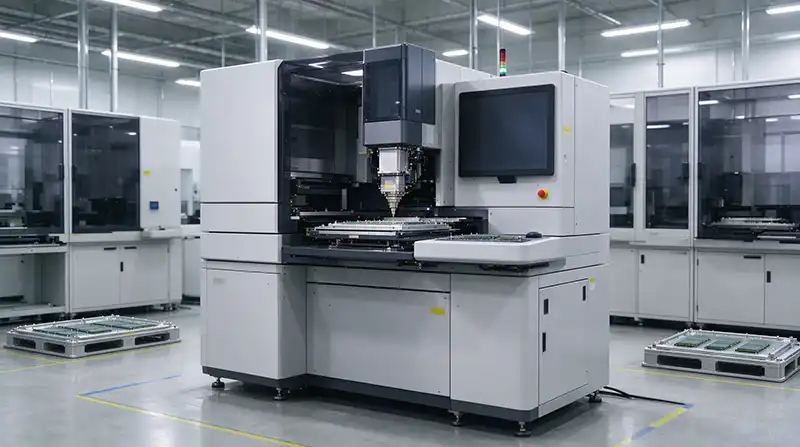
How the Original Model Affects Resale Value
The manufacturer and model establish the starting point for evaluating a used semiconductor die bonder. They indicate the machine's general application, design generation, and potential place in a packaging process. However, the model name alone cannot establish the value of an individual unit.
Established platforms can retain practical value
Equipment from a well-established platform may appeal to buyers who already understand its operating characteristics. Existing process knowledge can reduce the effort needed to evaluate the machine, train operators, or integrate it into a compatible production environment.
The availability of technical documentation, tooling, replacement parts, and maintenance expertise can also affect a platform's attractiveness on the secondary market.
However, a recognized brand should not automatically command a premium regardless of condition. An older machine with missing options, unresolved faults, or limited support may be less useful than a less expensive alternative that better fits the intended application.
Brand recognition helps attract attention. The actual configuration and condition determine how much of that attention can translate into a sound purchase.
Model generation matters, but age is not the whole story
Manufacturing year is a useful reference when comparing equipment, but chronological age does not provide a complete picture of remaining service value.
A relatively old machine may have been maintained carefully, operated within a stable process, and kept in a configuration that remains suitable for current production. A newer unit may have experienced heavy use, undergone undocumented repairs, or been removed from a line with components that now require attention.
The relevant question is how the machine's age relates to its mechanical condition, control system, software environment, and expected workload.
Buyers should also consider whether the model remains compatible with their production roadmap. A machine can be mechanically sound yet become commercially less attractive if its capabilities no longer meet changing package requirements or if maintaining its control system becomes increasingly difficult.
Specialized capabilities can narrow the buyer pool
Not every die bonder is intended for the same manufacturing task. Conventional epoxy die bonding, eutectic bonding, precision placement, flip-chip assembly, and other specialized applications impose different requirements on the equipment.
A machine configured for a particular process may be valuable to a buyer who needs that exact capability. The same specialization can limit demand among buyers whose products require another bonding method.
This is why resale value should be considered in relation to the machine's likely applications rather than the manufacturer's reputation alone.
Configuration Can Change the Value of the Same Model
Installed configuration is one of the most important reasons why two used die bonders carrying the same model designation may not be equivalent purchases.
A model name identifies a platform, but it does not necessarily describe every option fitted to a particular unit. Depending on the machine, differences may involve wafer handling, material loading, vision systems, dispensing equipment, bond heads, tooling, software functions, or other process-specific modules.
These differences can affect both the machine's original capability and the amount of work required to use it.
Installed options are valuable when they solve a real production need
An additional module is not automatically an advantage. Its value depends on whether the buyer needs it, whether it functions correctly, and whether it is compatible with the intended process.
A configuration that supports the required substrate format or material-handling arrangement may save substantial integration work. An option designed for a different application may contribute little to the buyer's actual requirements.
For instance, a manufacturer evaluating an epoxy die bonder should pay attention to the installed dispensing arrangement and its suitability for the intended adhesive process. A buyer considering a precision die bonder may place greater emphasis on the vision system, positioning capability, and available alignment functions.
The relevant configuration is therefore the one that supports the required production outcome, not necessarily the one with the longest option list.
Missing components can reduce value in ways that are easy to overlook
A used machine may appear complete while lacking an option, accessory, tooling set, or software function that was present in another version of the same model.
If the missing item is essential to the buyer's process, the purchase may require additional sourcing, engineering, installation, or validation. In some cases, the component may be difficult to obtain or may no longer be supported.
These costs can change the economics of a transaction even when the initial machine price looks attractive.
A meaningful comparison should identify what is included in each offer and distinguish standard equipment from optional components. It should also clarify whether the quoted configuration reflects the actual machine being sold or a general description of the model family.
Configuration compatibility is more important than feature count
Consider two machines from the same model family. Machine A includes more options, but several are irrelevant to the buyer's product. Machine B has a simpler configuration that already matches the required bonding process.
Machine A is not automatically worth more to that buyer. If its additional features do not improve the intended production operation, they may not justify a higher acquisition cost.
The comparison changes if those options are needed for future products or would otherwise require an expensive upgrade. Their value must be assessed against a real application, not an abstract assumption that more features always mean better equipment.
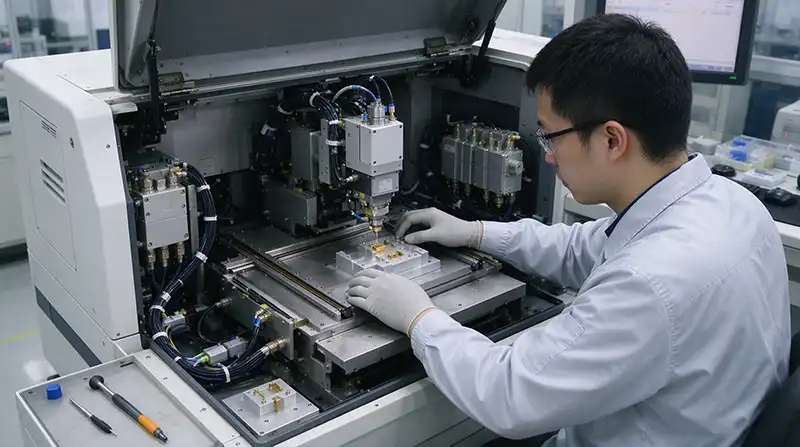
Machine Condition and the Cost of Restoring Performance
The physical condition of a used die bonder influences its value, but appearance alone is an unreliable measure. Cosmetic wear may have little effect on production capability, while deterioration in a critical subsystem can create substantial technical and financial risk.
The valuation should focus on the condition of the functions that matter to the intended process.
Mechanical condition affects expected maintenance work
Motion systems, positioning mechanisms, bond heads, material-handling assemblies, and other moving components can experience wear over time. The effect depends on the design, operating history, maintenance practices, and the work the machine performed.
A machine that has been idle for an extended period may also require attention before returning to service. Inactivity does not necessarily preserve every component, and a powered-on demonstration does not establish that all functions perform consistently during production.
The cost of correcting identified issues should be considered alongside the quoted price. Where the extent of a fault remains uncertain, buyers may need to account for the additional risk rather than assume that repairs will be minor.
Vision and positioning performance influence usable capability
For die bonding applications, placement performance is often central to the equipment's usefulness. A machine's original accuracy specification describes its capability under defined conditions; it does not prove that a particular used unit currently achieves that performance.
Vision-system condition, calibration status, mechanical stability, and the configuration of the bonding process can all affect the result.
This distinction is especially important when comparing equipment intended for different accuracy requirements. A buyer who needs precise placement cannot base the valuation solely on a published specification or the machine's original reputation.
Where available, recent functional test results and application-relevant verification provide stronger evidence than a general statement that the machine is operational.
Maintenance records reduce uncertainty
Maintenance documentation can help explain how the machine has been used and what work has already been completed. Records of repairs, component replacements, calibration, and preventive maintenance can provide useful context when assessing expected future expenditure.
Missing records do not automatically mean that a machine is unsuitable. They do, however, leave more uncertainty about its history and current condition.
That uncertainty can affect the value a buyer is prepared to accept. A machine with documented maintenance and credible functional evidence may be easier to evaluate than a similar unit whose history is largely unknown.
The goal is not to reward paperwork for its own sake. It is to establish a clearer basis for estimating the work, risk, and expenditure associated with bringing the equipment into service.
Why Production Suitability Changes the Economics
A used die bonder can be in good condition and still be a poor purchase if it cannot perform the required process.
This is one of the most important distinctions in equipment valuation. Mechanical condition determines part of the machine's usefulness, but process suitability determines whether that usefulness translates into production value.
The bonding method must match the application
Different bonding methods involve different process requirements, material combinations, and equipment configurations. A machine suited to one bonding process should not be treated as an interchangeable substitute for a machine intended for another.
Before comparing prices, buyers need to establish the required bonding method and confirm that the specific machine configuration supports it.
Otherwise, a low-priced machine may create additional engineering work or prove unsuitable for the intended product altogether. In that situation, its apparent savings are largely irrelevant.
Die, substrate, and handling requirements affect value
The dimensions and characteristics of the die, substrate, and carrier can influence whether a particular machine is suitable. Material-handling arrangements, tooling, alignment functions, and process settings may also determine how easily the equipment can be integrated into a production line.
A buyer should therefore compare the actual process requirements with the capabilities of the machine under consideration.
A platform that handles the required product format with its existing configuration may have a practical advantage over a cheaper unit that needs substantial modification. The value difference comes from the work avoided and the production capability available, not simply from the number of specifications listed.
Throughput should be judged against the intended workload
Higher nominal throughput can be valuable in a high-volume production environment, but the figure needs to be interpreted in context.
Actual output depends on factors such as die dimensions, substrate layout, bonding conditions, handling requirements, and the accuracy demanded by the product. A published maximum or theoretical cycle time may not represent the output achievable under a specific production setup.
For a buyer with moderate output requirements, a faster machine may offer little additional value if the extra capacity will remain unused. For a high-volume line, insufficient throughput may make a lower-priced machine commercially unattractive.
The relevant measure is whether the equipment can meet the required output and quality targets under realistic operating conditions.
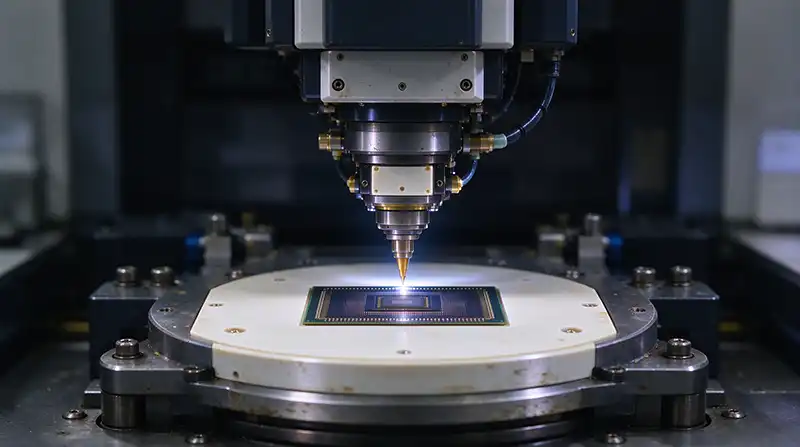
Calculating the Total Acquisition Cost
The purchase price is only one component of the cost of acquiring a used semiconductor die bonder. Installation, transportation, restoration, tooling, engineering work, and production preparation can all affect the final investment.
A useful comparison therefore begins with the total cost of bringing each candidate machine to the point where it can perform the intended work.
A practical cost model is:
Total acquisition cost = purchase price + logistics + installation + necessary repairs + tooling and configuration work + process qualification.
The exact categories will vary by machine and project. Some costs may already be included in a supplier's offer, while others may be the buyer's responsibility. The purpose of the calculation is to make those differences visible.
Purchase price
Start with the quoted price for the specific machine and the configuration included in the offer. Confirm whether the quotation covers accessories, tooling, documentation, testing, and any agreed preparation work.
Offers that appear similar may describe different scopes of supply, so the price should not be compared without checking what each seller is providing.
Transportation and installation
Semiconductor equipment can involve substantial logistical and installation requirements. Shipping arrangements, packing, handling, site preparation, utilities, and installation resources may all affect the cost of bringing a machine to its destination.
The impact depends on the equipment, delivery location, and scope of work. A machine sourced from a convenient location may have a different overall cost from one requiring more complex transportation or site preparation.
Repair and configuration costs
Known faults should be translated into estimated corrective work wherever possible. Missing tooling, unavailable components, outdated software dependencies, or configuration changes may introduce further expenditure.
If repair costs cannot yet be established, the uncertainty should remain visible in the comparison. Treating an unknown cost as zero makes the cheaper option look more attractive than the available evidence supports.
Qualification and production preparation
A machine may require additional setup, calibration, recipe development, process verification, or internal approval before it can be used for production.
These activities vary with the application and the buyer's existing technical resources. A facility familiar with the same platform may need less preparation than one introducing a different machine type.
Where production timing matters, the time needed to complete these activities can also have commercial consequences. A lower acquisition price may not compensate for a lengthy preparation process if the equipment is needed to meet a near-term production requirement.
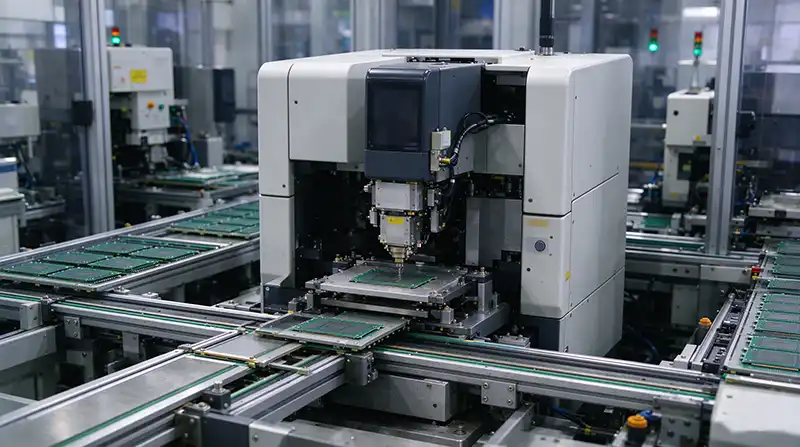
Comparing Two Used Die Bonders on a Like-for-Like Basis
A structured comparison is more useful than ranking machines by price alone. The following example is illustrative and does not represent actual market quotations or specific machines.
Imagine that a packaging company is considering two used die bonders for the same production task.
| Evaluation factor | Machine A | Machine B |
|---|---|---|
| Asking price | Lower | Higher |
| Required configuration | Some items need confirmation or sourcing | Required configuration appears to be included |
| Condition evidence | Limited documentation | More complete functional records |
| Additional work | Potential repairs and configuration work | Less identified preparation work |
| Process suitability | Requires further verification | Better aligned with the stated application |
| Overall cost certainty | Lower | Higher |
Machine A may still be the better purchase if the missing items are inexpensive, the condition can be verified, and the final cost remains attractive. Machine B may be more economical if its higher price avoids substantial corrective work and reduces uncertainty.
The comparison cannot be settled by the table alone. The buyer needs credible information about both machines, including the actual scope of supply, condition, and costs that remain after purchase.
The lesson is straightforward: compare the cost of obtaining equivalent production capability, not just the initial quotations.
This approach also prevents buyers from assigning too much value to cosmetic appearance, a newer manufacturing year, or a longer list of features when those factors do not materially improve the intended application.
Spare Parts and Long-Term Support Affect Resale Value
The future maintainability of a used die bonder can influence both its present value and its suitability for continued operation.
Equipment from a mature platform may benefit from existing technical knowledge, available replacement parts, and established maintenance practices. However, the situation varies by model, component, software generation, and supplier network.
A common model is not necessarily easy to maintain in every configuration. Some specialized components may remain difficult to source even when the machine itself is widely recognized.
Buyers should distinguish between general parts availability and the availability of the specific items required by the machine under consideration. Tooling, dispensing components, sensors, cameras, and control-system parts may have different supply conditions.
Software and controller dependencies deserve similar attention. A machine that depends on an older operating environment or a particular licensed function may involve additional work if the relevant support is limited.
These factors do not automatically make older equipment a bad investment. They influence how much risk and future expenditure the buyer should consider when evaluating its price.
A machine with a clear maintenance path may be more attractive than a nominally cheaper alternative whose critical components are difficult to replace. The difference becomes particularly important when unplanned downtime would disrupt production schedules.
Market Demand and the Difficulty of Reselling Specialized Equipment
Used die bonder value is also affected by the number of potential buyers who need a particular platform.
Machines that serve established packaging applications may attract interest from several types of manufacturers. Highly specialized platforms may appeal to a smaller group of buyers, even if their capabilities are valuable within that group.
This affects resale liquidity: how easily a machine can find another suitable buyer and how long that process may take.
A specialized machine is not necessarily worth less in every case. If demand exists for its particular capability and supply is limited, it may retain meaningful value. But a seller cannot assume that a technically sophisticated machine will command a high price simply because it offers advanced functions.
Model popularity, installed-base familiarity, process relevance, configuration, and equipment condition all influence the potential buyer pool.
For buyers who may need to resell the machine later, it is worth considering whether its configuration serves a reasonably broad market or depends on a narrow application. That consideration should complement, rather than replace, the machine's immediate production value.
For sellers, the same factors influence how an asking price should be positioned against comparable equipment. A realistic valuation needs to reflect the specific unit and the demand for its capabilities, rather than relying exclusively on its original purchase price.
How a Used Equipment Supplier Approaches Valuation
As a supplier of used semiconductor equipment, GK-SEMI evaluates die bonders in relation to their model, installed configuration, condition, and intended production requirements. This helps buyers compare available machines on a more consistent basis and understand which differences may affect their acquisition decision.
The important distinction is between a machine's general specifications and the condition and configuration of the actual unit being offered. A model description can establish a useful starting point, but it cannot replace unit-specific information when the buyer is deciding what the equipment is worth.
For procurement teams, a clearer understanding of these differences makes it easier to compare alternatives, identify unanswered questions, and estimate the work required before production use.
When Is a Used Semiconductor Die Bonder Worth the Investment?
A used die bonder is worth considering when its capabilities align with the intended process, its condition can be established with sufficient confidence, and its total acquisition cost makes sense for the buyer's production requirements.
There is no single age, brand, or price level that determines whether a machine is a good investment. The decision depends on the relationship between what the equipment can deliver and what the buyer must spend to obtain that capability.
A machine with a higher asking price may offer better value when it includes the required configuration, has credible condition evidence, and needs less preparation. A lower-priced machine may be preferable when the buyer has the technical resources to address its limitations at a reasonable cost.
The decision should also account for the expected period of use. Equipment intended to support a short-term production requirement may be evaluated differently from a machine expected to remain in service for many years. Maintenance exposure, parts availability, and compatibility with future products become more significant when long-term use is planned.
Before committing to a purchase, buyers should be able to explain why the selected machine is preferable to the alternatives in terms of capability, condition, total cost, and production fit. If that explanation depends mainly on the lowest quotation or the reputation of the manufacturer, the valuation is probably incomplete.
Frequently Asked Questions
What determines the price of a used semiconductor die bonder?
The price is influenced by the manufacturer, model, manufacturing year, installed configuration, equipment condition, application suitability, and current market demand. Logistics, necessary repairs, tooling, and installation can also affect the total cost of acquisition.
Why do used die bonders of the same model have different prices?
Machines from the same model family may have different options, tooling, software functions, maintenance histories, and operating conditions. Differences in what is included in the sale and the work required before production can also explain price variations.
Is an older die bonder always worth less than a newer one?
No. Age is one factor, but it does not establish the machine's current condition or remaining usefulness. An older machine with a suitable configuration and documented maintenance may be a better fit than a newer machine that requires extensive repairs or does not meet the intended process requirements.
How can buyers compare used die bonder quotations accurately?
Compare the actual units and scope of supply, not just their model names and asking prices. Review the installed options, condition evidence, process suitability, required additional work, logistics, and expected preparation costs. This provides a more useful basis for comparing the total investment.
Does a lower purchase price mean a better deal?
Not necessarily. A low quotation may be attractive, but missing components, uncertain condition, additional engineering, or difficult parts sourcing can increase the total cost. The better deal is the machine that delivers the required capability at an acceptable overall cost and level of risk.
What information should be available when valuing a used die bonder?
Useful information includes the manufacturer and model, manufacturing year where available, installed options, included tooling, operating and maintenance history, current condition, functional test evidence, and any known repairs or missing components. The intended application and production requirements are equally important because they determine which capabilities actually matter.
Final Considerations
The value of a used semiconductor die bonder cannot be established from its model number or asking price alone. Its real usefulness depends on the relationship between the machine's configuration, current condition, process capabilities, and the cost of bringing it into production.
Buyers who evaluate these factors together are better positioned to distinguish a genuinely economical machine from one that only appears inexpensive at the quotation stage. The most defensible purchase decision is based on the specific equipment, credible evidence, and the production requirements it must meet—not on age or brand reputation in isolation.